 Feb 2, 2026
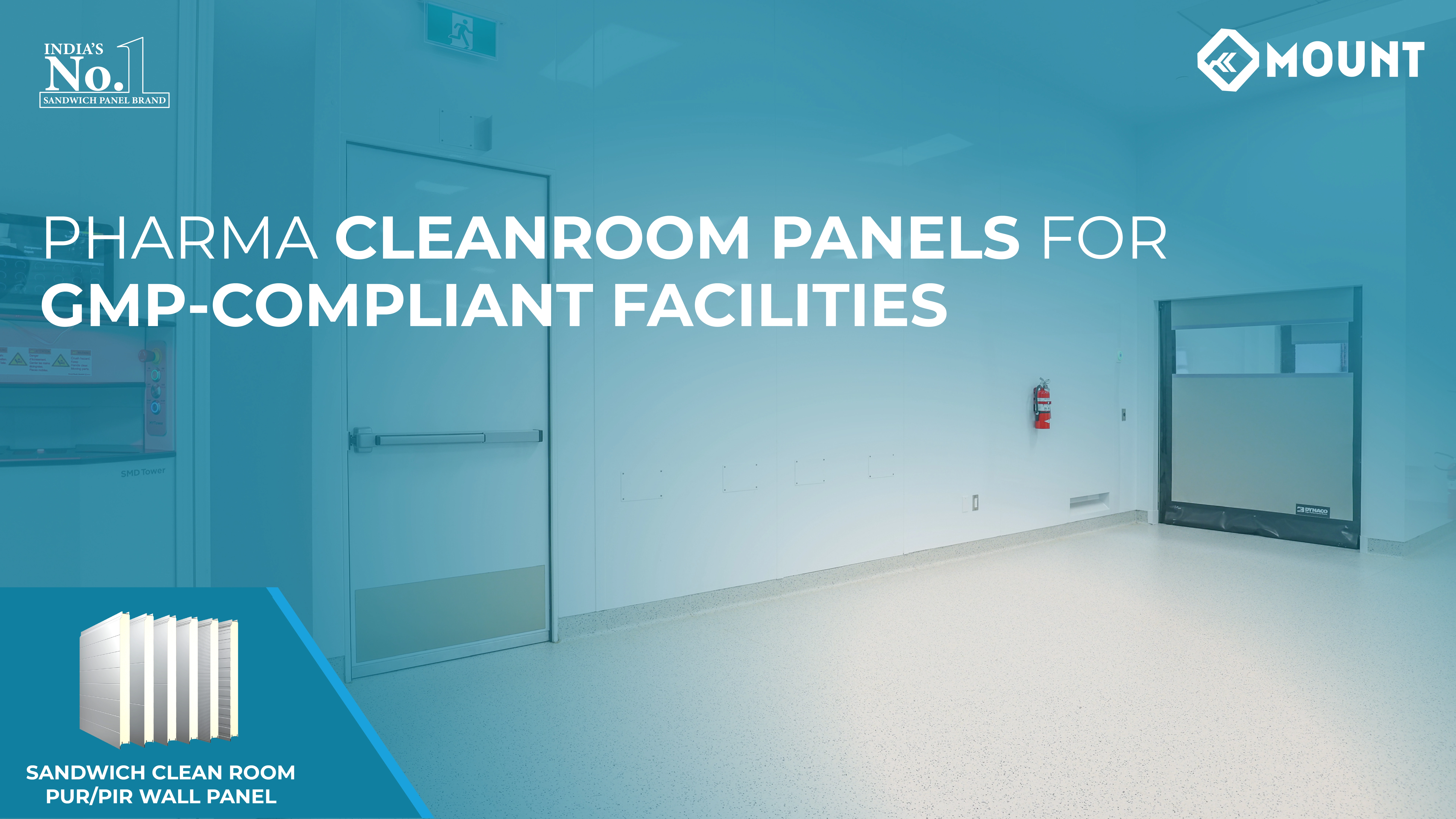
Pharma Cleanroom Panels for GMP-Compliant Facilities
In pharmaceutical facilities, construction choices are evaluated through a regulatory lens long after the civil team has exited the site. Walls, ceilings, and partitions are assessed not for appearance, but for how consistently they support contamination control, validation logic, and long-term process reliability. In this context, pharma cleanroom panels operate as part of the manufacturing control framework rather than as building finishes.
GMP compliance places sustained demands on the cleanroom envelope. Surfaces must remain cleanable after years of chemical exposure. Pressure boundaries must hold during routine operation and upset conditions. Fire behaviour must be predictable, documented, and defensible during inspection. These requirements explain why engineered panel systems are now integral to regulated pharmaceutical design.
Envelope Control in Pharmaceutical Cleanrooms
A GMP cleanroom is expected to behave the same way on day one and year ten. That expectation is difficult to achieve with site-built partitions, where workmanship variability directly affects sealing, flatness, and joint integrity. Cleanroom panels for pharmaceutical manufacturing are factory-produced under controlled conditions, allowing tolerances and material properties to be defined before installation begins.
- This predictability simplifies design qualification and reduces corrective actions during installation qualification. For project teams, the benefit is not speed alone, but reduced uncertainty during validation reviews.
- Such an approach reflects the engineering discipline typically associated with experienced cleanroom solution providers, including Mount Roofing and Structures, where panel systems are developed to align with validation and compliance objectives rather than construction convenience.
Hygiene Performance and Surface Behaviour
Regulators do not approve materials; they approve outcomes. Based on cleanability, chemical resistance, and surface stability under repeated sanitation cycles Clean room wall panels used in pharmaceutical areas are selected.
Smooth, non-porous finishes limit microbial adhesion and prevent absorption of disinfectants. Flush joints and concealed fixing systems reduce particulate traps and simplify cleaning validation. These characteristics directly influence inspection outcomes, particularly in sterile processing and high-grade zones.
Where chilled environments are required within classified spaces, cold room panels are deployed without compromising hygienic continuity, ensuring that temperature control does not introduce condensation or surface degradation risks.
Airtightness and Pressure Zoning
Pressure differentials are central to contamination control strategies. Any loss of envelope integrity compromises airflow directionality and room classification. Modular clean room panels incorporate precision-formed joints and continuous sealing methods that maintain airtight boundaries across interfaces.
This consistency allows airflow visualisation studies and pressure decay tests to be repeated with confidence during requalification. Facilities operating multiple pressure regimes benefit from reduced cross-contamination risk and improved operational stability.
Thermal Control and Condensation Risk
Pharmaceutical cleanrooms frequently interface with cold stores, airlocks, and utility corridors. Temperature differentials across these interfaces can result in condensation if envelope performance is inconsistent. Insulated panels for pharma plants provide controlled thermal resistance, stabilising internal surface temperatures and protecting finishes.
This thermal predictability supports both hygiene control and structural durability, particularly in high-humidity processing environments.
Fire Safety Considerations
Fire performance is no longer treated as a secondary concern in regulated facilities. Core selection within clean room sandwich panels influences fire spread, smoke development, and structural behaviour during thermal exposure.
Panels engineered with defined fire performance characteristics allow project teams to align cleanroom design with statutory fire requirements while maintaining GMP compatibility. Documented test data supports regulatory and authority reviews without reliance on assumptions.
Validation, Audits, and Long-Term Use
Cleanrooms are re-qualified repeatedly over their operational life. Materials that deform, delaminate, or lose sealing integrity create ongoing compliance risk. Cleanroom panels for pharma industry applications are expected to maintain performance through service penetrations, layout changes, and maintenance activity.
Panel systems with traceable specifications and installation methodologies simplify audit preparation and reduce downtime during inspections. For regulated manufacturers, this stability directly affects business continuity.
Why Engineered Panels Matter
Pharmaceutical cleanrooms function as integrated systems. Walls, ceilings, HVAC, and processes are interdependent. Clean room sandwich panels provide the stable envelope required for this integration to function as intended.
Treating panels as generic construction elements introduces avoidable risk into a regulated environment.
Why Choose Mount Roofing and Structures
Mount delivers engineered cleanroom panel solutions developed specifically for pharmaceutical manufacturing environments. Panel specifications are aligned with GMP hygiene requirements, pressure zoning strategies, fire safety expectations, and long-term validation performance.
The specifications of the panels are designed in accordance with GMP standards of hygiene, pressure zoning techniques, fire safety standards, and long-term validation performance.
Mount’s systems-oriented approach ensures that the pharma cleanroom panels interface seamlessly with HVAC system designs, service penetrations, and plans for future expansions.
FAQ :
Q1 : When should cleanroom panels be treated as a GMP-critical system rather than a construction component?
A : Cleanroom panels should be considered GMP-critical wherever envelope failure can impact contamination control, pressure zoning, or audit outcomes. In regulated pharmaceutical areas, panel performance directly influences validation continuity and inspection risk.
Q 2: Why is airtightness important in pharmaceutical cleanrooms?
A : Airtight panel systems maintain pressure differentials and airflow directionality essential for contamination control. Consistent sealing allows reliable smoke studies and pressure decay testing throughout the facility lifecycle.
Q 3: How do panel surfaces affect hygiene validation?
A : Non-porous, chemically resistant panel surfaces withstand repeated sanitation without degradation. Flush joints and concealed fixings minimise particle traps, simplifying cleaning validation and inspection compliance.
Q 4: What is the role of cleanroom panels in fire safety and long-term performance?
A : Panel core selection influences fire behaviour, smoke development, and structural stability. Engineered panels maintain integrity through audits, service modifications, and repeated revalidation cycles
Similar Events