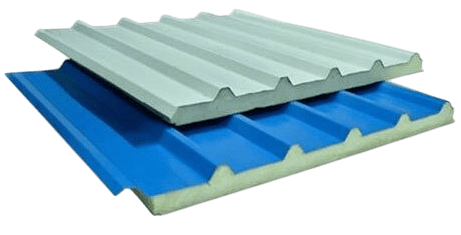
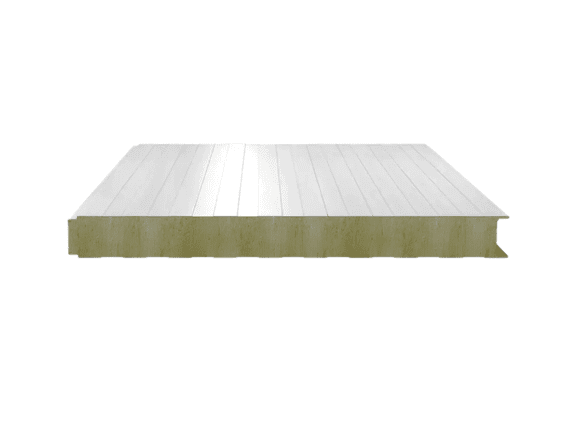
Fire Retardant PIR Hidden Tongue & Groove Panels
Designed for precision-built enclosures, Fire Retardant PIR Hidden Tongue & Groove Panels integrate a concealed interlocking joint system with fire-retardant polyisocyanurate (PIR) insulation to limit air leakage, reduce thermal bridging, and improve enclosure continuity across panel joints.
Colour Shades
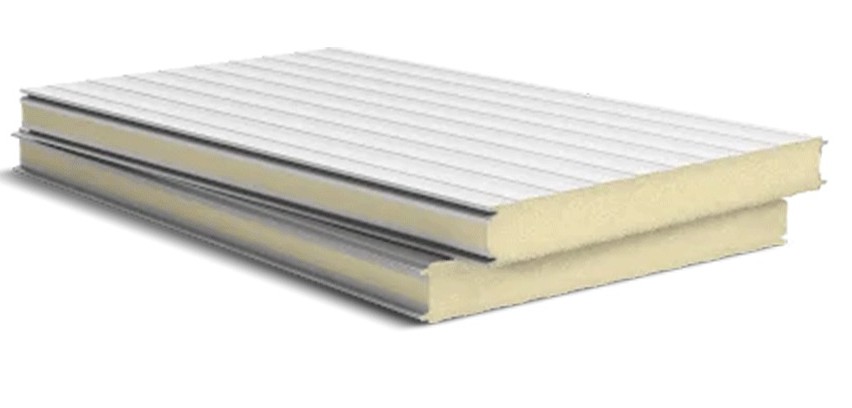
Fire Retardant PIR Hidden Tongue & Groove Panels are supplied with a standard colour-coated finish selected to meet functional zoning, architectural coordination, and environmental exposure requirements. The pre-coated metal facings are factory-finished to ensure uniform colour consistency, corrosion resistance, and long-term surface stability under industrial and coastal operating conditions.
Select Color:
Product Specifications
| Parameters | Specifications |
|---|---|
| Full Form | Polyisocyanurate |
| Thermal Conductivity (k-value) | 0.018–0.021 W/m·K |
| Insulation Performance | Excellent |
| Fire Resistance | B1 (Better Fire Retardant) |
| Smoke Generation | Lower |
| Density | 40–45 kg/m³ |
| Panel Thickness | 30–200 mm |
| Panel Width | 1000 mm |
| Panel Length | Up to 12–15 m |
| Top Sheet | PPGI / GI / Aluminium / SS |
| Bottom Sheet | PPGI / GI / Aluminium / Foil |
| Sheet Thickness | 0.35–0.60 mm |
| Wall Profile | Plain / Ribbed |
| Weight (50 mm) | 11–13 kg/m² |
| Service Temperature | -40°C to +120°C |
| Cost | Higher (10–20% more) |
| Typical Applications | Pharma, FMCG |
Profile drawing

Concealed fastening
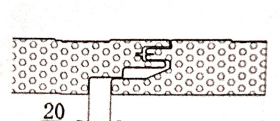
Wide Seam Connection
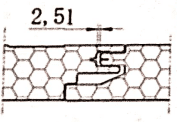
Seamless Connection
Key Performance Attributes
Outlining essential performance parameters influencing fire behaviour, insulation efficiency, and enclosure integrity.

Airtight Jointing
Concealed tongue and groove joints restrict air infiltration and improve enclosure tightness.

Enhanced Fire Behavior
Fire-retardant PIR insulation exhibits improved fire performance .

High Insulation Efficiency
Low thermal conductivity of PIR insulation supports stable internal temperatures and reduced heat transfer.

Dimensional Stability
PIR core maintains insulation and structural integrity under elevated operating temperatures.
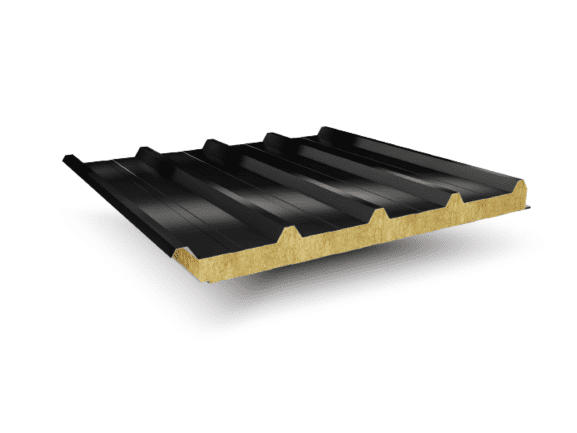
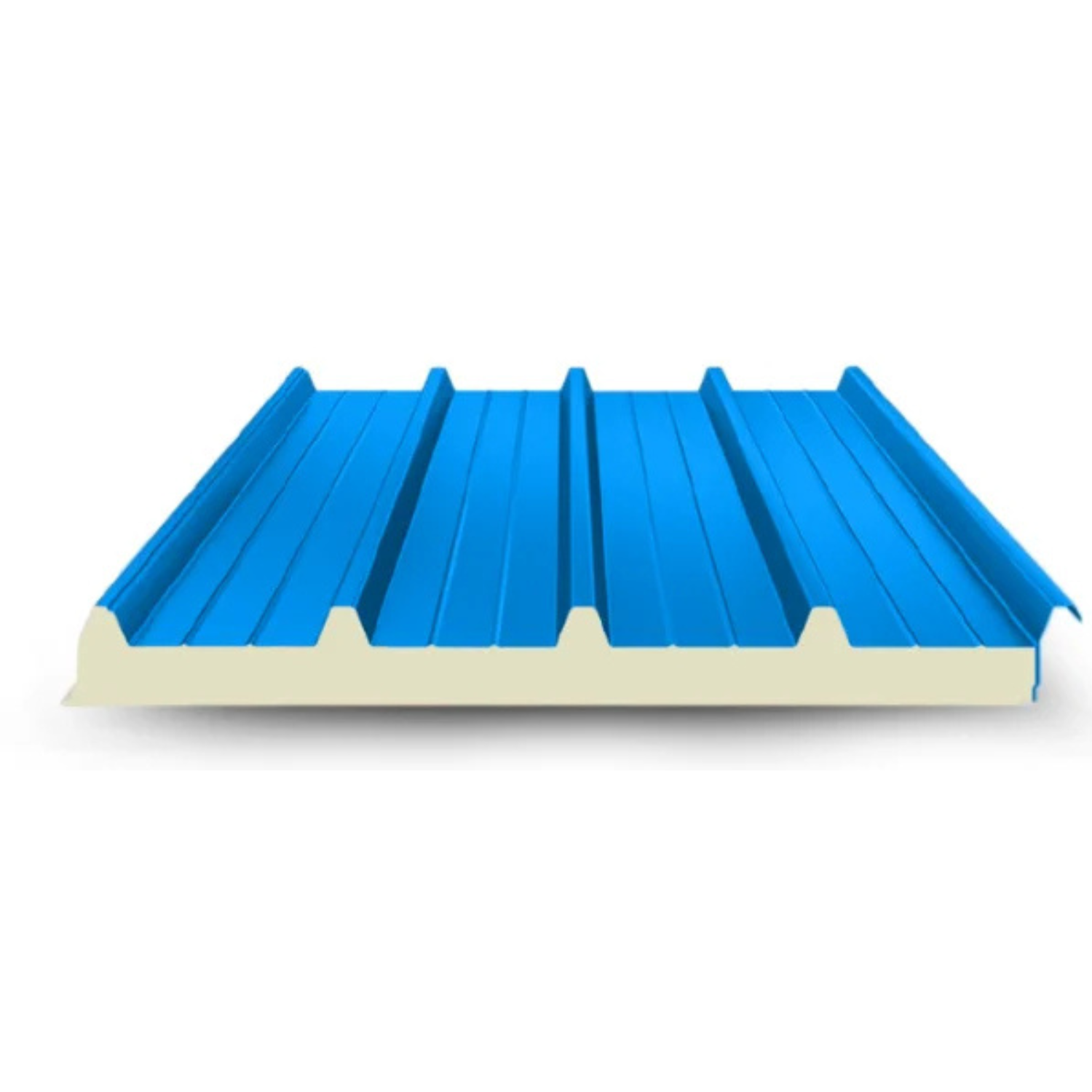
Related Products
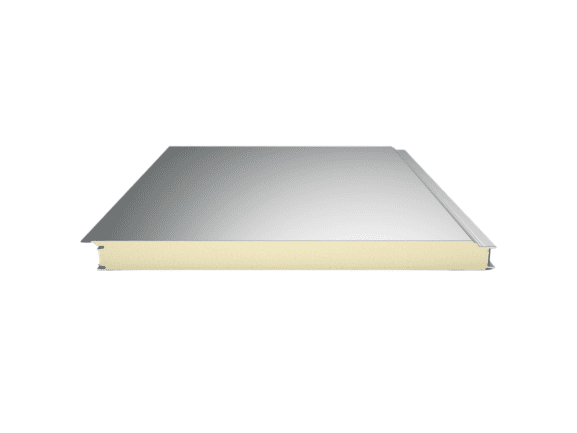
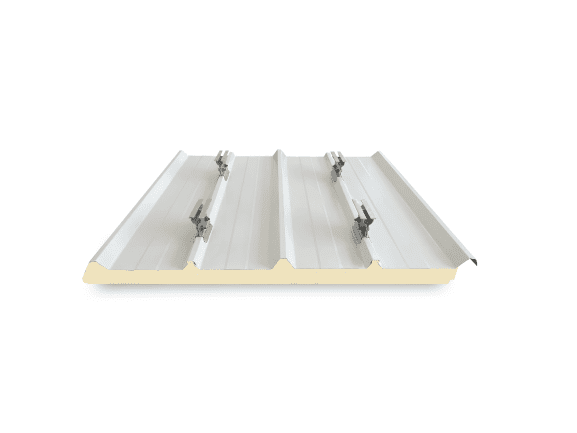
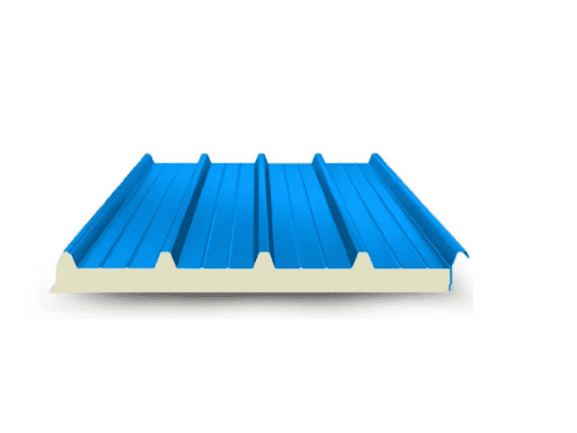
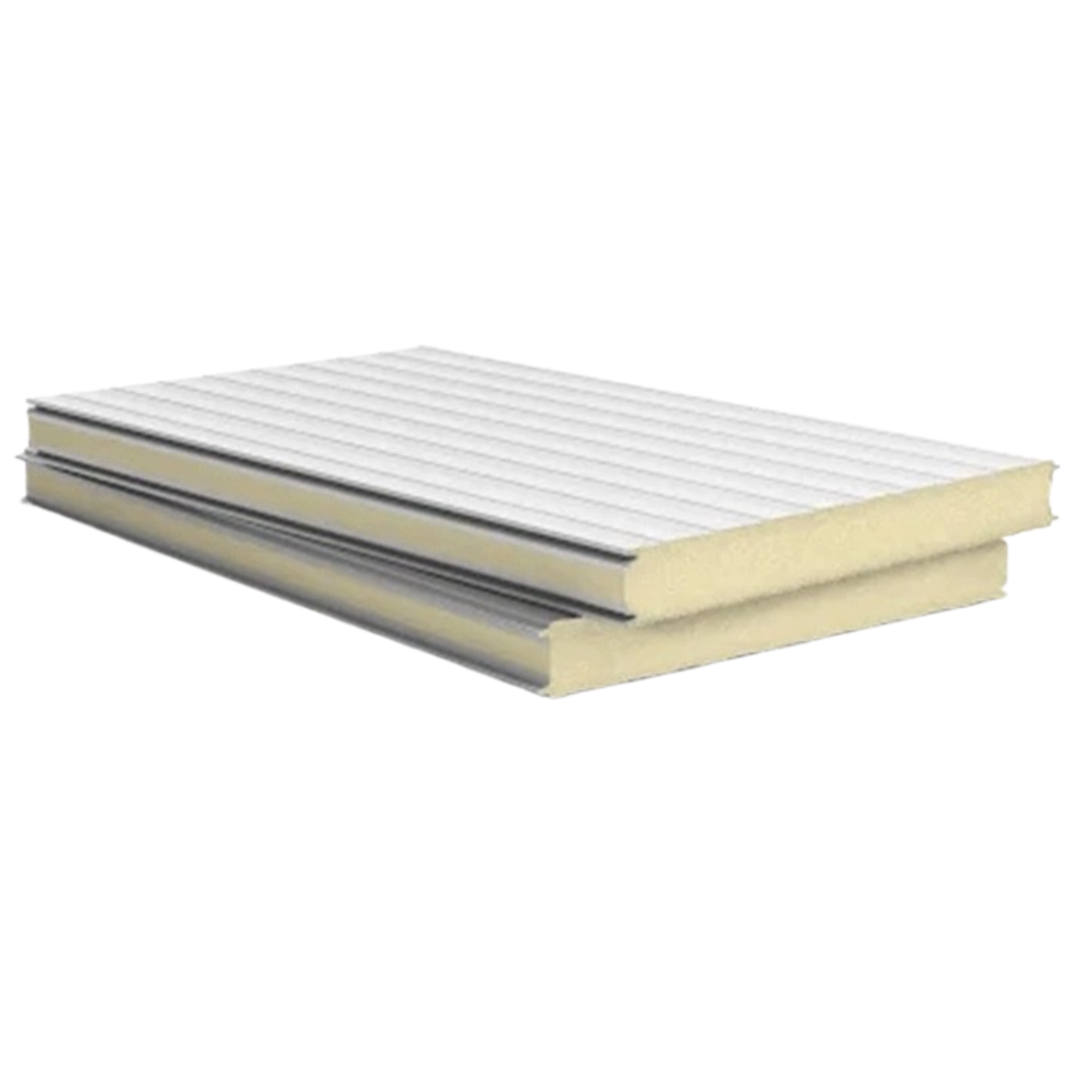
Available Joints
Mount’s panel joint configurations ensure precise alignment, secure interlocking, and effective load transfer, enhancing structural continuity, air and moisture tightness, and installation efficiency while maintaining long-term durability .

Roof Joint

Single Tongue & Groove Joint

Double Tongue & Groove Joint

Hidden Tongue & Groove

Camlock Joint

M Section
Advantages of the Fire Retardant PIR Hidden Tongue & Groove Panel
Concealed Fire-Aware Joint System
The hidden tongue & groove configuration reduces exposed fastening points while maintaining PIR-based insulation performance across vertical wall interfaces.
Improved Joint-Level Fire Behaviour
Concealed interlocking joints can help limit direct flame pathways through exposed mechanical overlaps compared to externally lapped systems.
Char-Forming Insulation in Flush Wall Applications
PIR core formulation supports improved reaction-to-fire characteristics while maintaining a clean, continuous wall finish.
Reduced Surface Disruptions
Flush joint geometry minimizes protrusions, supporting applications where smooth wall alignment and enclosure continuity are required.
Enhanced Enclosure Integrity in Controlled Industrial Spaces
Often selected in industrial and semi-controlled environments where both improved fire behaviour and concealed wall finishes are preferred.
Accessories
Mount Roofing & Structures provides engineered panel accessories designed to support installation accuracy, system compatibility, and enclosure performance across insulated panel applications.
These accessories are developed to integrate seamlessly with Mount panel systems, ensuring coordinated detailing, structural alignment, and long-term operational reliability across industrial, commercial, cleanroom, and cold storage projects.
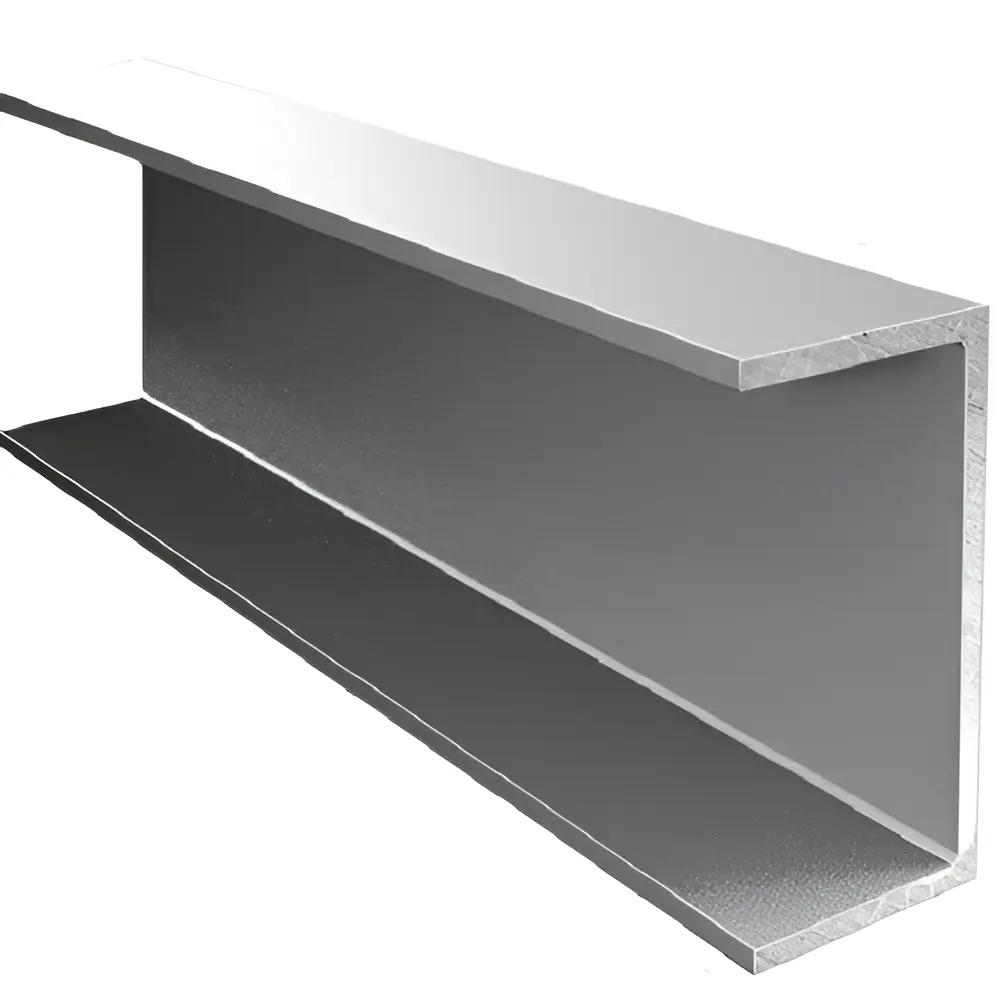
Bottom C Flashing
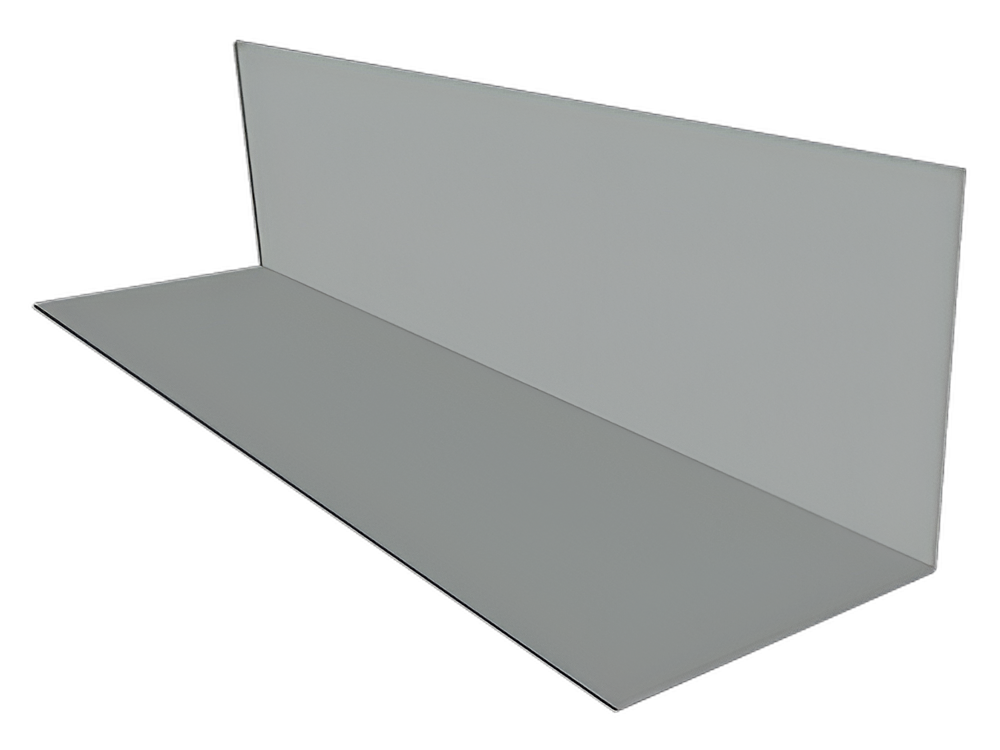
L Flashing (Inner and Outer)
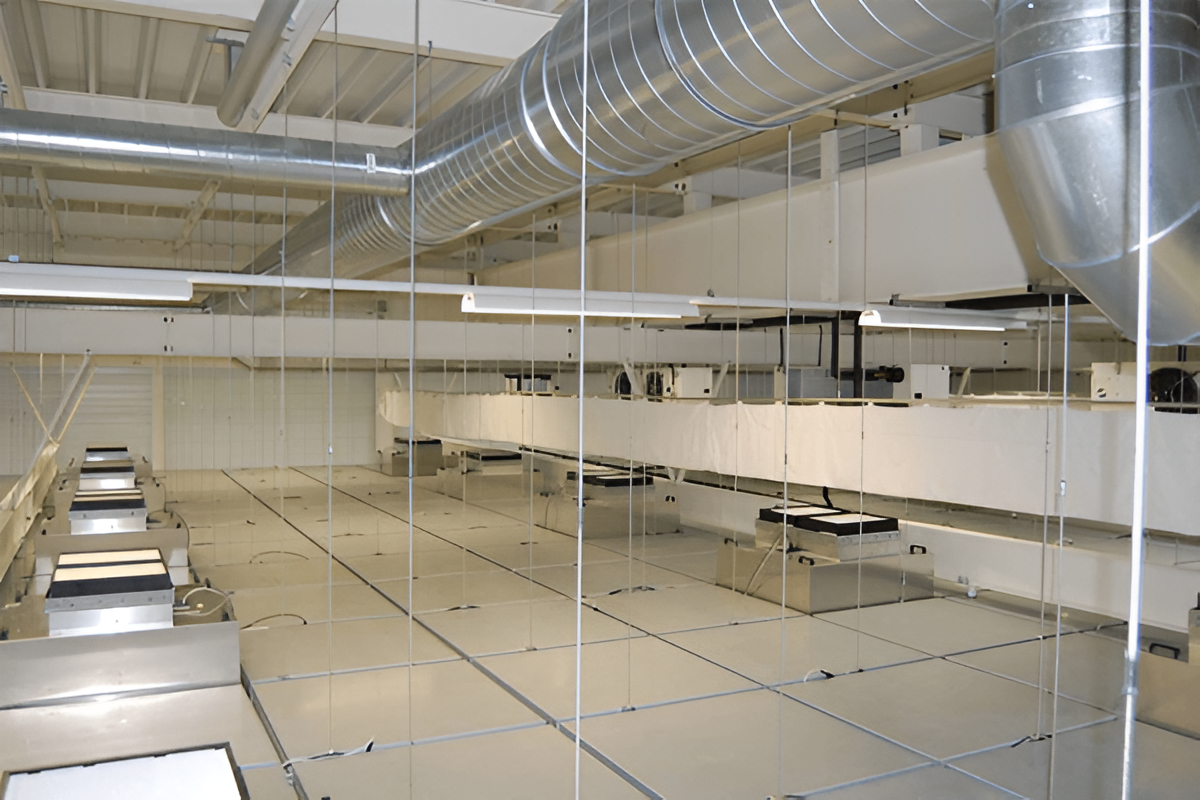
Walkable Ceiling Panels
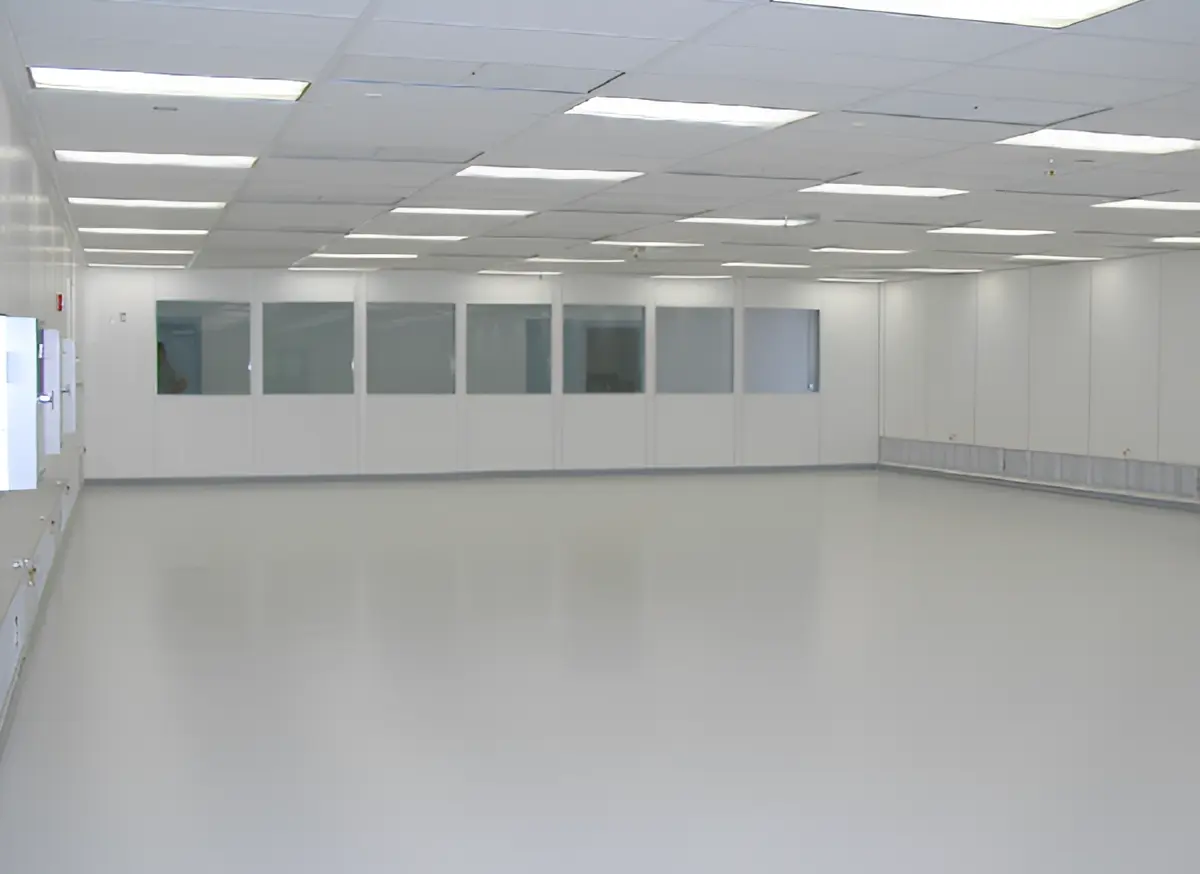
Non-Walkable Ceiling Panels
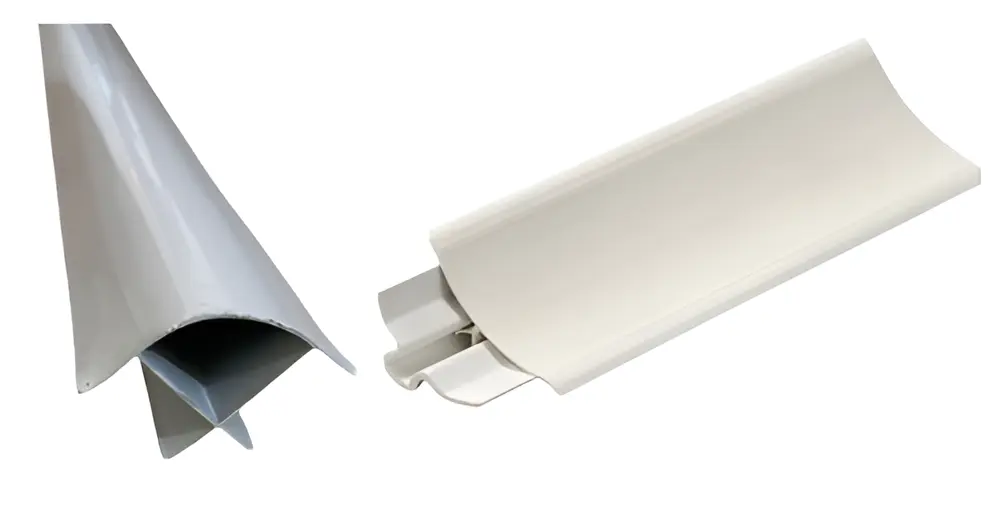
Inner and Outer Covings
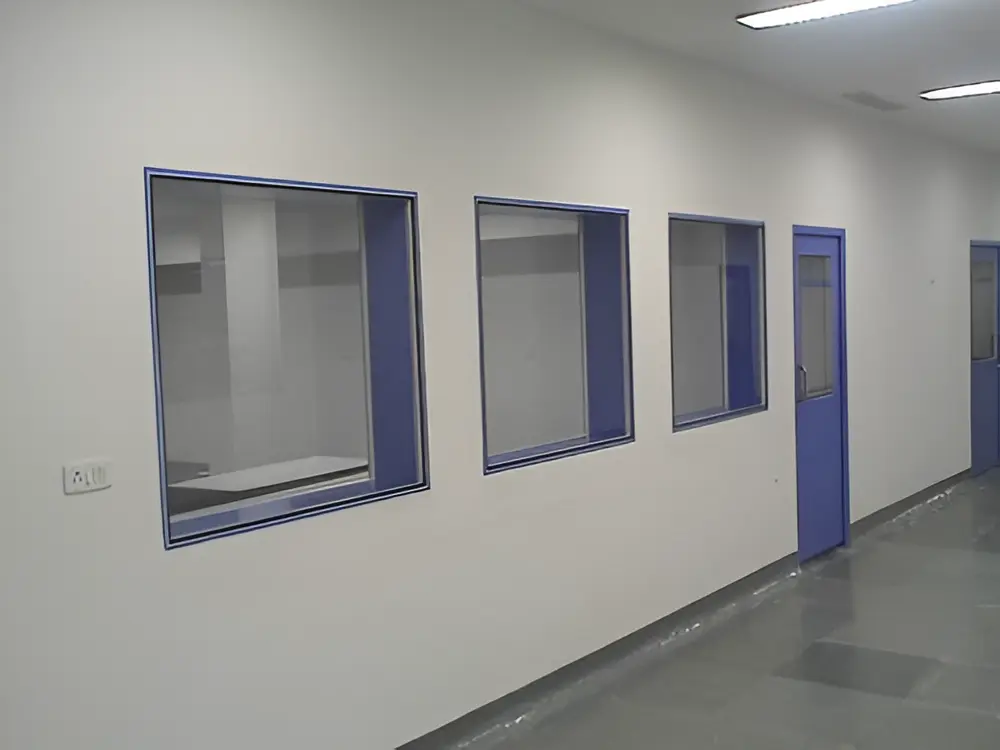
View Panels
Applications
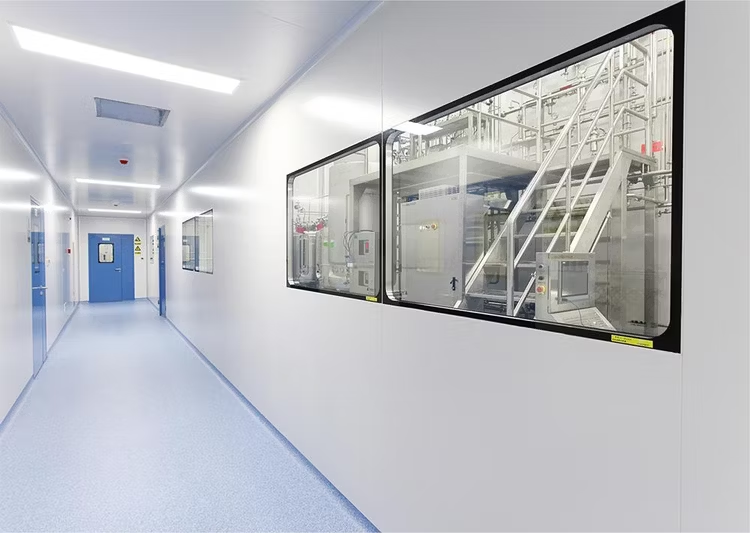
Pharmaceutical Production Rooms
Flush concealed joints reduce dust traps while providing insulated wall systems in regulated environments.
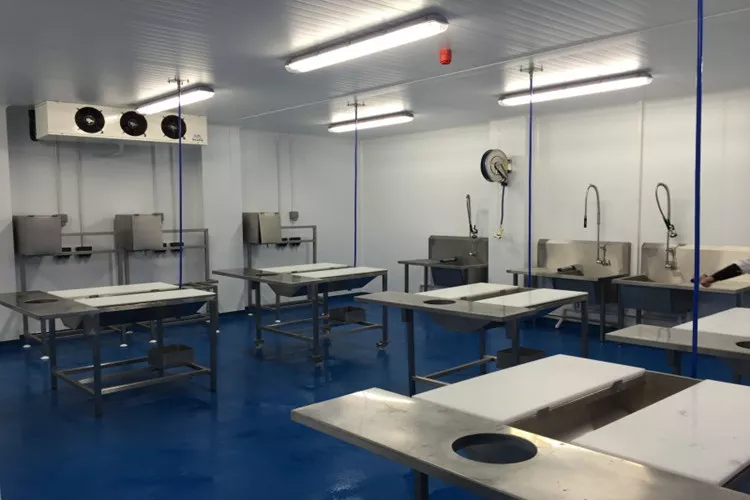
Food Packaging Areas
Smooth internal finishes support hygiene in insulated partition systems.

Clean Utility Rooms
Improved joint sealing enhances enclosure tightness in plant areas.

Laboratory Buildings
Insulated internal partitions suitable for temperature-managed workspaces.

Storage Rooms
Provides insulated internal partitioning with cleaner joint detailing.
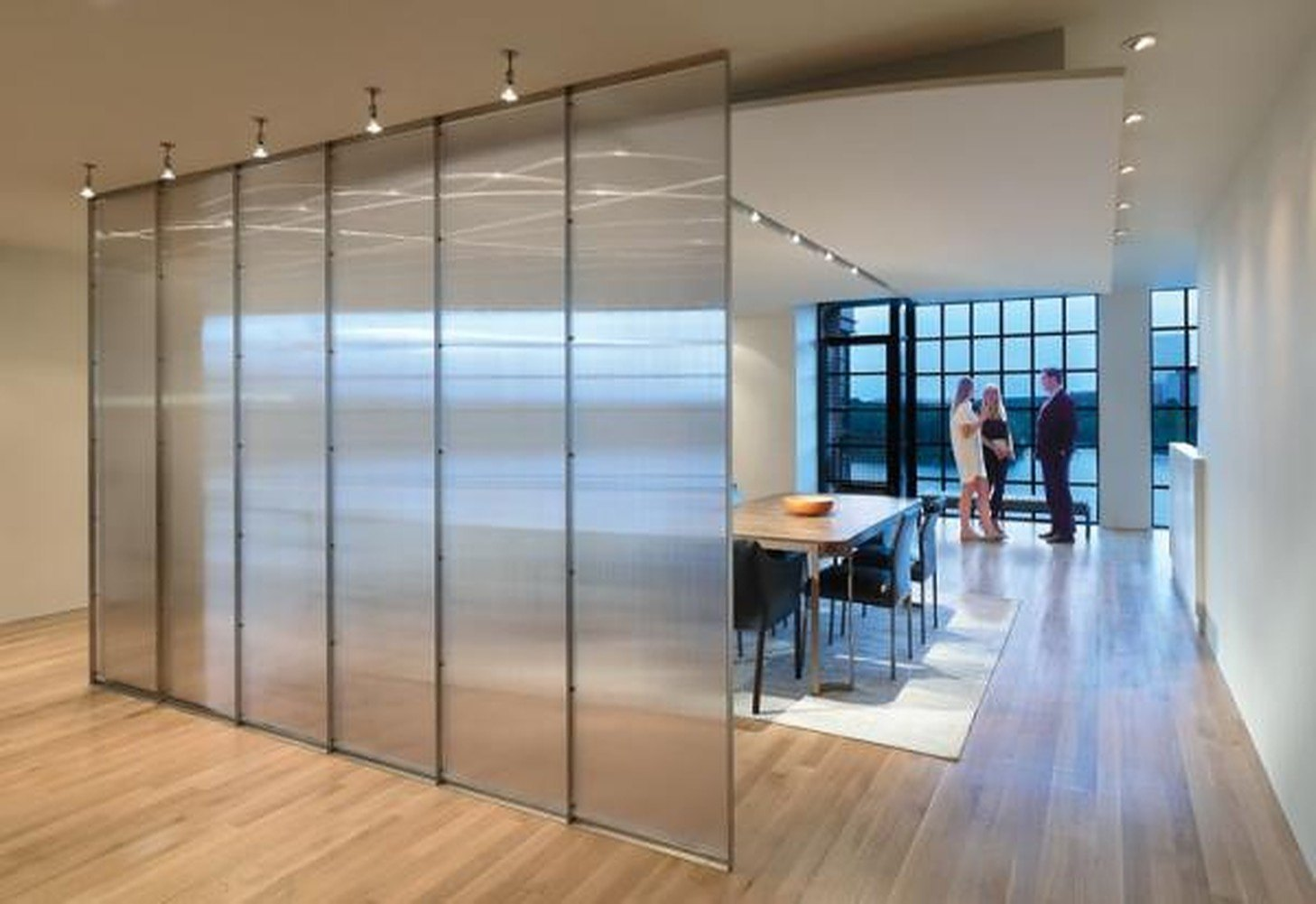
Office Interiors within Factories
Concealed joint finish improves aesthetics and maintenance within insulated office enclosures.

Production Rooms
Supports insulated wall systems in general manufacturing areas.

Data Centre Rooms
Maintains insulated internal partitions in temperature-controlled technical spaces.
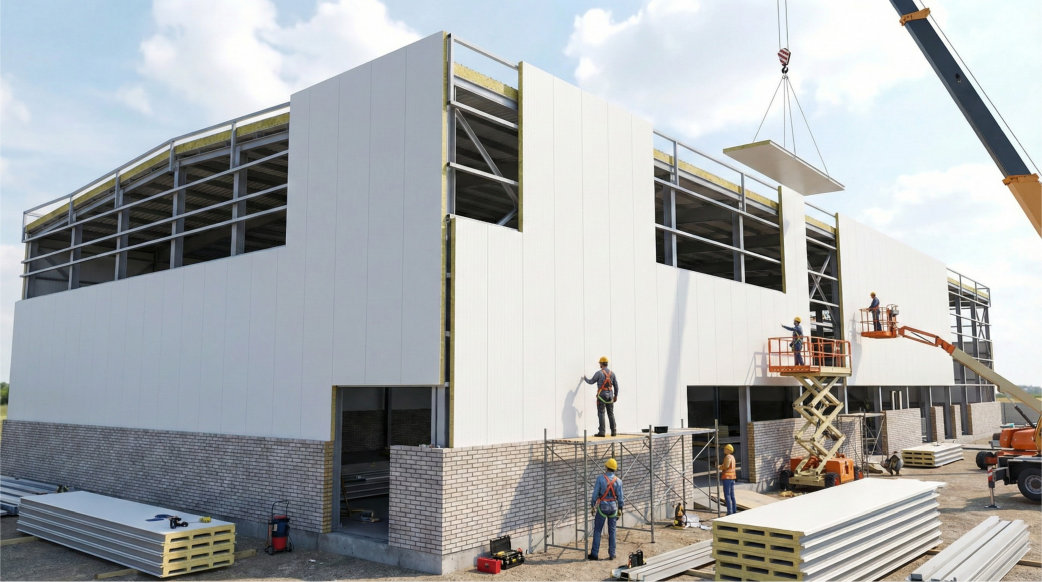
Commercial Production Areas
Used in enclosed working areas requiring improved internal finish.
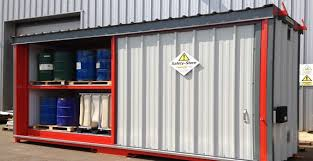
Equipment Rooms
Provides insulated enclosures for mechanical and electrical equipment spaces.
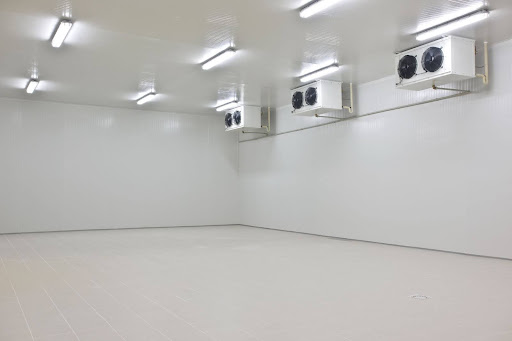
Utility Corridors
Flush joint systems improve internal wall continuity in service passages.
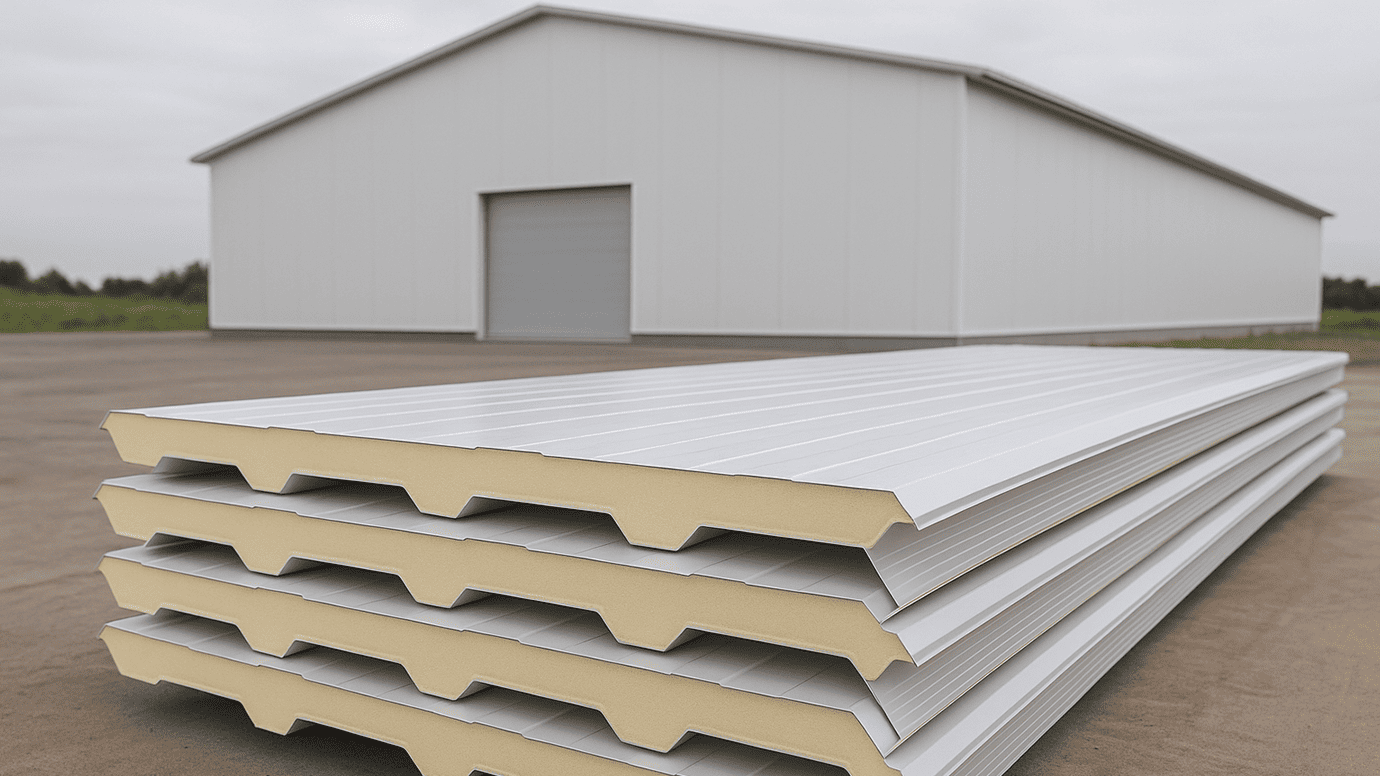
Industrial Partition Walls
Used to create insulated internal divisions within factory buildings.
Why Choose Mount?
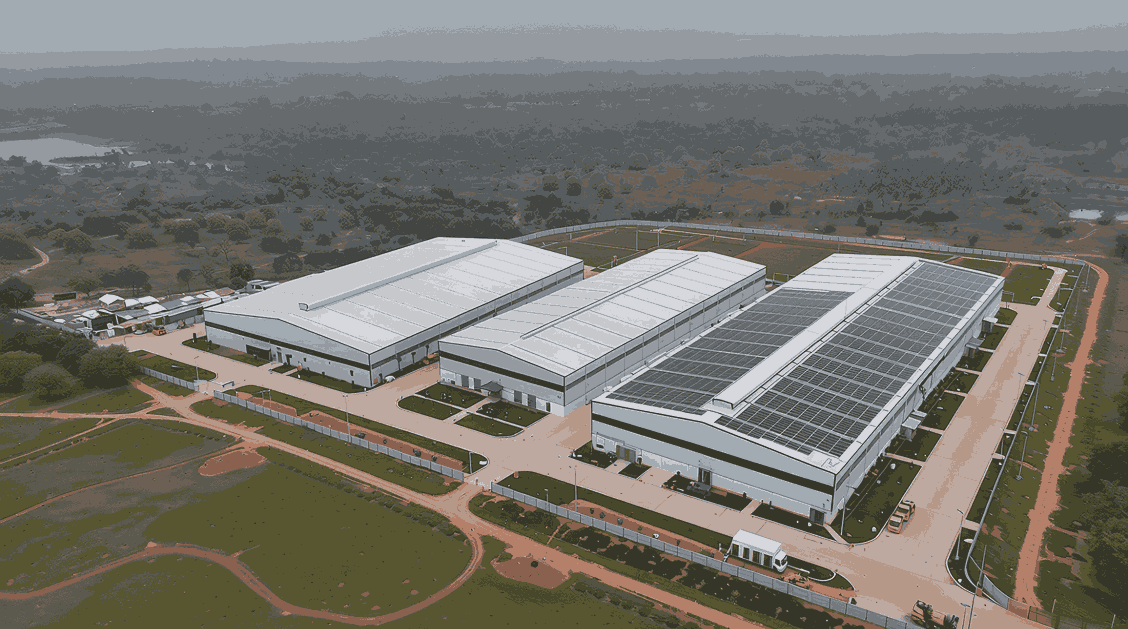
Mount Roofing & Structures manufactures Fire Retardant PIR hidden joint panels using automated continuous production systems. Precision is critical in concealed joint panels to ensure consistent interlocking geometry and uniform core bonding.
Key capabilities include:
- 30+ Years of Combined Industry Experience
Technical expertise across insulated panels and steel building systems.
- Automated PUF Panel Production Lines
Ensures uniform core bonding, dimensional accuracy, and repeatable quality.
- 8.5 Million m² Annual Production Capacity
Supports large-scale industrial and infrastructure roofing projects.
- 460+ Skilled Workforce
Structured manufacturing, quality monitoring, and execution oversight. - Exports to 89 Countries
Experience supporting cold storage, industrial, and infrastructure developments globally.
Frequently asked Question
It is an insulated sandwich panel with a concealed interlocking joint and a fire-retardant polyisocyanurate (PIR) insulation core.
PIR insulation offers improved fire behaviour and lower thermal conductivity compared to conventional polyurethane foam.
The concealed joint improves enclosure continuity by reducing air gaps and thermal bridges at panel interfaces.
Fire-Retardant PIR Hidden Tongue and Groove Panels are engineered to deliver significantly improved fire performance. The PIR core achieves a higher char yield under combustion, limiting flame spread and reducing heat release rates.
Yes. The PIR core delivers high thermal resistance within a slim panel profile ,making these panels highly effective for cold storage facilities, refrigeration rooms, and temperature-controlled environments. The hidden tongue and groove jointing system ensures a thermally continuous, airtight interface between panels, minimising thermal bridging and preventing condensation ingress at panel junctions.
Yes. Fire-Retardant PIR Hidden Tongue and Groove Panels are designed for both wall and ceiling applications. The concealed tongue and groove connection system provides a flush, seamless finish suitable for interior lining.
By minimizing air leakage and thermal loss, the panels support efficient heating and cooling operation.
PIR insulation has a closed-cell structure that limits moisture absorption under normal operating conditions.
No, precision joint geometry supports accurate alignment and consistent installation.
Fire performance requirements, insulation needs, operating temperature, and applicable building regulations.