 Apr 8, 2026
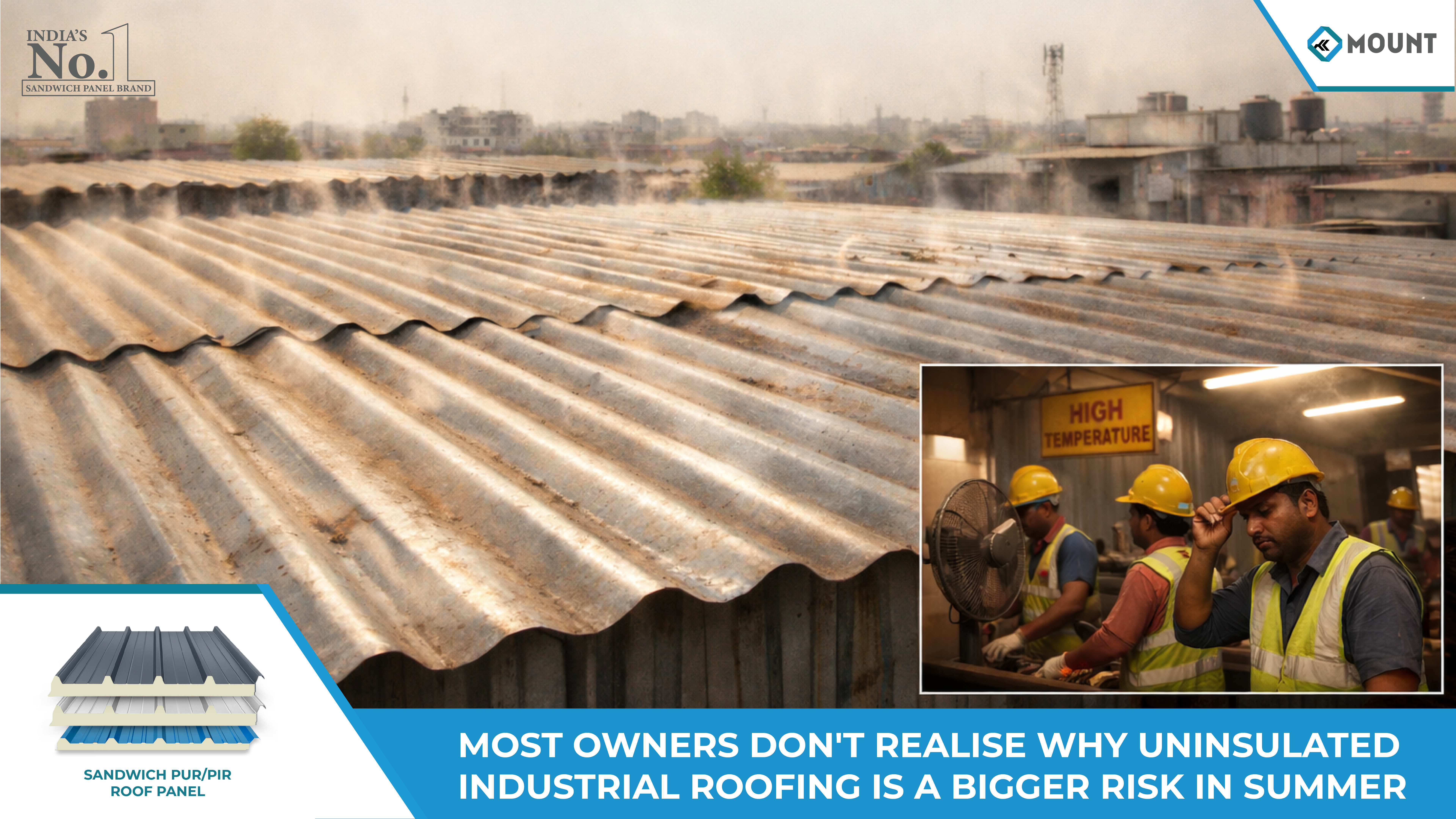
Most Owners Don’t Realise Why Uninsulated Industrial Roofing Is a Bigger Risk in Summer
In the industrial sector, the roof is often viewed as a simple protective shell designed to keep rain out. However, as summer temperatures across India consistently breach the 40°C mark, this overhead surface becomes a massive thermal radiator. For facility owners relying on uninsulated corrugated metal sheets, the roof is no longer a shield,it is a liability. The heat gain through a standard metal roof can account for up to 70% of the total thermal load of a building, leading to an environment that is both economically and operationally unsustainable.
At Mount, we see the building envelope as a strategic asset. A thermally compromised roof doesn’t just raise temperatures; it erodes profit margins through astronomical cooling costs and equipment degradation.
The Physics of Radiant Heat Transfer in Large-Span Structures
Metal is an exceptional conductor of heat. When solar radiation hits a standard industrial shed, the metal skin absorbs the energy and re-radiates it into the interior space through a process known as convection and long-wave radiation. In an uninsulated setup, the underside of the roof can reach temperatures 15-20°C higher than the ambient air.
This heat “soak” creates a stratified layer of hot air that descends toward the floor, forcing HVAC systems to work overtime. For a turnkey warehouse construction company, ignoring the thermal property of the roof during the design phase is a fundamental error. Without a thermal break, the energy required to maintain a workable temperature increases exponentially, often exceeding the original mechanical specifications of the cooling plant.
Impact on Operations: Beyond the Electricity Bill
The risks of poor insulation extend deep into the core of industrial operations. In facilities where precision is paramount, fluctuating internal temperatures can lead to catastrophic failures.
- Equipment and Calibration: High ambient heat affects the viscosity of lubricants and the calibration of sensitive CNC machinery or electronic controllers.
- Material Integrity: For those utilizing cold storage wall panels or cold chain insulation panels, a failure in the primary roof insulation puts immense pressure on the secondary refrigeration zones, increasing the risk of spoilage.
- Worker Productivity: Human heat stress is a documented cause of reduced cognitive function and increased workplace accidents. A facility that fails to control its climate is a facility with declining output.
To mitigate these risks, modern developers are shifting toward factory building panels that offer built-in thermal resistance, ensuring that the internal environment remains stable regardless of the external peak.
Engineering the Solution: The Role of PUF and Solar Integration
The most effective way to combat summer heat gain is the transition from single-skin sheets to composite sandwich systems. As a Top PUF Panels Manufacturer And Suppliers In India, Mount engineers roofing solutions that utilize a high-density Polyurethane Foam core. This core acts as a definitive thermal break, effectively “decoupling” the internal climate from the external heat.
Synergising with Renewable Energy
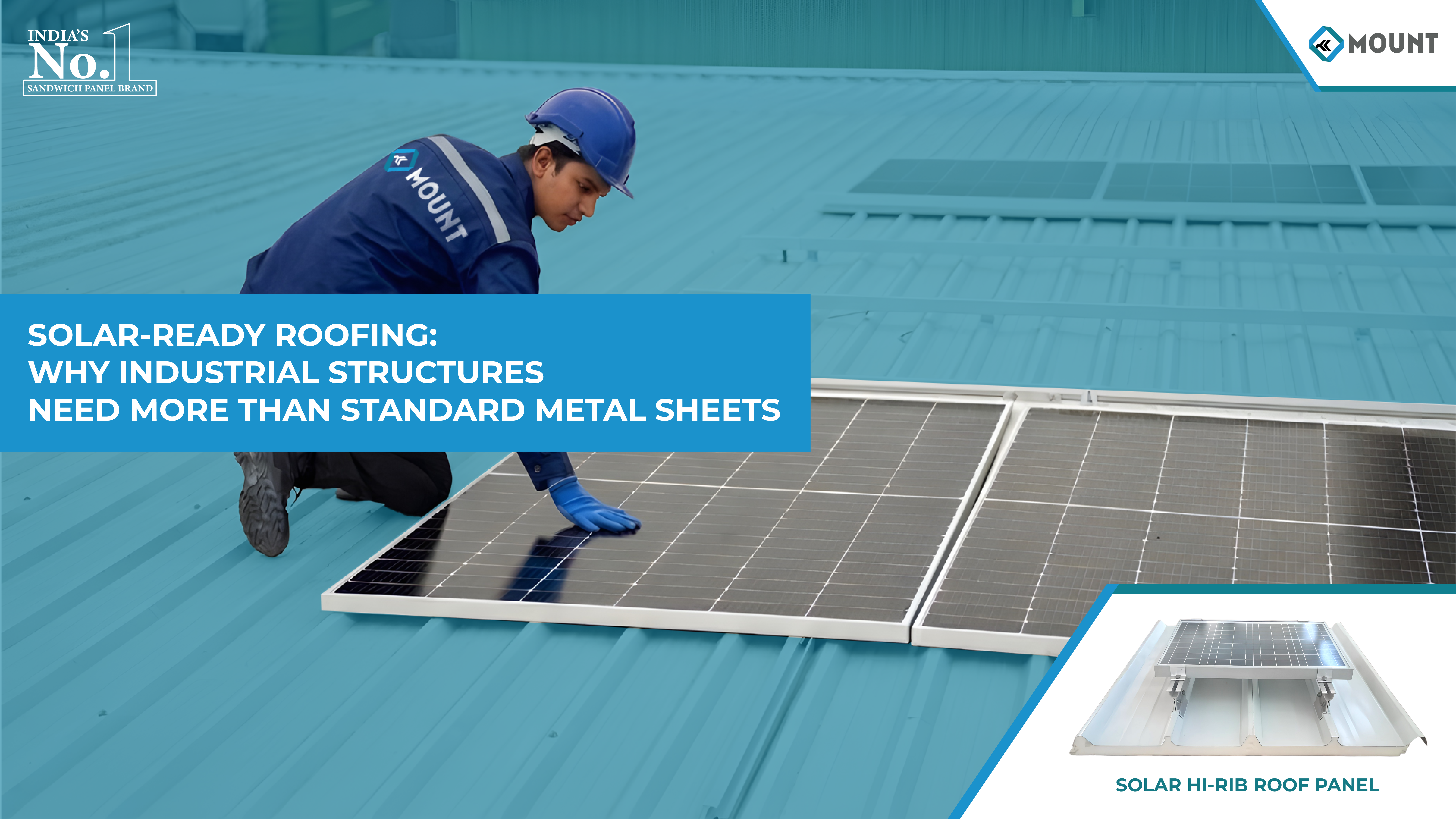
An increasingly popular strategy involves the use of the Solar Roof Sandwich Panel. This system provides a double advantage: the solar array shades the roof, reducing the initial heat absorption, while the insulated panel beneath prevents the remaining heat from penetrating the building. This dual-layer protection is a hallmark of a forward-thinking industrial shed construction company.
Long-Term Value and Structural Longevity
Choosing insulated systems over basic metal sheets is a decision that pays dividends throughout the lifecycle of the building. Beyond energy savings, insulated panels prevent “internal sweating” or condensation, which is a major cause of corrosion in uninsulated sheds.
When you engage with a professional warehouse wall panels provider like Mount, you are investing in a system that protects the structural steel from thermal expansion and contraction cycles. This stability ensures that seals remain intact and the building remains leak-proof for decades.
Why Mount is the Strategic Partner for Industrial Excellence
Mount stands at the forefront of building envelope technology because we prioritise technical precision over generic supply. We understand that a warehouse in Rajasthan requires a different thermal profile than a manufacturing unit in Tamil Nadu.
Our role as a leading solutions provider is to ensure that your infrastructure is an enabler of growth, not a drain on resources. By integrating high-performance insulation with robust structural engineering, we help industries achieve thermal equilibrium, lower operational costs, and superior durability.
FAQ
Q: How does the R-value of a PUF panel compare to a traditional roof with glass wool underlay?
A: While glass wool provides insulation, it is prone to sagging and moisture absorption over time, which destroys its thermal properties. A PUF panel from a Top PUF Panels Manufacturer And Suppliers In India offers a consistent, closed-cell R-value that does not degrade, providing superior long-term thermal resistance without the maintenance headaches of loose-fill insulation.
Q: Can an uninsulated industrial shed be retrofitted with insulated panels?
A: Yes. A professional industrial shed construction company can perform a “roof-over” or a full replacement. Retrofitting with factory building panels is often the most cost-effective way to fix a building that was originally built with poor thermal foresight.
Q: Does the colour of the roofing panel affect the heat gain even if it is insulated?
A: Yes. While the insulation blocks most of the heat, a lighter-coloured “cool roof” coating reflects more solar radiation initially. Combining a high-reflectivity surface with a Solar Roof Sandwich Panel core results in the lowest possible heat ingress for industrial facilities.
Q: Are these panels suitable for high-humidity environments like pharmaceutical or food processing?
A: Absolutely. Cold chain insulation panels and cold storage wall panels are specifically designed to be non-porous and vapour-tight. This prevents mould growth and maintains the strict hygiene standards required in these sectors.
Q: How does the weight of insulated panels affect the existing steel structure?
A: PUF sandwich panels are remarkably lightweight relative to their strength. In many cases, the structural load is comparable to a double-skin metal roof with heavy insulation blankets, making them a viable option for most modern steel frames.
Similar Events