 Feb 19, 2026
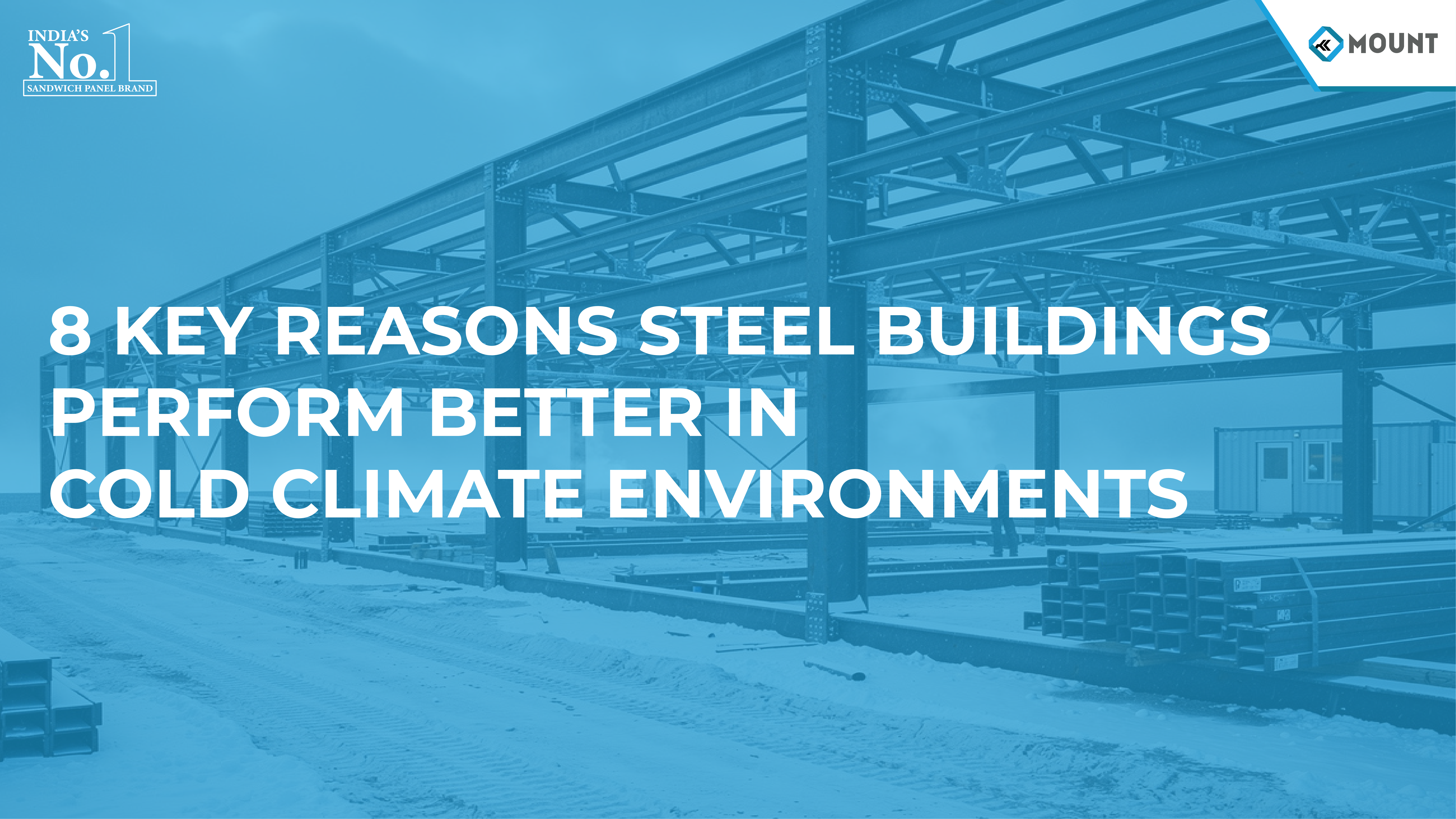
8 Key Reasons Steel Buildings Perform Better in Cold Climate Environments
In the high-stakes world of industrial infrastructure, plunging temperatures introduce structural variables that standard construction often fails to address. For stakeholders managing logistics hubs, manufacturing plants, or cold storage assets, the transition to sub-zero conditions isn’t just an operational inconvenience, it’s a rigorous test of material science. At Mount Roofing & Structures, we’ve documented how traditional masonry and timber frequently falter under the relentless stress of freeze-thaw cycles and extreme snow accumulation. Precision-engineered steel systems, however, provide a level of structural predictability and thermal continuity that conventional methods cannot match.
Here are the eight technical drivers behind steel’s dominance in cold-climate performance.
1. Predictable Structural Performance at Sub-Zero Thresholds
Whereas natural materials such as wood increase in size with the amount of moisture it contains, or concrete is prone to micro-fracturing due to rapid temperature changes, structural steel has a predictable modulus of elasticity. To effectively engineer for the frost belt area, it is imperative to have a comprehensive knowledge of transition temperatures from ductile to brittle materials. By identifying specific steel types and connection specifications, Mount Roofing & Structures can guarantee that your structure maintains its integrity even when the temperature is at its lowest.
2. Elimination of Thermal Bridging via Advanced Envelopes
A primary failure of standard construction is the “thermal gap.” We solve this through the strategic integration of insulated panels for steel buildings. Moving away from traditional fiberglass batts,which are notorious for sagging and losing R-value, these high-density cores provide an unbroken thermal barrier. This technical approach effectively eliminates the thermal bridges typically found in standard C-channel or Z-purlin configurations, stabilizing internal temperatures and slashing energy overhead.
3. Engineering for Extreme Snow and Ice Accretion
Vertical pressure management is the cornerstone of cold-climate design. Steel’s exceptional strength-to-weight ratio facilitates large-span roof designs capable of sustaining 60+ PSF snow loads without excessive mid-span deflection. Utilizing steel building roofing panels with standing seam profiles allows the structure to absorb the dynamic kinetic energy of sliding ice and heavy snow packs without compromising fastener pull-out strength.
4. Bypassing “Wet Trade” Delays in Short Construction Windows
Northern construction seasons are punishingly brief. Traditional “wet” trades, masonry and concrete, are often paralyzed by frozen subgrades or the logistical nightmare of curing blankets and site heaters. As a specialized insulation panel supplier, we champion a “dry” assembly methodology. Because components are precision-fabricated off-site and bolted in the field, we can achieve full envelope enclosure before the heavy snow sets in, protecting your project timeline from seasonal stall-outs.
5. Interstitial Condensation and Vapor Control
In colder climates, condensation acts as a silent corrosive agent. When warm internal air hits a cold outer shell, moisture triggers mold and oxidation. Our building systems utilize sandwich panels for walls featuring integrated vapor barriers positioned on the “warm side.” This specific detailing prevents moisture from reaching the primary frame, preserving the building’s structural core and maintaining a controlled interior environment.
6. Hydrophobic Coatings and Snow-Shedding Geometry
Efficient design focuses on load shedding as much as load bearing. By deploying peb roofing panels engineered with high-performance hydrophobic coatings and optimized pitch angles, we facilitate natural snow shedding. This technical foresight prevents the formation of ice dams at the eaves, a frequent culprit for structural damage in traditional industrial sheds, ensuring melt-water is effectively channeled away from the foundation.
7. Foundation Resilience Against Frost Heave
Ground shifts during the spring thaw can devastate rigid structures. The inherent flexibility of a steel skeleton, coupled with the reduced mass of pre-engineered building panels, exerts significantly less pressure on the substructure. This lower dead weight allows for more adaptive foundation engineering that accommodates minor soil movements far better than the heavy, brittle mass of a concrete or brick-and-mortar facility.
8. Hardened Durability and Reduced Lifecycle Maintenance
Performing maintenance in sub-zero winds is both a safety risk and a massive expense. Steel components treated with PVDF coatings are essentially immune to the spalling and cracking that plague brick or stucco. By specifying sandwich panels for roofing with concealed fastening systems, we drastically reduce the number of potential leak points, ensuring a 40-year operational lifecycle with minimal facility management intervention.
The Mount Roofing & Structures Advantage
Selecting a partner for arctic-grade construction requires a deep dive into building science, not just a quote for materials. Mount Roofing & Structures functions as a structural authority, ensuring every component, from secondary members to roofing panels for steel structures is part of a high-performance ecosystem. Our engineering team prioritizes the technical synergy between thermal seals and connection strength. When the environment is at its most aggressive, our systems provide the operational security and structural longevity your business requires to remain profitable through the winter months.
FAQ
Q: How is the “Thermal Break” maintained in extreme cold?
A: We implement thermal spacer blocks in conjunction with high-R-value insulated panels for steel buildings. This creates a physical separation between the exterior skin and the interior frame, effectively “breaking” the path of cold conduction.
Q: Are peb roofing panels rated for unbalanced snow drifting?
A: Absolutely. Our engineering protocols follow ASCE 7-22 standards. We calculate the specific areas where roof geometry will cause snow to drift and proactively reinforce the purlin gauge and spacing in those zones to prevent localized failure.
Q: Why are sandwich panels for walls superior to field-assembled insulation?
A: Sandwich panels for walls are factory-cured and tested for airtightness. Field-assembled systems are susceptible to voids, moisture infiltration during installation, and compression, all of which degrade the U-value. Our panels guarantee thermal performance across every square inch.
Q: Does the steel frame require specialized alloys for temperatures below -30°C?
A: While standard steel is robust, for extreme sub-arctic applications, we specify grades with high Charpy V-Notch (CVN) toughness. This ensures the steel retains its ability to absorb energy and resist brittle fracture under high-impact loads in extreme cold.
Q: What is the direct impact of PEB construction on winter ROI?
A: The dry assembly of a PEB system removes the need for expensive site heating and temporary enclosures. By accelerating the “dry-in” date, we allow interior fit-outs to begin weeks earlier, moving your project from a cost center to an operational asset much faster.
Similar Events