 Apr 22, 2026
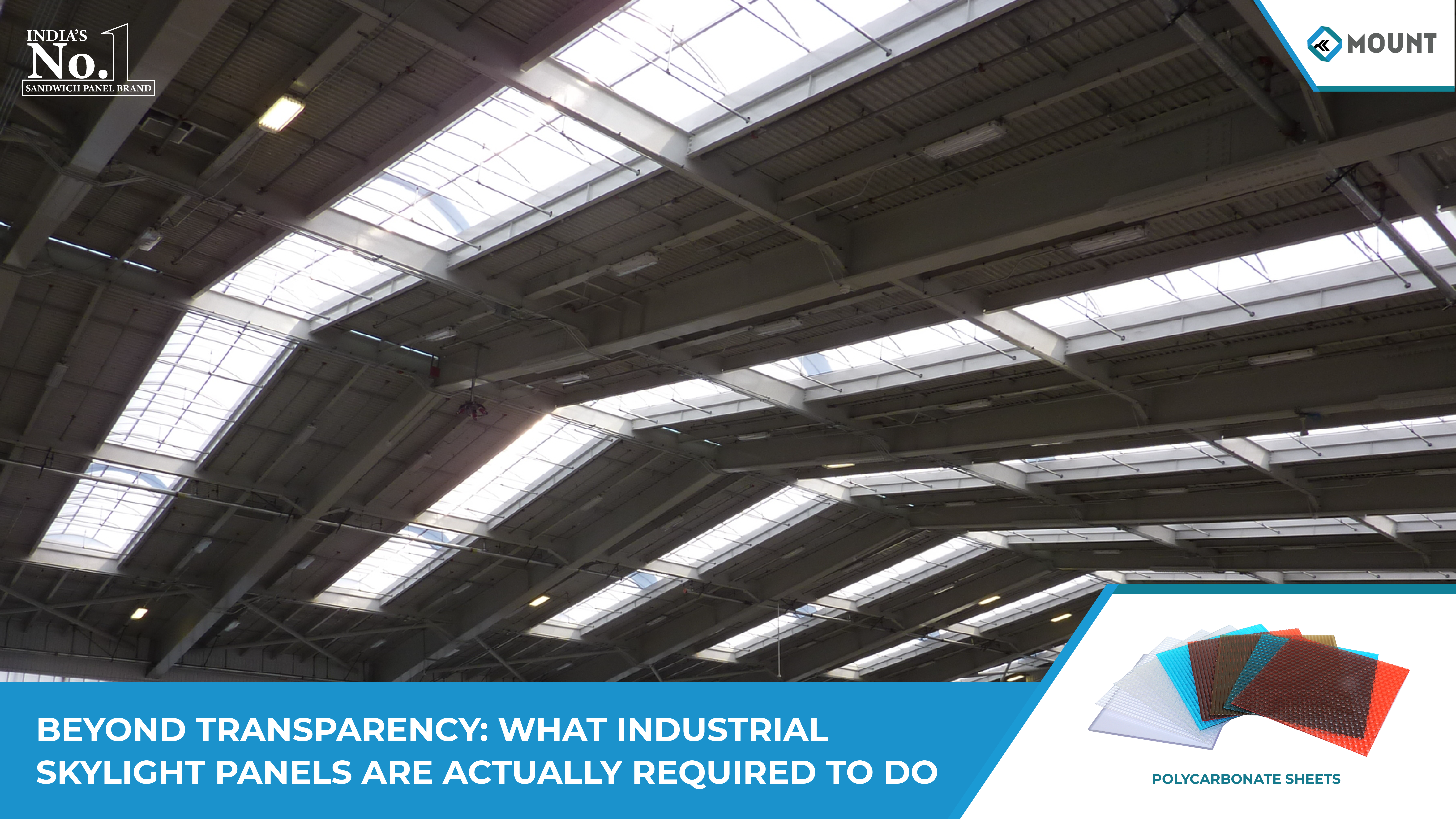
Beyond Transparency: What Industrial Skylight Panels Are Actually Required to Perform
When a project manager looks at a roof plan, they often see skylights as nothing more than a way to cut down the electricity bill. But from an engineering standpoint, a skylight is a deliberate “weak link” in the building’s armor. If that link isn’t as tough as the steel around it, the facility is going to face expensive problems. Choosing the right polycarbonate sheets for industrial use isn’t about how clear the plastic is; it’s about making sure the roof doesn’t fail when the weather turns or the temperature spikes.
The Problem with Thermal Expansion
The biggest headache in industrial roofing is that steel and plastic don’t get along when it gets hot. Steel expands at one rate, but polycarbonate expands much faster. If you simply bolt a sheet down tight in the cool morning, it will try to “grow” by noon. This is where most leaks start: the sheet buckles, or the fastener holes tear because the material has nowhere to go.
This is why polycarbonate strength is about more than just surviving a hit; it’s about mechanical memory. The panels need to be able to shift and flex without losing their shape. For polycarbonate sheets for commercial roofing, we focus on the specialized fixing systems, things like oversized washers and EPDM gaskets that allow the building to breathe. Without this technical foresight, even the most expensive sheet will eventually fail at the joints.
Managing Heat, Not Just Light
There is a common mistake in large-scale builds: assuming more light is always better. In reality, a basic clear sheet acts like a magnifying glass, turning a warehouse into an oven. This forces the HVAC systems to work twice as hard, which kills any savings you made on lighting. Modern polycarbonate sheets for large projects use co-extruded layers that act like a filter. They let the “cool” visible light in but bounce the “hot” infrared rays back into the atmosphere.
This technical balance is a requirement for high-end infrastructure. You’ll see this most clearly in Polycarbonate sheets for airport roofing or large shopping centers. These Polycarbonate sheets for mall roofing have to stay perfectly clear for years while blocking massive amounts of solar heat. If the material yellows or clouds over, it’s a failure of the specification, because the facility loses its energy efficiency and its aesthetic value at the same time.
Why the Lap Joint is the Real Test
A roof is only as dry as its weakest lap joint. Most leaks don’t happen in the middle of a sheet; they happen where the polycarbonate meets the metal deck or the insulated wall panel. As a specialized industrial skylight polycarbonate sheets supplier, Mount focuses on the profile match. If the ribs of the skylight don’t nest perfectly into the metal roof, you are relying on a bead of caulk to keep the rain out. In a heavy storm, that’s a losing battle.
The Mount Perspective: Engineering the Whole Roof
Mount doesn’t just “sell sheets.” We look at the skylight as a functional part of the structural envelope. We make sure the panels are rated for the specific wind loads and safety standards of your site. We handle the technical coordination from the factory to the site, ensuring the transition details are as solid as the panels themselves.
Choosing Mount means you are working with an industry leader that understands the chemistry and the physics of the building envelope. We provide the systems that keep your facility bright and energy-efficient without ever compromising on structural safety or weatherproofing.
FAQ
- Why do we talk about the “Yellowness Index” in B2B specs?
Over time, UV rays break down plastic, making it yellow and brittle. A high yellowness index means you are losing light transmission, which forces you to turn your warehouse lights back on. Our high-grade sheets are treated to prevent this, ensuring you get the light you paid for for over a decade.
- Is there a “fall-through” safety standard for these sheets?
No one should ever walk on a skylight, but accidents happen. Our panels are engineered to meet non-fragility ratings. This means the resin is strong enough to resist an accidental impact, providing a vital safety layer for your maintenance crews. - Why does my skylight leak even if I don’t see any cracks?
It’s likely “thermal movement.” If the panel was installed without enough room to expand, it will pull away from the sealants during the heat of the day. We provide the specific installation details to ensure the panels can move without breaking the seal. - Can these panels handle the fumes in a chemical or processing plant? Polycarbonate is tough, but it needs the right coating for harsh environments. We offer specialized sheets designed to resist industrial chemicals and salty air, making them ideal for coastal or heavy-manufacturing zones.
- What is the actual payback period for a daylighting system?
In most large-scale facilities, a smart skylight system can cut daytime lighting costs by over 60%. When you factor in the heat-blocking tech that lowers your cooling bill, the system usually pays for itself in a few years through pure operational savings.
Similar Events
 23 October, 2026