 Apr 2, 2026
Solar-Ready Roofing: Why Industrial Structures Need More Than Standard Metal Sheets
This is especially true within India, where there is a shift towards energy autonomy within the industrial landscape. As manufacturing plants and logistics centres strive towards carbon footprint reduction and increasing operational costs, rooftop solar solutions have clearly shifted from a “value-add” to a “must-have” requirement. Nevertheless, there is a glaring disconnect between how many developers currently design their roofs, assuming that they can simply “bolt on” their photovoltaic arrays later.
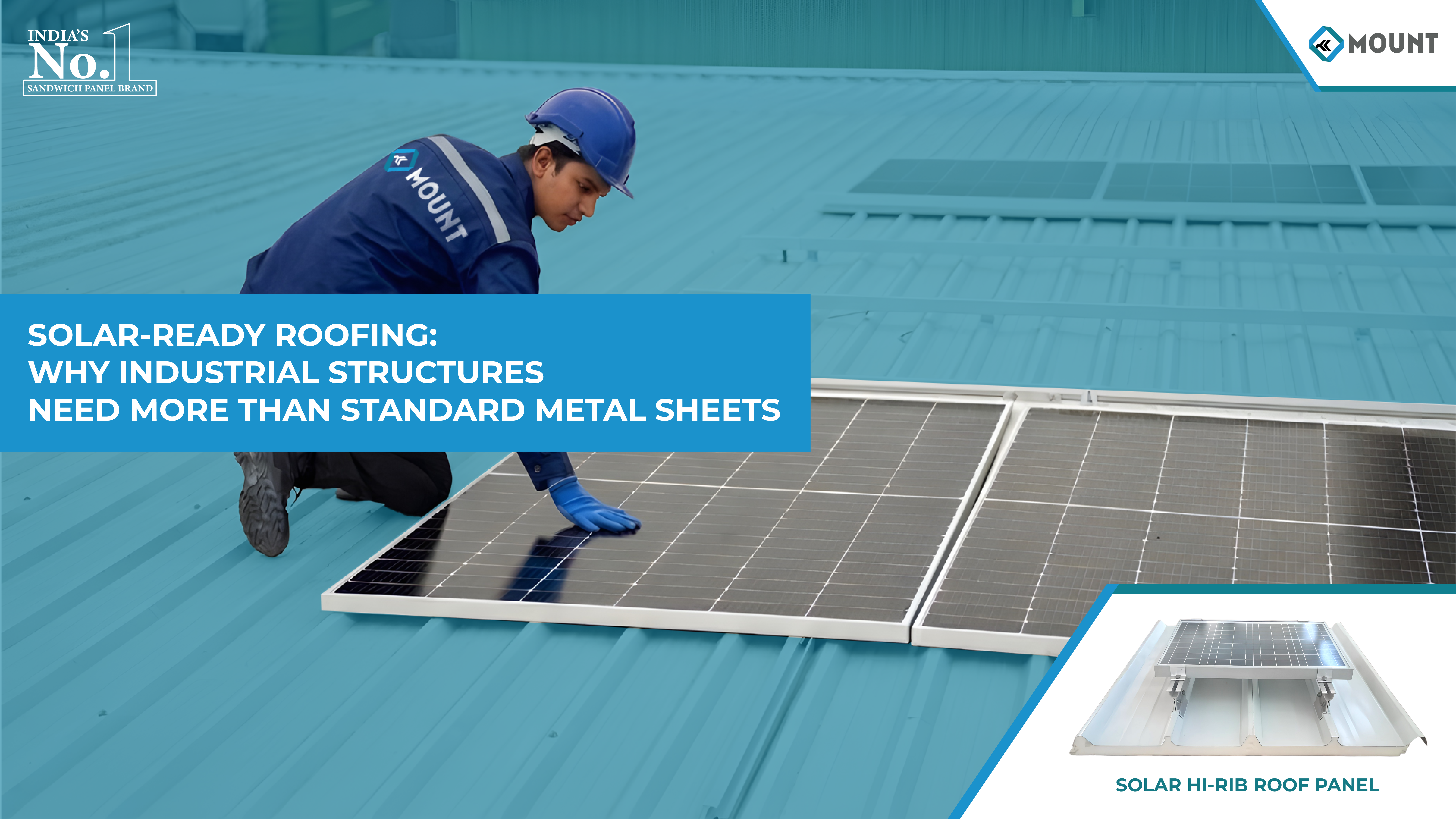
At Mount, we understand that, clearly, a roof is no longer simply a weather protection component, but rather a structural platform. Metal sheets, by their design, do not have the engineering sophistication required to deal with the future physical and thermal stresses of a solar plant. To design for the future, the industry needs to move towards integrated solutions such as the PV Solar Roof Sandwich Panel.
The Structural Deficit of Conventional Metal Roofing
Traditional corrugated or trapezoidal sheets were engineered for one primary purpose: shedding water. They are lightweight by design, which minimizes initial cost but creates significant hurdles for solar integration.
- Point Loading and Deflection: Standard sheets are thin. When solar mounting structures are fastened, the concentrated “point loads” can cause microscopic sagging. Over time, this compromises the structural integrity of the entire building envelope.
- Thermal Expansion Conflicts: Metal expands and contracts with temperature shifts. Solar racks, often made of different alloys, expand at different rates. This differential movement on a standard sheet can loosen fasteners, leading to catastrophic leaks.
- Wind Uplift Dynamics: Adding solar panels alters the aerodynamics of a roof. Standard sheets may not have the pull-out strength required to withstand the increased suction forces during high-velocity wind events.
By opting for insulated panels for steel buildings, engineers provide a rigid, composite structure that treats the roof and the solar array as a single, cohesive unit.
Engineering Resilience: The Case for PUF and H-Rib Profiles
To ensure a 25-year lifespan for both the roof and the solar assets, the building envelope must be “solar-ready” from day one. This is where Solar Roof PUF Panel technology becomes indispensable.
As a Top PUF Panels Manufacturer And Suppliers In India, Mount focuses on high-density cores that offer superior compressive strength. Unlike hollow metal sheets, these panels do not deform under the weight of maintenance foot traffic or heavy PV modules.
Optimized Geometry with H-Rib Designs
The introduction of h-rib sandwich panels has revolutionized solar mounting. The elevated rib profile serves two functions:
- Direct Attachment: It allows for the Fix Solar Roof Panel methodology where the solar clamps attach directly to the standing rib, eliminating the need to pierce the internal liner and ensuring 100% waterproofing.
- Ventilation: The rib height creates a natural air gap between the panel and the solar cells, reducing heat buildup and increasing the efficiency of the PV system.
Thermal Performance and Energy Synergies
A standard metal roof acts as a radiator, transferring intense solar heat into the warehouse or factory floor. This forces HVAC systems to work harder, effectively canceling out some of the savings generated by the solar panels.
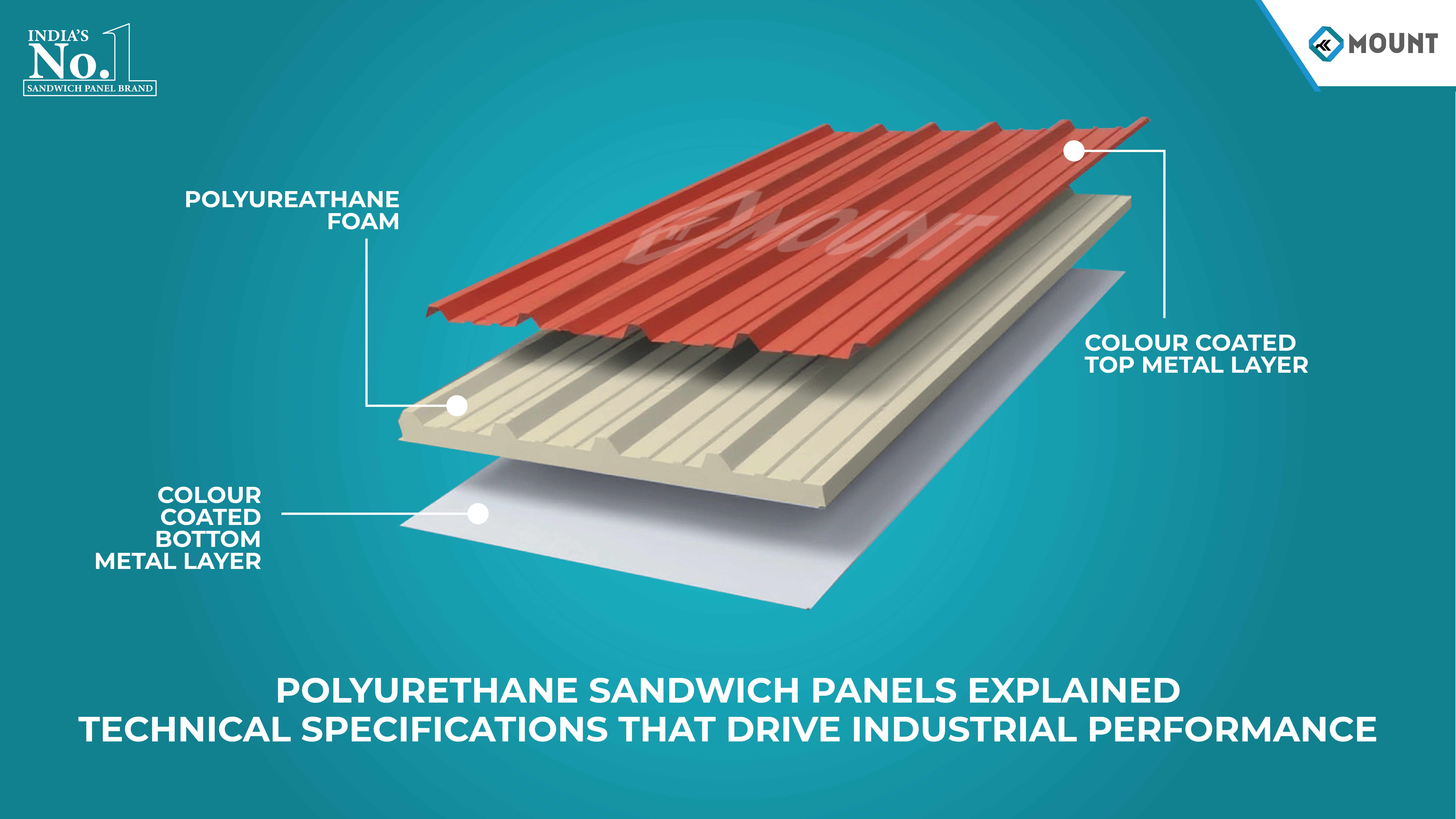
Using a Solar Roof Sandwich Panel creates a thermal break. The Polyurethane Foam (PUF) core provides exceptional “R-values,” keeping the interior cool. When you combine the shading effect of the PV modules with the insulation of Mount’s sandwich panels, the reduction in internal ambient temperature is substantial. This synergy is the hallmark of a modern, energy-efficient industrial facility.
Long-Term Maintenance and Waterproofing Integrity
The most common failure point in industrial solar installations is water ingress. Every puncture in a standard metal sheet is a potential leak. By utilizing a PV Solar Roof Sandwich Panel with specialized overlapping joints and non-penetrative mounting clips, the risk of moisture penetration is virtually eliminated. This protects not only the machinery and inventory inside but also the electrical components of the solar infrastructure itself.
Why Mount is the Strategic Choice for Solar-Ready Infrastructure
Choosing a partner for your building envelope requires more than just sourcing materials; it requires technical foresight. Mount distinguishes itself as a leading solutions provider by integrating structural engineering with advanced material science.
We don’t just supply components; we engineer systems that account for dead loads, live loads, and the specific wind zones of the Indian subcontinent. Our insulated panels for steel buildings are manufactured to exacting tolerances, ensuring that your transition to renewable energy is supported by a foundation that is as durable as the technology it holds.
FAQ
Q: How does the load-bearing capacity of a PUF panel differ from standard PEB sheets when considering solar arrays?
A: Standard PEB sheets rely on the underlying purlins for total support and can suffer from local buckling. A Solar Roof PUF Panel acts as a composite slab; the bond between the metal skins and the foam core provides inherent stiffness, allowing it to distribute the weight of the PV system more uniformly across the structure.
Q: Can h-rib sandwich panels be used for retrofitting solar on existing buildings?
A: While h-rib sandwich panels are ideal for new builds, they are the preferred choice for roof replacement during solar retrofitting. They allow for a “clamp-on” system that avoids the thousands of screw penetrations required by older, traditional metal roofing profiles.
Q: Does the insulation core of the Solar Roof Sandwich Panel affect the fire rating of the industrial building?
A: Yes. As a Top PUF Panels Manufacturer And Suppliers In India, Mount utilizes PIR (Polyisocyanurate) or fire-retardant PUF cores. These materials are engineered to be self-extinguishing, providing a critical safety layer for buildings housing expensive solar electronics and high-value inventory.
Q: What is the impact of a “Fix Solar Roof Panel” system on the warranty of the building envelope?
A: Traditional solar mounting often voids roofing warranties because it involves piercing the weather barrier. The Fix Solar Roof Panel approach used by Mount utilizes non-penetrative standing seam or rib-grip technology, which preserves the structural warranty while ensuring a leak-proof finish.
Q: Why is the “thermal bridge” a concern for B2B industrial solar projects?
A: A thermal bridge occurs when heat bypasses insulation through metal fasteners or gaps. In solar-heavy roofs, standard sheets can cause condensation on the underside due to temperature differentials. Using insulated panels for steel buildings eliminates these bridges, protecting the interior from “sweating” and corrosion.
Similar Events