 Jul 6, 2026
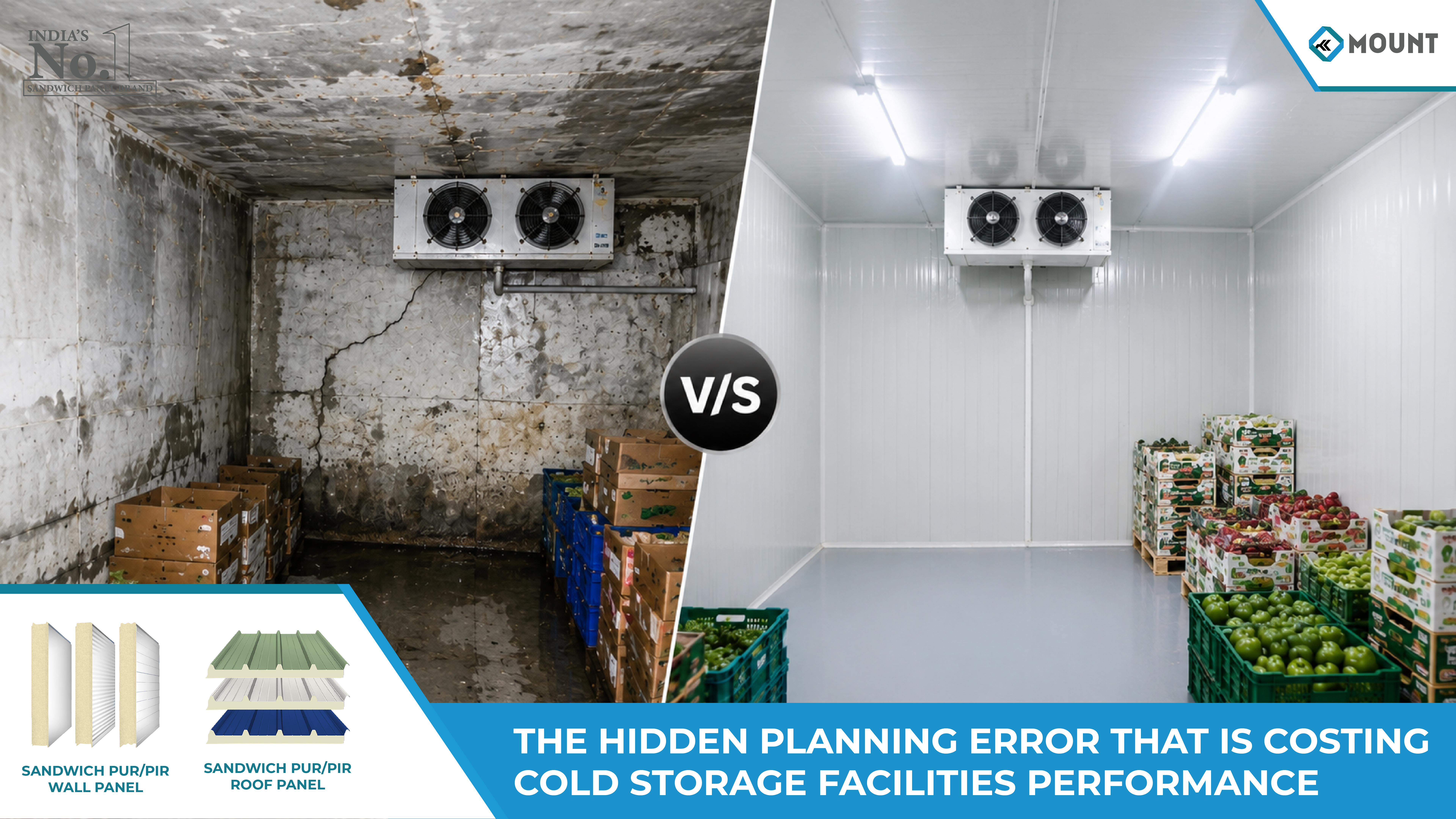
The Hidden Planning Error Costing Cold Storage Facilities Performance
Cold storage projects rarely fail because of refrigeration equipment.
In fact, by the time compressors, condensers, and evaporators are being discussed, one of the most important decisions has often already been made. The building envelope.
Nonetheless, it is also one of the most ignored parts of constructing cold storage buildings. While much time is spent selecting equipment for cooling purposes, the containment part necessary for keeping that cool air inside is considered nothing more than an equipment purchase.
That approach usually works only until the facility becomes operational. Higher electricity bills, longer compressor cycles, uneven temperatures and condensation issues are often symptoms of a problem that began much earlier during the planning stage. Choosing the right cold room panels is therefore one of the earliest decisions that influences how efficiently a cold storage facility will perform over the next twenty or thirty years.
Refrigeration Doesn’t Stop Heat. It Removes It.
A common misconception in cold storage construction is that refrigeration equipment creates efficiency. It doesn’t, its primary job is to remove the heat that enters the building.
The more heat entering through the roof, walls, joints, doors and service penetrations, the harder the refrigeration system must work to maintain the required storage temperature. That continuous heat gain increases energy consumption, shortens equipment life and raises operating costs throughout the life of the project.
This is why experienced consultants involve Mount cold room panel manufacturers during the design phase rather than after structural drawings have been finalized. Panel selection affects the refrigeration load itself, making it an engineering decision rather than simply a material purchase.
One Panel Specification Cannot Work for Every Facility
A pharmaceutical warehouse operating between 2°C and 8°C has very different insulation requirements from a frozen food facility operating below -20°C.
Likewise, a fruit ripening chamber behaves differently from a dairy processing cold room.
These factors include the ambient temperature, humidity, frequency of door openings and sensitivity of the products. Though using the same specifications of the panels in different facilities will make the procurement process easy, this rarely results in optimum performance.
This is where Mount approaches projects differently. Rather than recommending a standard solution, Mount evaluates storage temperatures, climatic conditions and operational requirements before recommending the appropriate cold room puf panel configuration. The panels in Mount have been manufactured using high-density PUF insulation, as well as precise tongue-and-groove joints, to minimise the transfer of heat and create an air-tight envelope for achieving consistent internal temperature levels.
Panel Thickness Is an Engineering Decision
One question appears on almost every cold storage project.
“What panel thickness should we use?” The answer depends on much more than budget.
Thicker insulation generally reduces heat transfer, but selecting the correct panel also depends on storage temperatures, building usage, climatic conditions and refrigeration design.
Choosing a thinner panel to reduce initial costs can increase refrigeration demand for the next twenty years. Overspecifying insulation where it isn’t required may unnecessarily increase project costs.
Achieving a balance depends on technical assessment, not on assumptions. This is the reason that cold room puf panel who have experience in their line of business collaborate with consultants and EPC contractors in the initial phase of designing to ensure that the performance of insulation matches the goals of the operation.
The Smallest Gaps Often Create the Largest Energy Losses
When people think about insulation, they usually picture the insulated core inside the panel.
In reality, some of the biggest thermal losses occurs at the joints. Even the best insulated panel cannot perform efficiently if warm air is allowed to enter through poorly designed connections or improperly sealed interfaces. Air leakage increases refrigeration loads, creates localised condensation and introduces temperature variations that become increasingly difficult to control.
Mount addresses this challenge through precision-manufactured interlocking profiles that improve joint integrity and minimise unwanted air infiltration. Combined with proper cold room panel installation, these engineered joints help create a continuous thermal barrier across the enclosure, allowing the insulation system to perform as intended rather than being compromised by gaps between panels.
Thermal Bridges Can Quietly Increase Operating Costs
Not every source of heat gain is immediately visible.
Even when insulated panels are specified correctly, heat can still enter the building through structural connections, service penetrations, poorly detailed junctions and other elements that bypass the insulation layer. These thermal bridges create localised hot spots, forcing refrigeration equipment to compensate continuously.
The challenge is that thermal bridges are difficult to correct once construction is complete. They are far easier and considerably less expensive to address during the design stage.
Mount’s panel systems are engineered to work as part of a continuous insulated envelope. Their precision-manufactured profiles and consistent insulation density help reduce unnecessary interruptions within the thermal barrier, allowing the enclosure to perform more efficiently over the long term.
Moisture Is Just as Important as Temperature
Temperature often dominates discussions around cold storage performance.
Moisture also deserves equal attention. When warm, humid air enters a temperature-controlled environment, condensation becomes almost inevitable. Over time, this can affect insulation performance, damage stored products, encourage microbial growth in certain applications and increase maintenance requirements.
An effective enclosure, therefore, needs to do more than slow heat transfer.It must also minimise air infiltration. Mount panels combine high-density PUF insulation with tightly engineered interlocking joints to help create an airtight enclosure. By reducing uncontrolled air movement, the system helps maintain more stable internal conditions while lowering the risk of condensation that can compromise facility performance.
Different Applications Need Different Cold Room Solutions
No two cold storage facilities operate under identical conditions.A distribution hub storing frozen products has different priorities from a pharmaceutical warehouse. Likewise, facilities using cold room panels for food processing units must consider hygiene, wash-down procedures and temperature consistency alongside thermal performance.
Laboratory environments present another set of challenges. Facilities requiring cold room panels for laboratories depend on stable environmental conditions to protect sensitive materials, research samples and testing processes. In both cases, selecting the right panel system requires an understanding of the application’s operational demands rather than simply choosing a standard specification.
This is why experienced project teams evaluate the complete building envelope instead of treating insulation as an isolated component.
Looking Beyond the Initial Purchase Price
Cold storage projects are often evaluated on capital expenditure, but operating expenditure deserves the same level of attention. A lower-cost panel may reduce procurement costs today, but if it allows greater heat ingress or requires more refrigeration energy over the next twenty years, the overall cost of ownership changes significantly.
The same applies to maintenance. An enclosure that maintains its thermal integrity, minimises air leakage and supports stable temperatures places less stress on refrigeration equipment throughout its service life.
For many developers, the question is no longer “What does the panel cost?”
The better question is, “What will this enclosure cost to operate over the next two decades?”
Why Developers Choose Mount Roofing & Structures
Cold storage performance begins long before refrigeration equipment is switched on. It starts with an enclosure designed to limit heat gain, control moisture movement and maintain consistent thermal performance throughout the life of the facility.
Mount Roofing & Structures supports developers, consultants and EPC contractors from the planning stage by supplying precision-engineered insulated panel systems tailored to individual project requirements. Manufactured with high-density PUF cores, precision tongue-and-groove joint profiles and thickness options ranging from 30 mm to 200 mm, Mount’s panels are designed to create airtight building envelopes that reduce thermal losses while supporting efficient refrigeration.
Rather than supplying panels alone, Mount helps customers engineer complete cold storage enclosures that deliver dependable performance, lower energy consumption and long-term operational reliability.
FAQs
1. Why should Sandwich panel selection begin during the design stage?
Insulation directly affects refrigeration loads, energy consumption and long-term operating costs. Selecting the appropriate panel system during design allows thermal performance to be integrated with the overall cold storage strategy rather than treated as a procurement decision.
2. In what way does panel thickness impact cold storage performance?
Panel thickness impacts the speed at which heat is transferred across the building envelope. This should be specified correctly based on the storage temperature, climate, and product sensitivity.
3. Why are panel joints important in cold storage facilities?
Poorly sealed joints allow warm, moisture-laden air to enter the enclosure, increasing refrigeration loads and creating condensation. Precision-engineered interlocking joints help improve airtightness and overall thermal performance.
4. Can Mount’s insulated panels help reduce long-term operating costs?
Yes. Mount’s Well-designed insulated panel systems reduce heat ingress, lower refrigeration demand, minimise compressor runtime and improve the overall efficiency of temperature-controlled facilities.
5. Why do developers involve Mount during project planning?
Mount works with developers, consultants and EPC contractors to recommend insulated panel systems based on project-specific operating temperatures, application requirements and environmental conditions, helping create cold storage facilities that perform efficiently throughout their lifecycle.
Similar Events
 23 October, 2026