 Jun 25, 2026
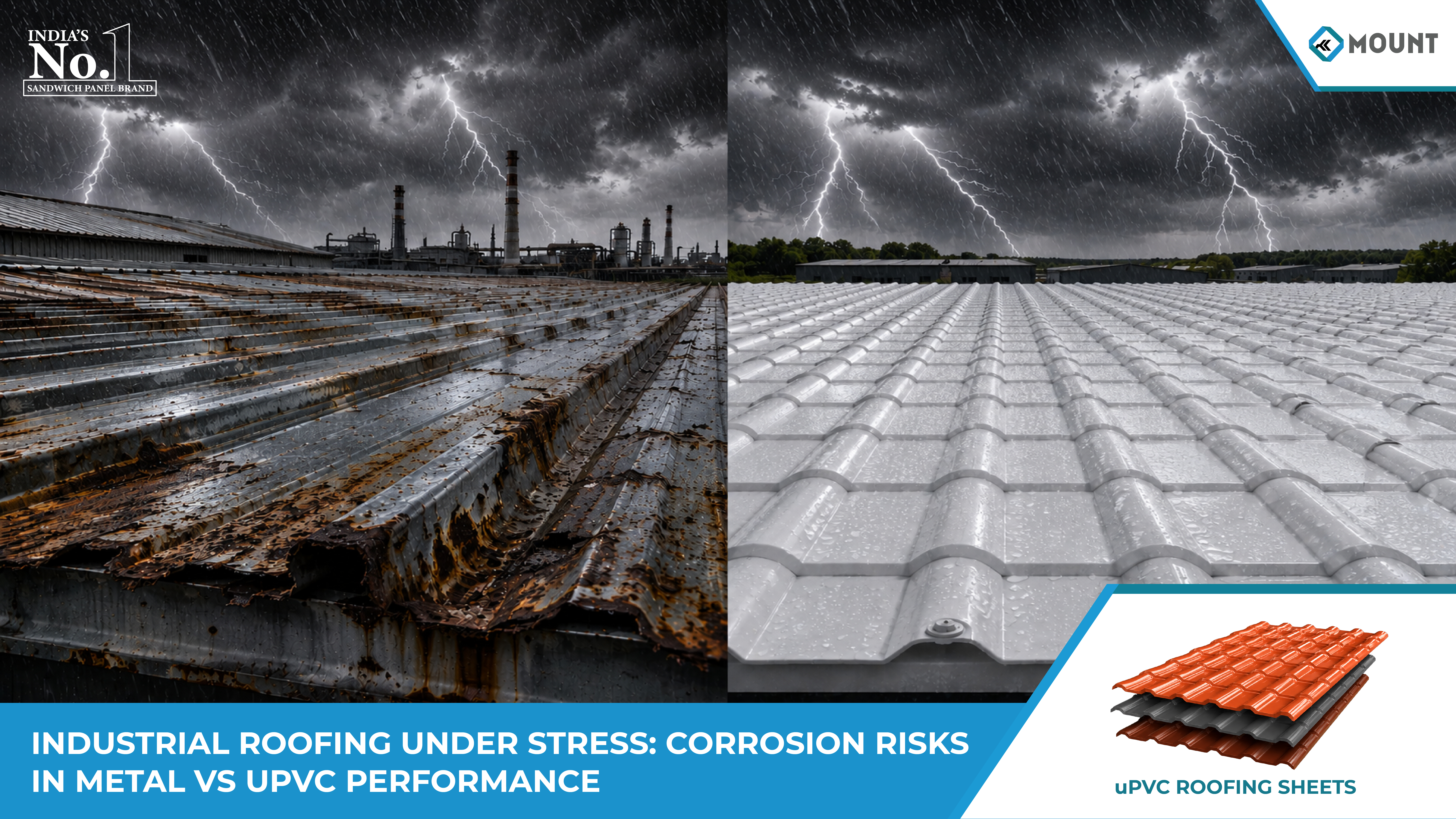
Industrial Roofing Under Stress: Monsoon Risks in Metal vs uPVC Performance
In industrial construction, roofing failures rarely happen overnight.
Generally, problems develop gradually because they originate from issues such as water buildup, chemicals, heat, and corrosion that occur beneath the surface of the roofing system before any damage shows itself on the surface. Industrial roofs experience forces from the environment that are way more severe than what normal roofs have to endure.
Rainwater during monsoon, industrial smoke, acidic gaseous emissions, ultraviolet radiation, temperature changes, and sea breezes continuously batter the panels of the roofing system. At some point, these forces from the environment will make these normal metal panels vulnerable to deterioration, which could hinder production efficiency, maintenance, and even safety of employees in the factory.
For industrial planners and infrastructure consultants, roofing selection has become a long-term performance decision rather than a basic construction requirement. This shift is driving demand for corrosion resistant industrial roofing systems capable of maintaining structural reliability in harsh operating environments.
Why Corrosion Becomes a Serious Industrial Roofing Problem
Corrosion is not simply surface-level rust. In industrial roofing systems, it is a gradual electrochemical process that weakens the metal substrate itself. When moisture combines with oxygen and industrial contaminants, oxidation begins attacking exposed metal areas. The damage accelerates further in facilities exposed to chemicals, saline air, and process emissions.
The most serious danger of corrosion is that it may be internal. Water may penetrate through bolted joints, overlaps, areas with worn coatings, or even through poorly sealed joints. Despite discoloration, peeling or leakages visible in the building, there can be signs of deterioration on underlying structures below the roof surface.
Industrial environments intensify this process significantly. Facilities located near coastal zones or chemical manufacturing clusters generally experience faster roofing degradation due to constant exposure to corrosive airborne particles.
Environmental Conditions That Accelerate Metal Roofing Failure
Moisture Retention During Monsoons
In the case of heavy rainfall regions, the industrial roofs continue being subjected to the process of wetting and drying for long. The presence of standing water around the areas of fastening and draining will gradually cause deterioration of the protective coating over the metallic sheets.
Eventually, when the moisture starts attacking the metal, then rusting is bound to occur continuously. As a result, the effect on the sheet, its joints, and ability to prevent water seepage will eventually be affected. Industrial buildings located in regions of high humidity often experience early leakage issues.
Chemical Vapors & Industrial Pollutants
The roof installed above chemical plants, fertilizer plants, warehouses, textile plants, and heavy industrial plants is under extra pressure due to contaminants present in the air.The corrosive effects of acids, industrial fumes, salts, and other contaminants in the atmosphere start deteriorating galvanized or coated metal roofs. The best-quality coated roofs are also susceptible to corrosion once exposed to chemicals.Once the coating on a metal roof starts to wear out, corrosion sets in at a much faster pace.
Thermal Expansion & Structural Stress
Industrial roofing systems absorb significant heat throughout the day. Metal sheets expand during high temperatures and contract as temperatures fall. This repeated movement creates long-term stress around fasteners, overlaps, and support points.
As expansion cycles continue, fastening systems loosen and microscopic gaps begin forming near joints. These openings allow moisture penetration, which accelerates internal corrosion and structural weakening.
Over several years, thermal movement alone can reduce roofing stability, particularly in large-span industrial structures.
Operational Impact of Corroded Roofing Systems
The consequences of corrosion extend far beyond roof appearance. In industrial facilities, roofing deterioration directly affects operations, infrastructure reliability, and maintenance expenditure.
Common issues include:
- Water leakage affecting stored inventory
- Heat buildup inside production zones
- Frequent repair shutdowns
- Structural weakening around support sections
- Corrosion near fastening systems
- Rising maintenance and replacement costs
- Safety risks caused by unstable roofing sections
In production-driven environments, even minor roofing failures can interrupt manufacturing schedules and create avoidable operational losses.
Why Industries Are Transitioning Toward uPVC Roofing
Corrosion-caused damage can be prevented by using uPVC roofing sheets that are suitable for harsh conditions in many industrial ventures.
In contrast with metallic roofing, uPVC, which is made from Unplasticized Polyvinyl Chloride, does not undergo any oxidation or rusting when placed in contact with moisture, chemicals, or other industrial substances.
The current uPVC roofing panels come with benefits other than chemical resistance. They have a light weight that decreases load, while the increased thermal insulation enhances temperature control within the building better than metal sheets.
Industrial consultants increasingly choose the best uPVC roofing sheets as the best material for their buildings in coastal areas, chemical processing industries, and humid environments because of their need for regular maintenance with traditional roofing sheets.
Industrial Performance Comparison
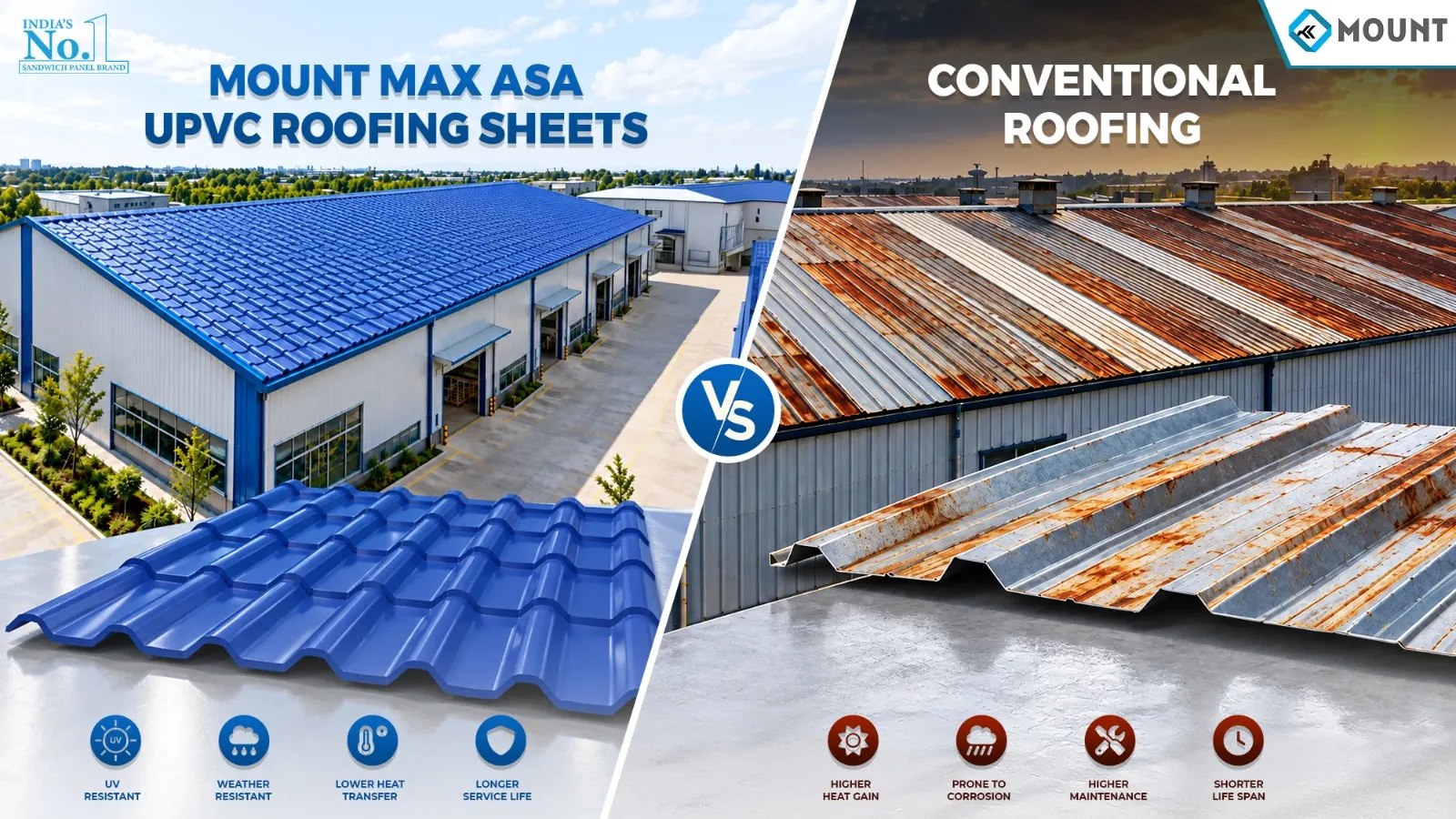
Traditional metal roofing continues to perform adequately in moderate environments, but harsh industrial conditions expose several long-term limitations. Corrosion risk, coating deterioration, heat transfer, and thermal movement increase maintenance dependency over time.
By comparison, affordable uPVC roofing sheets offer superior resistance against moisture absorption, chemical exposure, and environmental degradation. Since the material itself is non-corrosive, industrial operators experience lower maintenance requirements and improved roofing lifespan.
For project developers evaluating lifecycle costs rather than short-term procurement pricing, buy uPVC sheets solutions increasingly provide stronger long-term value.
How Mount Roof Shield Supports Long-Term Industrial Roofing Performance
Mount Roofing & Structures has developed Mount Roof Shield systems to address the performance challenges commonly faced in industrial environments exposed to corrosion, humidity, and thermal stress.
Engineered for industrial applications, these uPVC roofing sheets are designed to deliver reliable protection against:
- Industrial chemical exposure
- Heavy rainfall and moisture retention
- UV radiation
- Coastal atmospheric conditions
- Long-term weathering stress
The roofing system is widely suitable for warehouses, manufacturing plants, industrial sheds, coastal structures, and processing facilities where durability and operational continuity remain critical infrastructure priorities.
As a trusted uPVC roofing manufacturer, Mount focuses on roofing solutions built for long-term industrial reliability rather than short-term replacement cycles.
Modern corrosion resistant industrial roofing solutions like Mount Roof Shield uPVC roof panels provide industries with a more durable alternative engineered for aggressive industrial conditions. With strong resistance to corrosion, chemicals, humidity, and environmental exposure, Mount Roofing & Structures continues supporting industries seeking dependable roofing systems designed for long-term operational performance.
FAQs
Q1. Why does industrial roofing corrode faster than commercial roofing?
Industrial roofs face continuous exposure to chemicals, humidity, pollutants, and thermal stress, which accelerates oxidation and coating deterioration.
Q2. Are uPVC roofing sheets suitable for coastal industrial facilities?
Yes. uPVC roofing performs effectively in saline and high-humidity environments because the material does not rust or corrode like conventional metal roofing.
Q3. How does thermal expansion affect metal roofing systems?
Repeated expansion and contraction loosen fasteners, weaken joints, and create pathways for moisture penetration, increasing corrosion risk over time.
Q4. Why are industries adopting best uPVC sheets solutions?
Industries prefer uPVC roofing for its lower maintenance requirements, corrosion resistance, chemical durability, and improved thermal performance.
Q5. What industries commonly use Mount Roof Shield roofing systems?
Factories, processing units, warehouses, fertilizer plants, coastal facilities, and chemical manufacturing environments commonly use Mount roofing solutions.
Similar Events
 23 October, 2026