 Jul 10, 2026
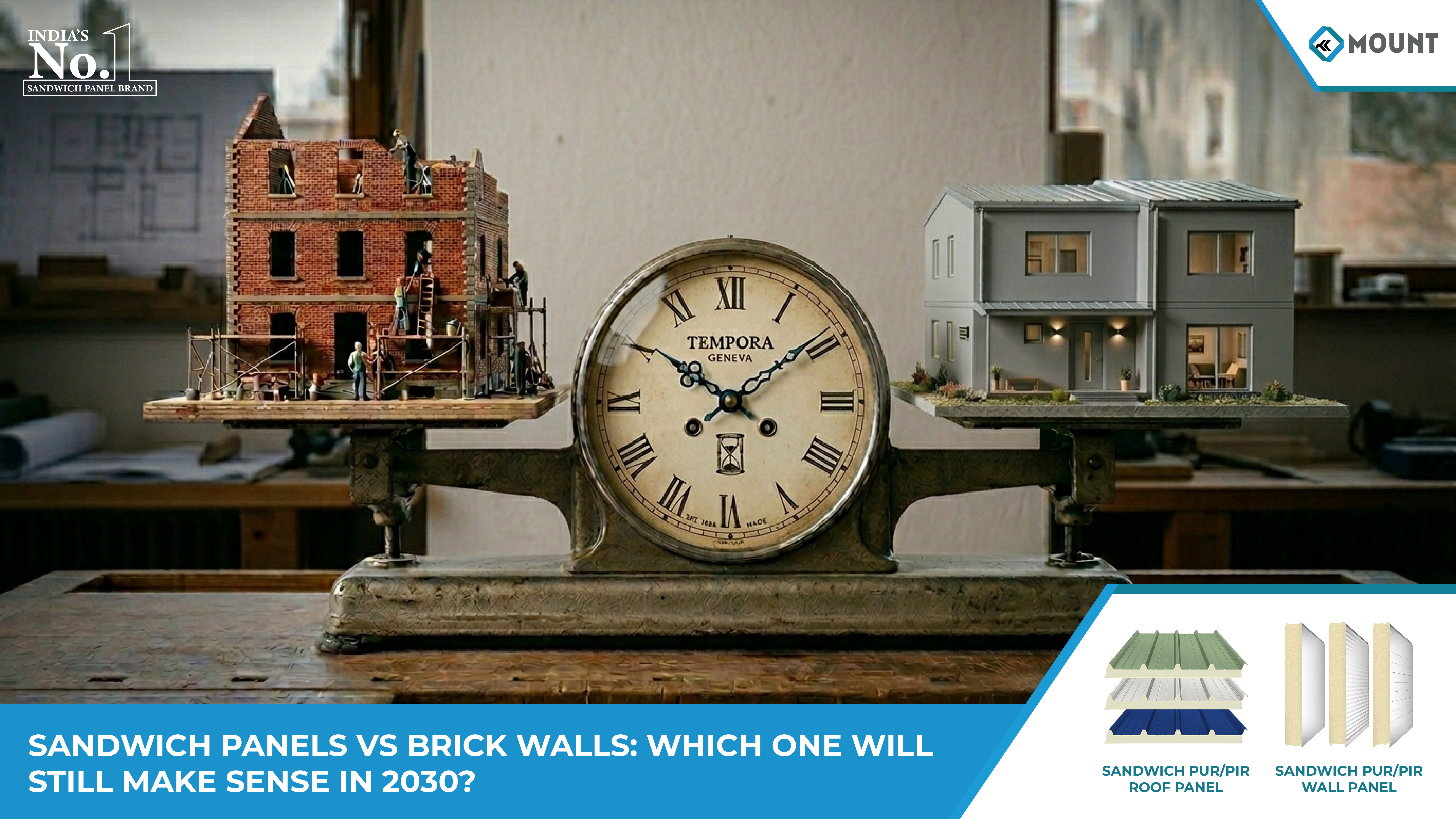
Sandwich Panels vs Brick Walls: Which One Will Still Make Sense In 2030?
A decade ago, the answer would have been straightforward.
If you were constructing a factory, warehouse, processing unit, or industrial facility, brick walls were often considered the default choice. They were familiar, readily available, and widely accepted across the construction industry.
Today, the conversation looks very different.
Industrial developers are no longer asking which material has been used for decades. They’re asking which solution can help them reduce construction timelines, control operating costs, improve energy efficiency, and adapt to future business requirements.
That’s why the comparison between brick walls and sandwich panels has become less about tradition and more about long-term performance.
The question is no longer what worked in 2010.
The question is what will still make sense in 2030.
Construction Speed Is Becoming a Business Decision
For many industrial projects, the building itself is only one part of a larger investment.
Production lines need to be commissioned. Equipment needs to be installed. Operations need to begin generating revenue.
Every additional month spent on construction affects the overall project timeline.
Traditional masonry construction involves multiple stages, including blockwork, plastering, curing, finishing, and painting. Each activity introduces dependencies that can affect project schedules.
Factory-manufactured sandwich panels follow a different approach. The wall system arrives ready for installation, reducing on-site activities considerably.
For developers building warehouses, logistics parks, manufacturing facilities, and data centers, construction speed has become a competitive advantage rather than simply a project metric.
The Energy Conversation Has Changed
Rising energy costs are forcing businesses to examine their buildings differently.
Ten years ago, operational energy consumption was often treated as a facilities management issue. Today, it influences design decisions from the earliest planning stages.
This is where insulated panels have established a clear advantage.
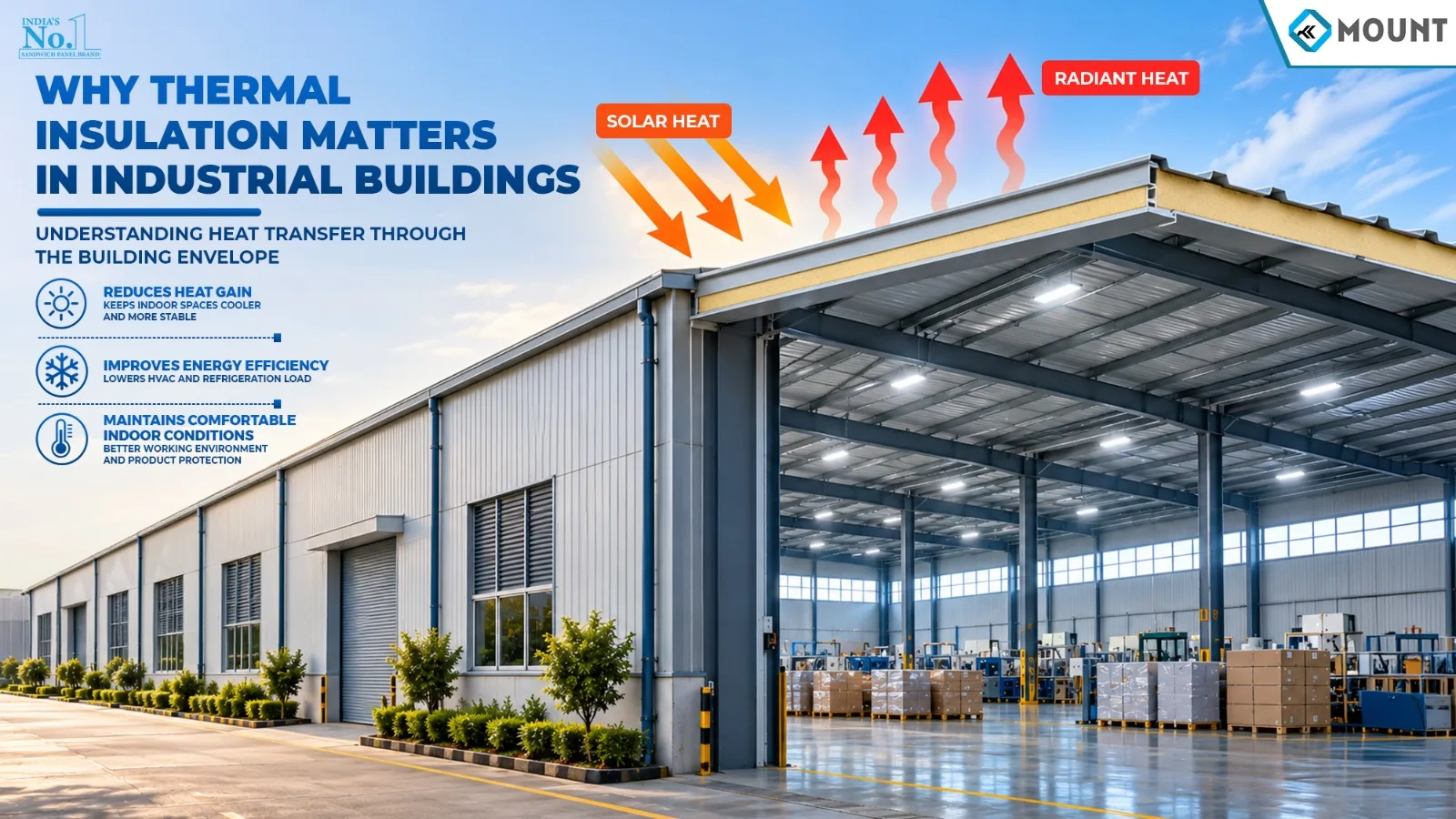
A conventional brick wall provides structural separation, but it contributes relatively little to thermal performance unless additional insulation systems are introduced. By comparison, PUR Panels combine enclosure and insulation within a single building element.
For facilities operating temperature-sensitive environments, the difference becomes even more significant.
Cold storage facilities, food processing plants, pharmaceutical units, and data centers increasingly evaluate wall systems based on their impact on long-term energy consumption rather than upfront material costs.
Weight Matters More Than Most Developers Realize
One topic that rarely receives attention during material selection is structural weight.
Yet it influences almost every aspect of project execution.
Heavier wall systems increase structural loading requirements, foundation design considerations, transportation demands, and installation complexity.
Lighter insulated panel systems allow engineers greater flexibility when designing industrial structures, particularly large-span buildings.
This becomes increasingly relevant as developers seek larger clear spans and more adaptable layouts across logistics, warehousing, and manufacturing projects.
The building industry’s shift toward lighter construction methods is unlikely to reverse over the next decade.
Flexibility Will Be More Valuable Than Permanence
Industrial facilities are evolving faster than ever.
A warehouse built today may become a manufacturing facility tomorrow. A processing plant may expand within a few years. A distribution center may need additional storage capacity sooner than anticipated.
Traditional brick construction was never designed around flexibility.
Making changes often involves demolition, reconstruction, debris removal, and operational disruption.
Insulated panel systems allow facilities to adapt more efficiently as operational requirements evolve. This ability to modify, expand, or reconfigure buildings is one reason developers increasingly view sandwich panels as infrastructure assets rather than construction materials.
The facilities being planned today are expected to support changing business models over the next twenty years.
Fire Performance Is Becoming More Sophisticated
Fire protection remains an important consideration across industrial construction.
However, the conversation has become far more detailed than it was in the past.
Developers are increasingly evaluating complete building systems rather than individual materials. Depending on project requirements, solutions such as Certified Fire Rated PIR Panels and Fire Rated Roof Panels are specified to support broader fire safety strategies.
The focus has shifted toward balancing fire protection, thermal performance, durability, and construction efficiency within the same enclosure system.
That approach aligns closely with how modern industrial facilities are designed and operated.
Maintenance Costs Often Tell the Real Story
A building’s true cost rarely becomes apparent during construction.
It becomes visible over the years of operation.
Repainting, crack repairs, moisture-related issues, insulation upgrades, and ongoing maintenance all contribute to lifecycle expenditure. This is one reason industrial developers increasingly evaluate facilities based on total ownership costs rather than construction budgets alone.
Well-designed insulated panel systems require comparatively less intervention over their service life, particularly in environments where temperature control, moisture resistance, and operational continuity are important.
For facility owners, maintenance predictability has become almost as valuable as construction speed.
What 2030 Will Demand From Industrial Buildings
The industrial buildings of 2030 will face different expectations than those built twenty years ago.
They will be expected to consume less energy.
They will need to be operational faster.
They will require greater flexibility.
They will increasingly support automation, digital infrastructure, controlled environments, and sustainability objectives.
Those requirements naturally favor construction systems that combine multiple performance characteristics within a single solution.
This explains the growing adoption of PUR Insulated Roofing Sheets, Leak Proof PUR Roof Panels, and advanced insulated wall systems across sectors ranging from cold chain infrastructure to data centers and manufacturing facilities.
The trend is not being driven by preference alone. It is being driven by operational economics.
Why the Industry Is Moving Toward Factory-Manufactured Building Systems
Perhaps the biggest shift occurring across industrial construction is the move from site-built dependency to factory-controlled quality.
Developers want predictable outcomes.
They want consistent insulation values.
They want faster installation.
They want fewer variables affecting project delivery.
This is where manufacturers play an increasingly important role.
Organisations evaluating the Best Sandwich Panel Manufacturers are looking beyond product specifications. They are assessing manufacturing capability, project support, supply reliability, and technical expertise.
The enclosure system has become too important to be treated as a commodity purchase.
Why Businesses Partner With Mount Roofing & Structures
The transition toward modern industrial construction is already underway.
Mount Roofing & Structures supports developers, EPC contractors, and infrastructure investors with advanced insulated building systems designed for today’s operational realities and tomorrow’s performance expectations. As an established Rockwool sandwich panel manufacturer and one of the industry’s recognised providers of insulated roofing and wall solutions, Mount combines large-scale manufacturing capability with technical expertise across industrial, commercial, cold storage, and infrastructure projects.
For organisations planning facilities intended to remain competitive through 2030 and beyond, the question is becoming increasingly clear.
The debate is no longer sandwich panels versus brick walls.
It is whether traditional construction methods can keep pace with what modern industry now demands.
FAQs
1. Why are sandwich panels replacing brick walls in industrial construction?
They offer faster installation, integrated insulation, reduced structural loading, improved energy efficiency, and greater flexibility for future expansion.
2. Are sandwich panels suitable for long-term industrial applications?
Yes. Modern insulated panels are widely used across manufacturing facilities, warehouses, cold storage facilities, pharmaceutical units, and data centers due to their durability and thermal performance.
3. How do sandwich panels impact operating costs?
Their insulation properties help reduce heat transfer, lowering energy consumption and reducing the load on cooling or heating systems.
4. Are fire-rated insulated panels available for industrial projects?
Yes. Depending on project requirements, PIR and rockwool-based insulated panels can be specified to support fire safety objectives while maintaining thermal performance.
5. Why are factory-manufactured wall systems becoming more popular?
Factory production improves consistency, reduces installation time, minimizes site-related variables, and helps developers achieve more predictable project outcomes.
Similar Events
 23 October, 2026