 Jun 22, 2026
Sandwich Panels vs Built-Up Roofing Systems: What Actually Performs Better Over Time?
When project teams sit down to specify roofing and wall systems for industrial or commercial buildings, the initial cost comparison between sandwich panels and built-up roofing systems tends to dominate the conversation. That framing consistently leads to poor long-term decisions. The more operationally relevant question is what each system costs to own, maintain, and repair across a 20–25 year building lifecycle , and on that measure, the performance gap between the two approaches is considerable.
Installation Complexity and Project Timelines
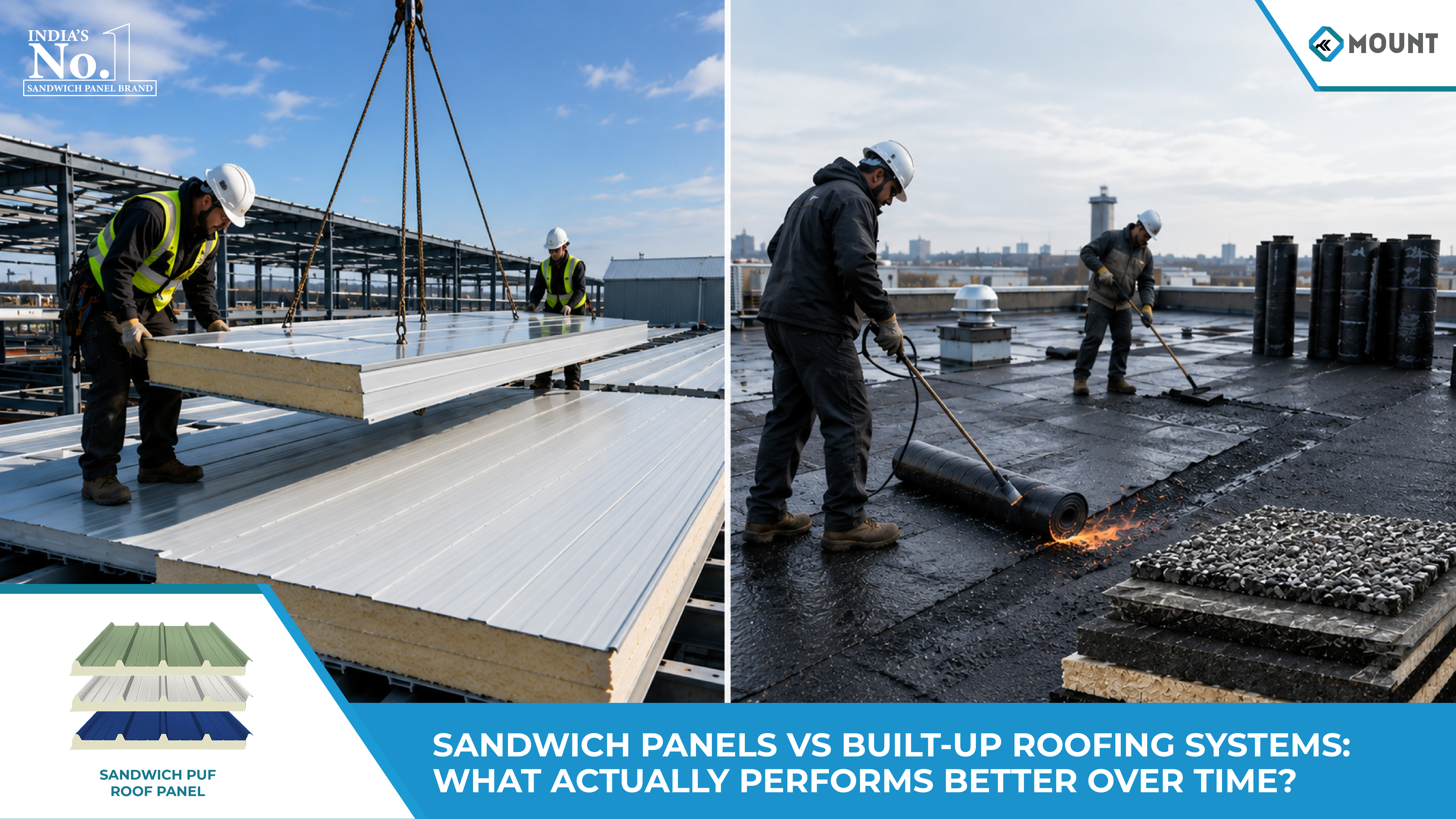
Built-up roofing systems involve multiple sequential trades and material layers , structural deck, vapour barrier, insulation board, membrane, and surface finish , each with its own installation tolerances, curing requirements, and inspection hold points. On large industrial projects, this layered sequencing adds weeks to the construction programme and creates interdependency risk between trades.
Sandwich panels for roofing arrive as factory-manufactured composite units, combining structural facing, insulation core, and weather surface in a single element. Installation proceeds as a single-trade operation with faster per-square-metre progress rates, reducing both programme duration and on-site coordination complexity , a material advantage for projects with phased handover or operational start-date commitments.
Water Leakage Risk Over Time
Built-up systems accumulate leak risk at every layer interface , membrane laps, penetration flashings, upstand terminations, and drainage outlets. Each junction is a potential ingress point, and membrane systems in particular are vulnerable to UV-driven embrittlement and thermal fatigue cracking over time.
PIR sandwich panels, with factory-sealed tongue-and-groove or ship-lap jointing systems, significantly reduce the number of field-formed junctions in the building envelope. Fewer junctions mean fewer long-term leak initiation points , a directly measurable reduction in water ingress risk across the building’s service life.
Insulation Consistency and Thermal Degradation
Insulation boards in built-up systems are installed in field conditions, creating variability in joint alignment, compression, and moisture exposure during construction. Over time, moisture absorbed into open-cell or poorly protected insulation layers reduces thermal resistance, causing gradual U-value degradation that is difficult to detect without intrusive investigation.
PUF sandwich panels use closed-cell polyurethane foam cores manufactured under controlled factory conditions, achieving consistent density and thermal conductivity across the full panel area. Thermal performance does not degrade through moisture absorption in the way that field-installed board insulation does, maintaining design U-values across the panel’s service life.
Maintenance Demands and Operational Downtime
Older built-up roofing systems typically enter a maintenance-intensive phase from year eight to ten onwards , membrane re-sealing, lap repairs, drainage clearance, and periodic full-surface inspection become recurring line items in facility management budgets. For operating industrial facilities, roof access for maintenance also introduces safety, contamination, and production disruption risks.
Rockwool insulated sandwich panels, specified for industrial environments where fire performance and acoustic attenuation are also required, reduce the maintenance programme to periodic joint sealant inspection and surface coating checks , a fraction of the intervention frequency that built-up systems demand at equivalent building age.
Thermal Expansion, Contraction, and Structural Behaviour
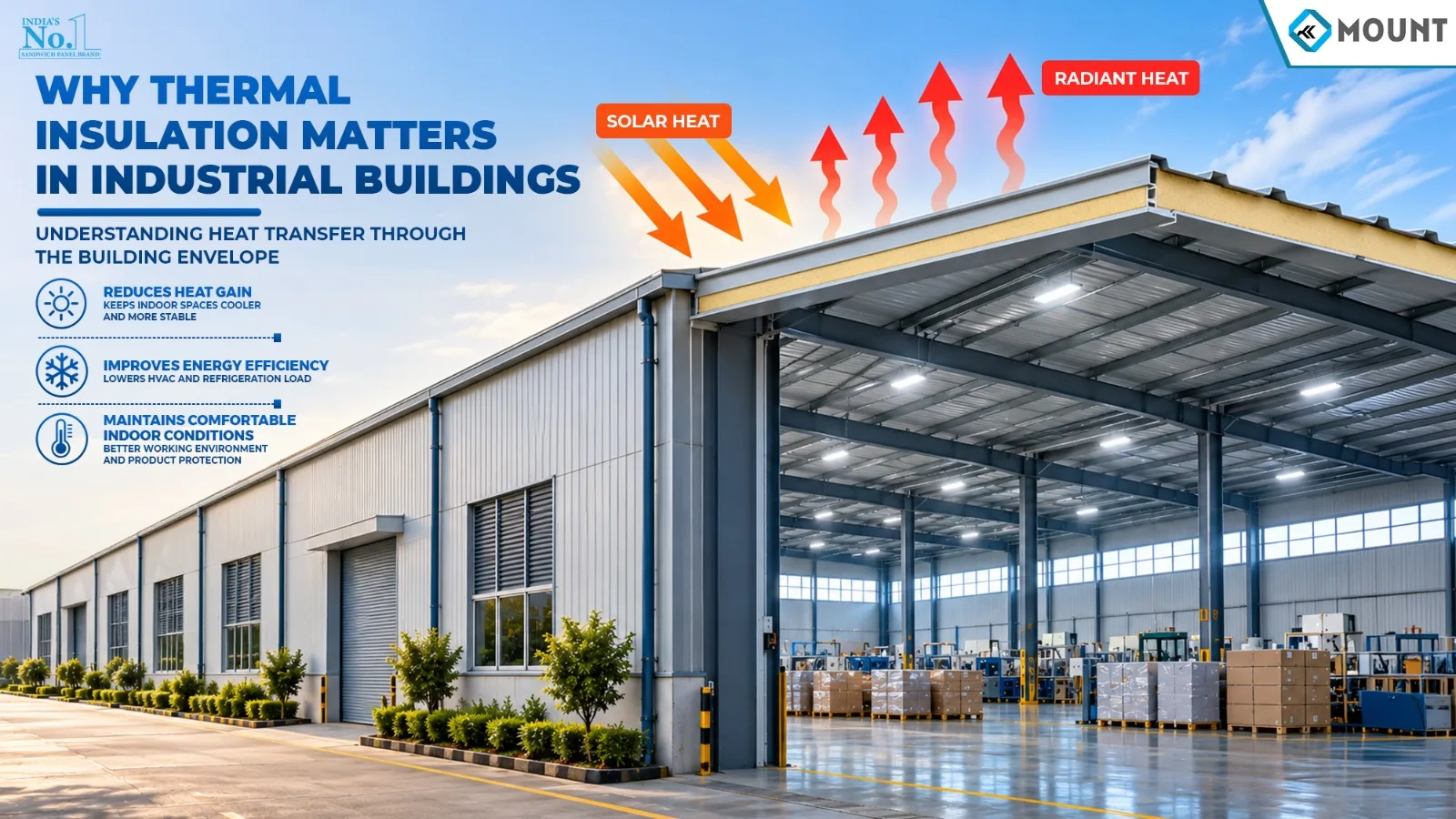
Industrial buildings experience significant thermal cycling across seasons and daily temperature swings. Built-up roofing systems, with multiple bonded layers of differing thermal expansion coefficients, accumulate differential movement stress at layer interfaces , a mechanism that accelerates delamination and membrane fatigue.
PIR insulated panels, manufactured as a structurally bonded composite, behave as a single unit under thermal movement. The panel’s concealed fixing system accommodates longitudinal expansion without transferring stress to the panel face or joint sealant, maintaining envelope integrity through repeated thermal cycling.
Hygiene, Cleanliness, and Modern Infrastructure Requirements
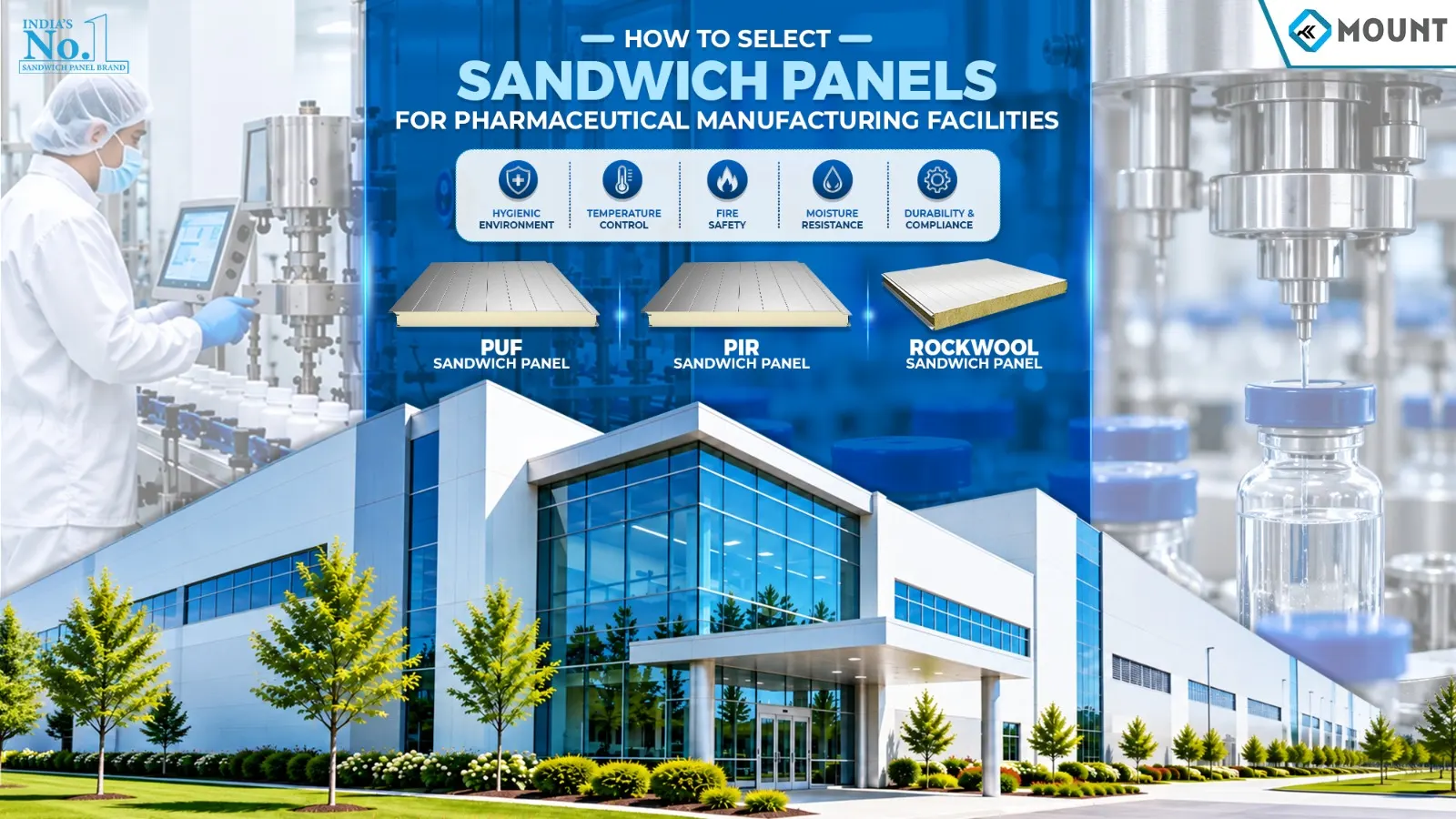
Flush-faced sandwich panels for walls present a sealed, jointless internal surface that is cleanable to food-grade and pharmaceutical standards , a specification that built-up systems with exposed insulation layers, service voids, and mechanical fixings cannot meet. For PUF sandwich panel for cold storage applications, the hygienic internal face combined with controlled thermal performance is a functional requirement, not an aesthetic preference.
As industrial buildings increasingly need to adapt for automation integration, clean manufacturing, or data infrastructure, the ability of PIR insulated panels to meet both thermal and surface hygiene criteria makes them the technically appropriate choice for modern facility upgrades.
Why Mount
Mount Roofing and Structures supplies PUF sandwich panels, rockwool sandwich panel systems, and full building envelope solutions engineered against verified performance specifications. As an established sandwich panel manufacturer with deep project experience across industrial, cold storage, and commercial applications, Mount provides design-stage technical input , matching panel grade, core specification, and fixing system to the building’s thermal, structural, and operational requirements. That engineering capability, applied before procurement rather than after problems emerge, is what separates Mount from a standard panel supplier.
1. Why are sandwich panels preferred over built-up roofing systems?
Sandwich panels offer faster installation, better insulation consistency, and lower long-term maintenance compared to built-up roofing systems.
2. Do PUF sandwich panels reduce water leakage risks?
Yes. Factory-made joint systems in PUF sandwich panels reduce the chances of leakage caused by multiple roofing layer connections.
3. How do PIR insulated panels improve thermal performance?
PIR insulated panels maintain stable thermal efficiency and reduce heat transfer across industrial and commercial buildings.
4. Are rockwool sandwich panels suitable for industrial facilities?
Yes. Rockwool panels provide thermal insulation along with fire resistance and sound reduction benefits.
5. Why do industries choose Mount sandwich panel solutions?
Mount provides engineered panel systems designed for long-term durability, thermal efficiency, and reliable building performance.
Similar Events
 23 October, 2026