 Jun 19, 2026
The True Cost of Poor Insulation in Industrial Buildings , It’s Not Just Energy Bills
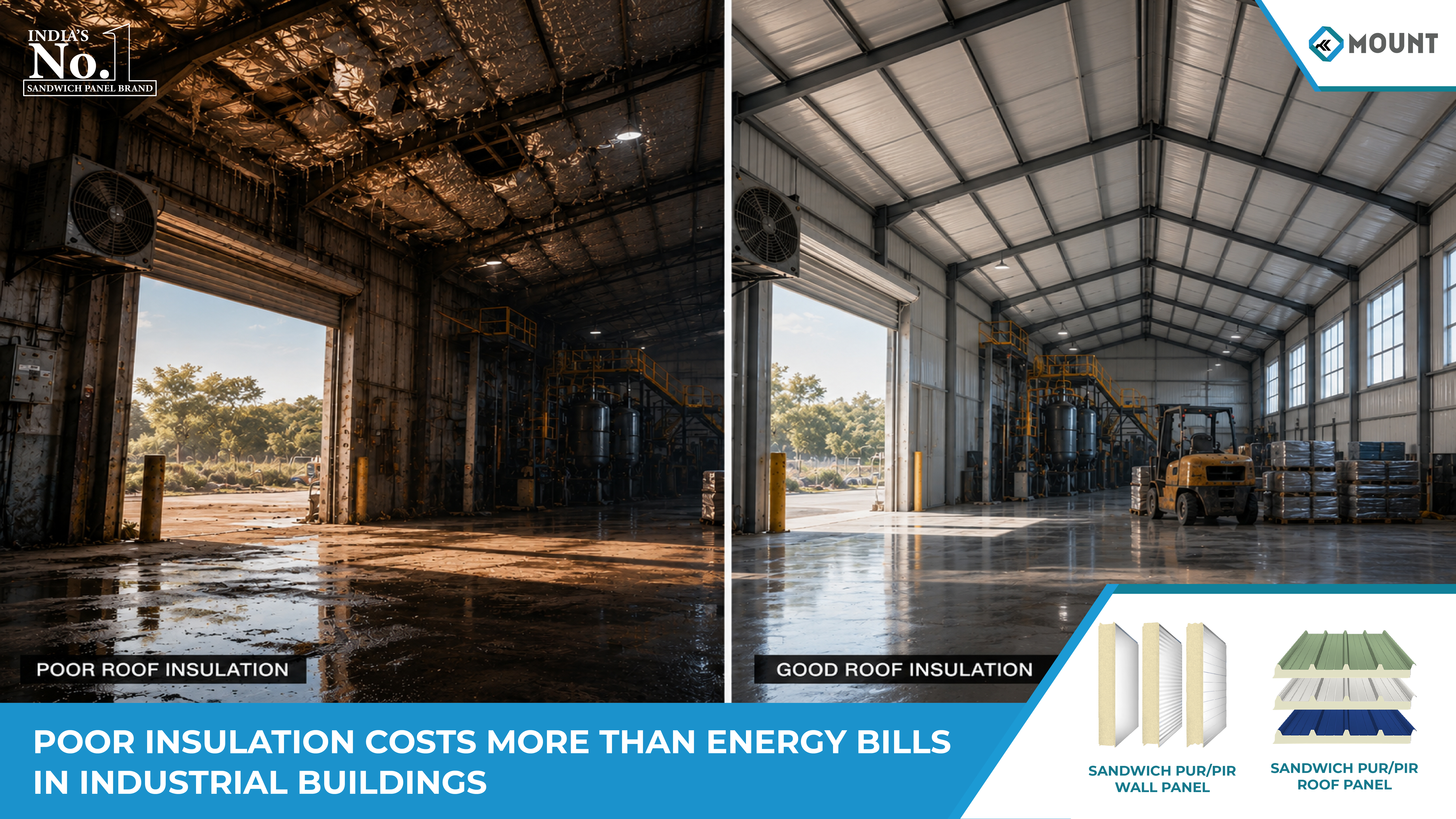
Energy savings get most of the attention when insulation comes up in capital planning discussions. But for operations managers, plant engineers, and facility heads running large-scale industrial buildings, the more damaging consequences of poor insulation rarely appear on an energy audit. They show up in production records, maintenance logs, equipment replacement schedules, and workforce output data , and by the time they’re visible, the compounded cost far exceeds what better insulation would have required at construction stage.
Unstable Temperatures and Production Inefficiency
Industrial processes that depend on consistent ambient conditions , precision assembly, pharmaceutical manufacturing, food processing, paint application , are directly disrupted by thermal instability inside the building envelope. When indoor temperatures fluctuate by 6–10°C across a shift due to inadequate roof or wall insulation, process tolerances tighten, rejection rates climb, and output consistency degrades. Roofing PUF panels, with thermal conductivity values as low as 0.022 W/m·K, maintain significantly more stable interior conditions compared to conventional metal sheet roofing, reducing process variance linked to ambient temperature drift.
Equipment Overheating and Reduced Machine Lifespan
Machinery operating in chronically overheated environments runs at elevated thermal loads, accelerating wear on bearings, seals, hydraulic fluid viscosity, and electronic control systems. A poorly insulated facility in a hot climate can see interior radiant temperatures exceed ambient by 8–12°C at roof level , precisely where most electrical infrastructure and elevated plant equipment sits. PIR wall panels, with superior fire-rated thermal performance, reduce radiant heat gain through building fabric, directly extending the operational lifespan of installed equipment.
Condensation, Corrosion, and Structural Degradation
Condensation forms when warm, moisture-laden air contacts cold building surfaces , a routine occurrence in poorly insulated structures experiencing significant delta-T between interior and exterior. Over time, persistent condensation drives corrosion of structural steel, fastener systems, and mechanical services. Insulation that controls dew point behaviour within the building envelope prevents this. Rockwool wall panels offer both thermal resistance and vapour management properties, making them particularly effective in humid or coastal industrial environments where interstitial condensation risk is elevated.
Inventory and Raw Material Damage
Temperature-sensitive raw materials, finished goods, and packaging stored in inadequately insulated warehouses are exposed to thermal cycling that degrades shelf life, dimensional stability, and chemical integrity. For industries like agrochemicals, electronics components, or specialty polymers, this translates directly into write-offs and supply chain disruption. Selecting the correct PUF wall panel thickness for the storage environment , typically 60mm to 120mm depending on climate zone and internal temperature targets , is a specification decision with measurable inventory protection implications.
HVAC Overloading and Maintenance Budgets
When building fabric thermal performance is poor, HVAC systems compensate by running longer duty cycles at higher loads. This reduces compressor and air handling unit service intervals, increases refrigerant consumption, and drives up planned maintenance frequency. Facilities managers consistently report that HVAC-related maintenance costs drop materially after re-cladding projects that improve the building envelope , a direct operational saving that payback modelling should capture. Best PUF sandwich panel manufacturers engineer panels to specific U-values that are matched against HVAC design loads during the building specification phase, not retrofitted as an afterthought.
Noise, Workforce Productivity, and Regulatory Exposure
Acoustic insulation is a secondary but operationally significant benefit of dense-core panel systems. Industrial buildings with poor envelope construction transmit external noise and amplify internal machinery noise, contributing to worker fatigue and creating potential occupational health liability. Polyurethane insulated panels, when specified with appropriate core density and facing configurations , deliver meaningful sound attenuation alongside thermal performance, reducing both noise exposure levels and the cost of separate acoustic treatment.
Insulation as Operational Infrastructure
The classification of insulation as a construction cost rather than an operational asset is where most lifecycle cost models go wrong. A poorly insulated industrial shell generates costs across energy, maintenance, productivity, equipment, and compliance simultaneously , costs that accumulate across a 20–30 year asset life. Sandwich panels for data centers and other critical-environment facilities have long been specified with rigorous thermal and acoustic criteria precisely because operators in those sectors calculate total cost of ownership from day one.
Why Mount
Mount Roofing and Structures engineers insulation systems , fire rated sandwich panels, PIR wall panels, and full building envelope solutions , against verified thermal, acoustic, and structural performance criteria. As one of the top PUF panel manufacturers and suppliers for industrial and commercial projects, Mount brings design-stage technical input that aligns panel specification with operational requirements, not just construction budgets. The difference between a panel supplier and a building performance partner is where Mount operates. Speak to Mount’s technical team before your next industrial project begins.
1. Why is insulation important in industrial buildings?
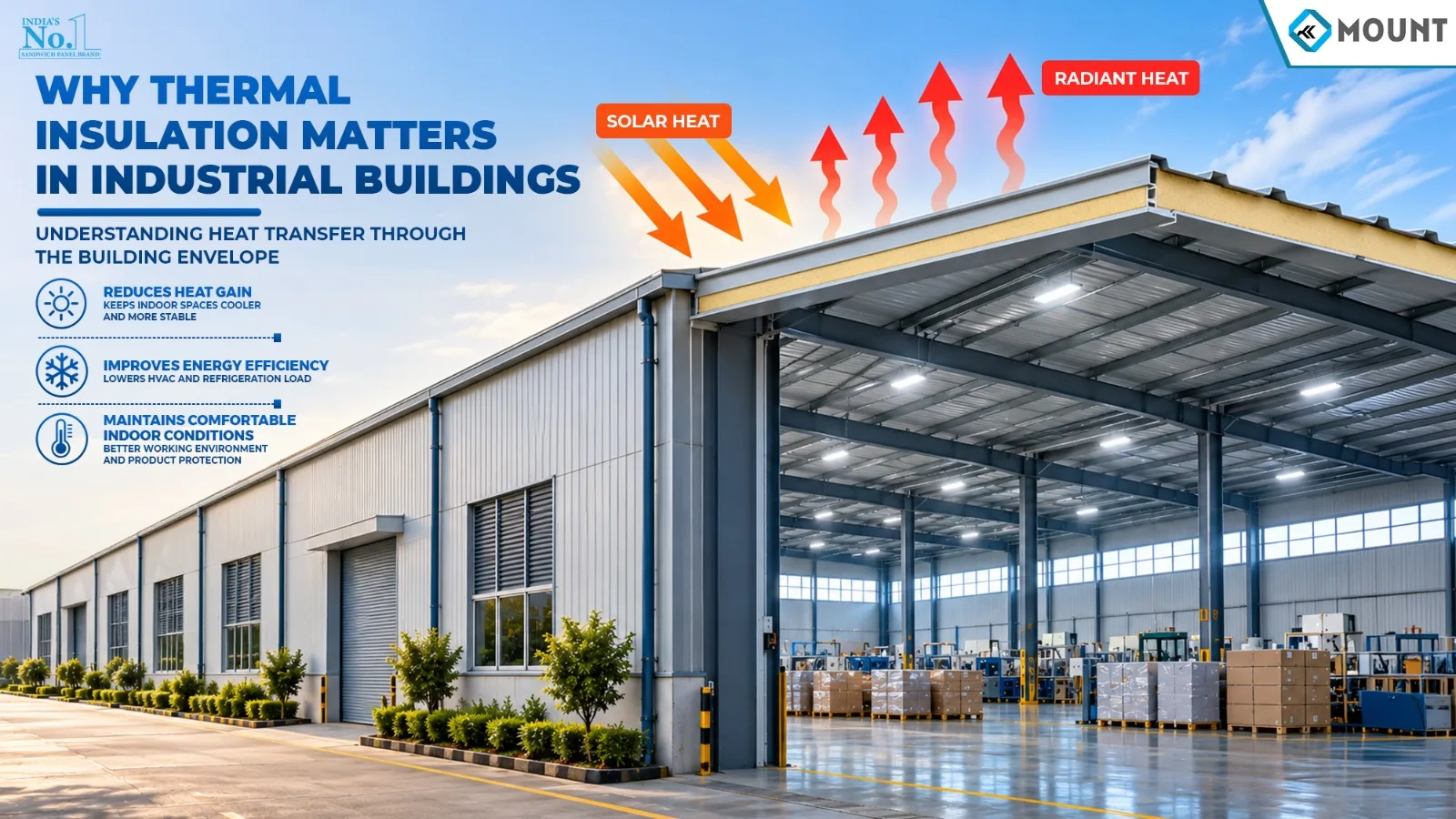
Good insulation helps maintain stable indoor temperatures, protects equipment, and reduces stress on HVAC systems.
2. Can poor insulation affect machinery performance?
Yes. Excess heat inside poorly insulated buildings can increase wear on machines and reduce equipment lifespan over time.
3. How do roofing PUF panels help industrial facilities?
Roofing PUF panels reduce heat transfer, improve indoor temperature control, and help lower cooling loads.
4. Why do warehouses need proper wall insulation?
Proper insulation helps protect stored goods from heat, moisture, and temperature fluctuations that can damage inventory.
5. Why do industries choose Mount for insulation solutions?
Mount provides technically engineered insulation systems designed for thermal efficiency, durability, and long-term industrial performance.
Similar Events
 23 October, 2026