 May 8, 2026
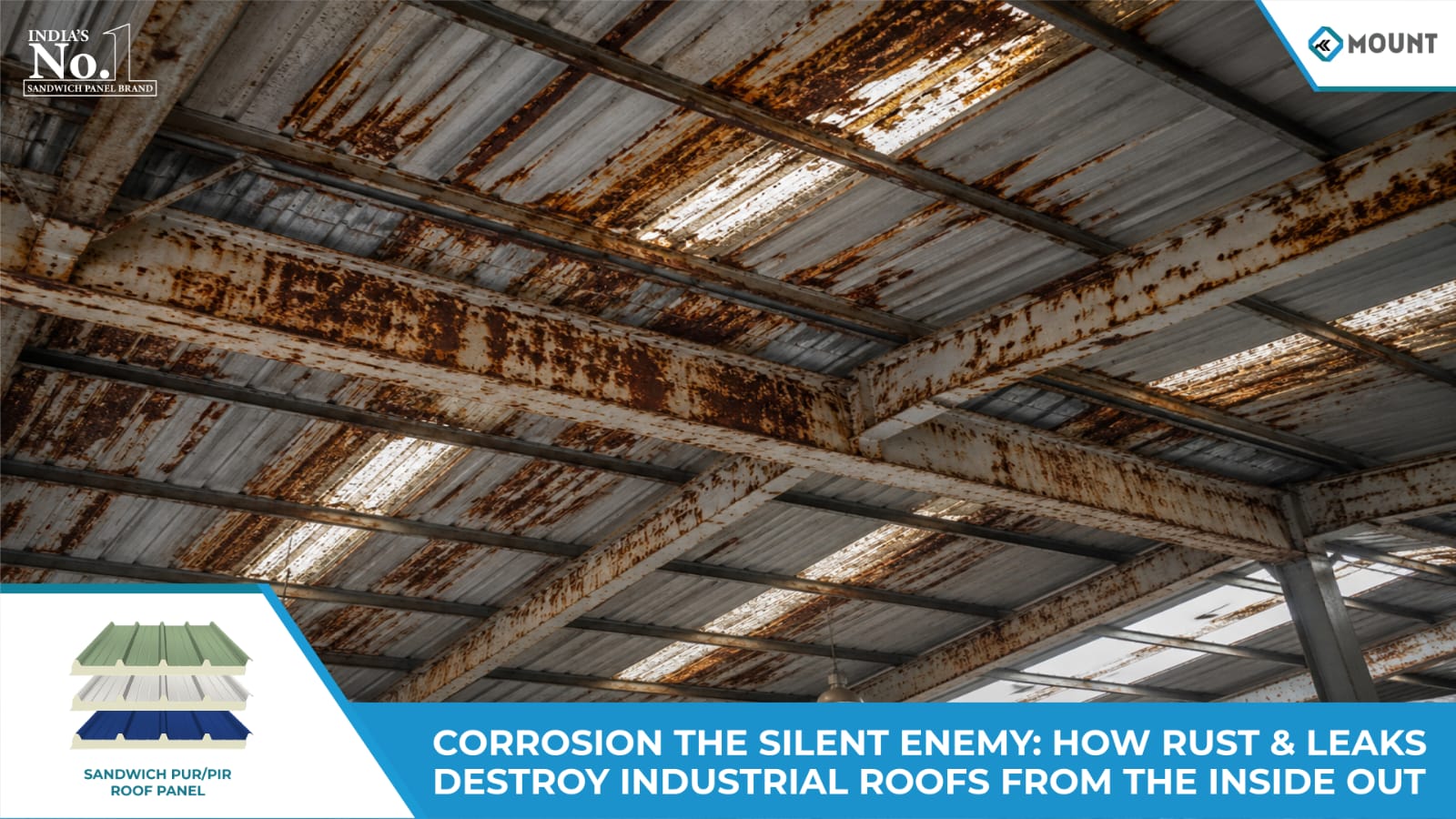
Corrosion The Silent Enemy: How Rust and Leaks Destroy Industrial Roofs from the Inside Out
Corrosion rarely starts where you can see it. That’s what makes it dangerous.
In most industrial buildings, the first visible signs , a stain, a drip, a discoloured patch , show up much later than the actual damage. By that time, the problem has already travelled through joints, fasteners, and internal layers of the roofing system. A seemingly small leak is actually the last phase of a lengthy process.
For organizations that depend on their ability to operate smoothly, such an insidious problem is not just about maintenance but an asset hazard, operational continuity, and structural integrity. That is why organizations such as Mount emphasize the study of material behavior instead of simple repairs.
How Corrosion Actually Begins
At a basic level, corrosion is a reaction between metal, moisture, and oxygen. In controlled environments, this process is relatively slow. Industrial environments are different.Factories, warehouses, and processing units introduce additional variables , chemical exposure, airborne pollutants, and temperature fluctuations. These conditions accelerate corrosion, especially when moisture gets trapped within the roofing system.
In facilities using industrial factory roofing solutions, this interaction becomes more aggressive over time. Even small pockets of trapped moisture can initiate internal degradation, particularly around fasteners and panel overlaps.
The Problem with “Invisible” Damage
One of the reasons corrosion goes unnoticed is because it doesn’t always start on the surface. It often begins inside the system , beneath coatings, within joints, or along insulation layers.
This is especially relevant in systems using Mount’s sandwich panels for roofing, where multiple layers are bonded together. If moisture enters at any point, it can travel within the panel, weakening the structure from within.By the time visible signs appear, the damage is rarely isolated. It has already spread across multiple sections, affecting both the outer sheet and the internal components.
From Corrosion to Leakage
Corrosion rarely stays contained. As metal surfaces weaken, micro-cracks begin to form. These cracks eventually become pathways for water ingress.
Leaks, however, don’t always appear directly below the source. Water can travel along structural members or insulation layers before becoming visible inside the building.In large facilities using warehouse roofing solutions, this often leads to delayed detection. By the time the leak is identified, internal assets , inventory, machinery, or stored goods , may already be affected.
Where Material Selection Goes Wrong
A significant number of corrosion-related issues can be traced back to material selection.Roofing systems that rely on basic coatings or lower-grade metals tend to degrade faster, particularly in humid or chemically active environments. Once the protective layer starts breaking down, the underlying metal becomes exposed.
For applications like cold storage roofing panels, the risk increases further due to temperature differences and condensation. Without proper material engineering, moisture accumulation becomes difficult to control.This is where working with a reliable industrial roofing manufacturer makes a difference , not just in terms of supply, but in understanding environmental exposure and selecting the right system.
Why System Integration Matters
Corrosion doesn’t happen randomly. It usually starts at weak points.Poorly sealed joints, incompatible materials, and inconsistent installation practices create entry points for moisture. Over time, these small vulnerabilities turn into larger issues.Roofing systems designed as integrated solutions , such as Mount’s steel building roofing panels delivered with proper joint detailing , perform more consistently. The alignment between components reduces gaps where moisture can enter.Similarly, peb roofing panels that are engineered as part of a complete system offer better resistance compared to assemblies built from disconnected elements.
The Long-Term Impact on Operations
Corrosion affects more than the roof itself. It gradually starts impacting operations.Frequent repairs lead to downtime. Maintenance costs increase. In some cases, sections of the roof may need replacement much earlier than expected.
For industrial facilities, this creates a ripple effect , production schedules get disrupted, storage conditions become unreliable, and safety risks begin to emerge.When roofing systems underperform, they stop being passive infrastructure and start becoming active liabilities.
Engineering Against Corrosion: A Different Approach
Preventing corrosion requires a shift in approach , from reactive fixes to engineered prevention.
This includes selecting the right base material, applying appropriate protective coatings, and ensuring that the entire system is designed to minimise moisture ingress. It also involves considering how the roof will behave over time, not just at installation.
Mount addresses this through a system-driven approach. By integrating panels, structural components, and installation practices, they reduce the number of failure points within the roofing system.
As a roofing panel manufacturer, the focus extends beyond product specifications to real-world performance , how the system holds up under exposure, stress, and time.
Why Early Prevention Matters More Than Repairs
Once corrosion sets in, controlling it becomes increasingly difficult. Repairs tend to address visible issues, but underlying damage often continues to spread.Preventive measures, on the other hand, work at the root level , limiting exposure, sealing entry points, and ensuring material compatibility from the start.For businesses evaluating industrial factory roofing solutions, this distinction becomes important. Investing in engineered systems early reduces the need for ongoing intervention later.
A Roof That Performs Quietly
The best-performing roofs are the ones you rarely think about. They don’t leak, they don’t need constant repair, and they don’t disrupt operations.Achieving that level of reliability depends on decisions made long before installation , material selection, system design, and execution quality.
Corrosion may be silent, but its impact is not. Addressing it early, through engineering rather than repair, is what ultimately protects both the structure and the business it supports.
FAQs
Q1: Why does corrosion often go unnoticed in industrial roofs?
A: Because it typically begins within joints, fasteners, or internal layers, making early-stage damage difficult to detect visually.
Q2: H0w do sandwich panels behave under moisture exposure?
A: If properly sealed, they perform well. However, moisture ingress can lead to internal degradation if entry points are not controlled.
Q3: What industries are most vulnerable to roofing corrosion?
A: Chemical plants, coastal facilities, cold storage units, and manufacturing plants with high humidity or pollutant exposure.
Q4: Can corrosion be completely prevented in roofing systems?
A: It cannot be entirely eliminated, but it can be significantly controlled through material selection, coatings, and system design.
Q4: How does Mount Roofing & Structures address corrosion risks?
A: By delivering integrated roofing systems with engineered materials, protective coatings, and precise installation practices that reduce exposure to moisture and environmental stress.
Similar Events
 23 October, 2026