 May 4, 2026
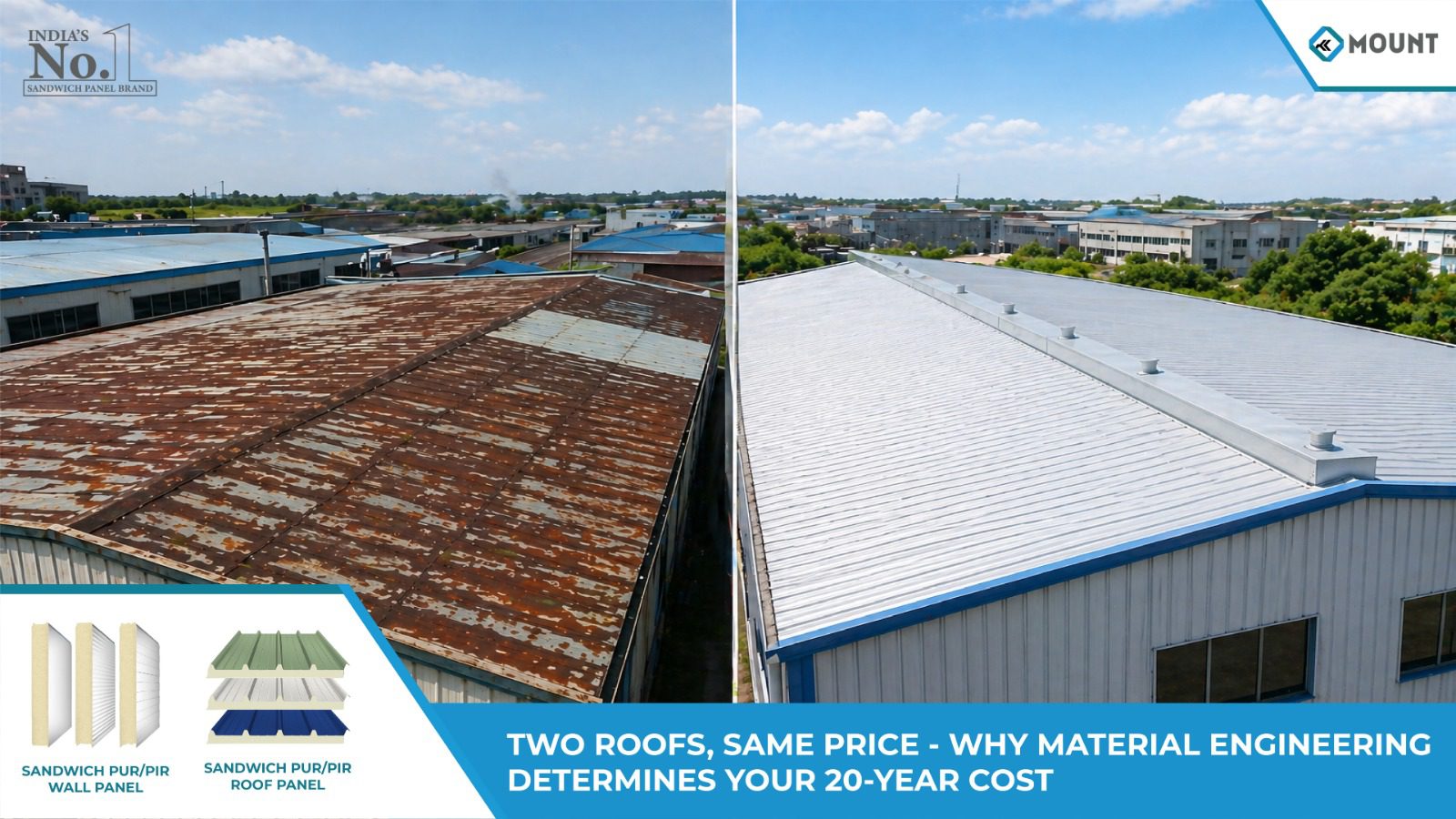
Two Roofs, Same Price: Why Material Engineering Determines Your 20-Year Cost
At the procurement stage, two roofing systems can look identical on paper. Same thickness, similar finish, comparable pricing. For most decision-makers, that’s where the evaluation ends.
But roofing doesn’t behave the same way it is quoted. It behaves the way it is engineered.
Over a 20-year lifecycle, the difference between two “similar” roofs becomes visible in maintenance logs, energy bills, shutdown costs, and structural performance. This gap rarely comes from the base material alone , it comes from how that material has been engineered, treated, and integrated into the overall system.
This is where Mount approaches roofing differently. Instead of focusing on supply, the emphasis is on performance over time , which is where most cost deviations actually occur.
The Illusion of Upfront Cost Parity
In industrial and institutional projects, roofing decisions are often made under budget constraints. When two options fall within the same price range, the assumption is that they will deliver similar outcomes.
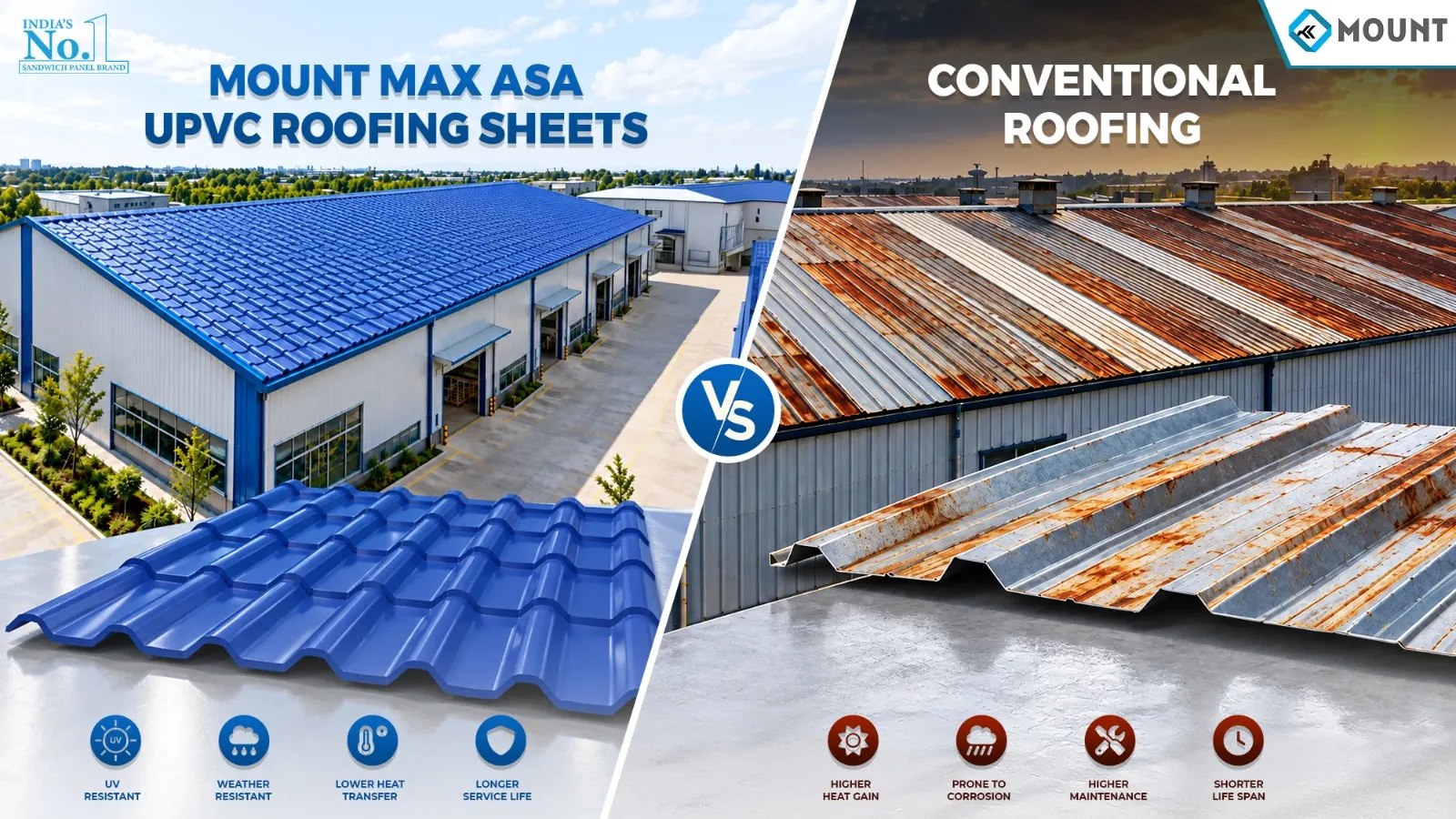
In reality, most conventional systems start diverging within the first few years. Materials that initially seem economical begin to show early signs of fatigue , corrosion, fastener failures, sheet distortion, and leak points.
This becomes particularly critical in sectors requiring corrosion resistant industrial roofing, where environmental exposure is constant. What looks like a minor compromise during procurement often translates into recurring maintenance cycles.
What Material Engineering Actually Changes
Material engineering goes beyond selecting a metal sheet or insulation core. It defines how the roof responds to thermal expansion, moisture ingress, wind uplift, and chemical exposure over time.
Engineered systems such as Mount’s sandwich panels for roofing are designed to work as a unified structure rather than layered components. The bonding between outer sheets and the core plays a crucial role in maintaining structural stability under fluctuating loads.
For applications like roofing solutions for chemical plants, this becomes even more important. Exposure to fumes, humidity, and temperature variation requires materials that can retain integrity without frequent intervention.
Thermal Performance and Operational Cost
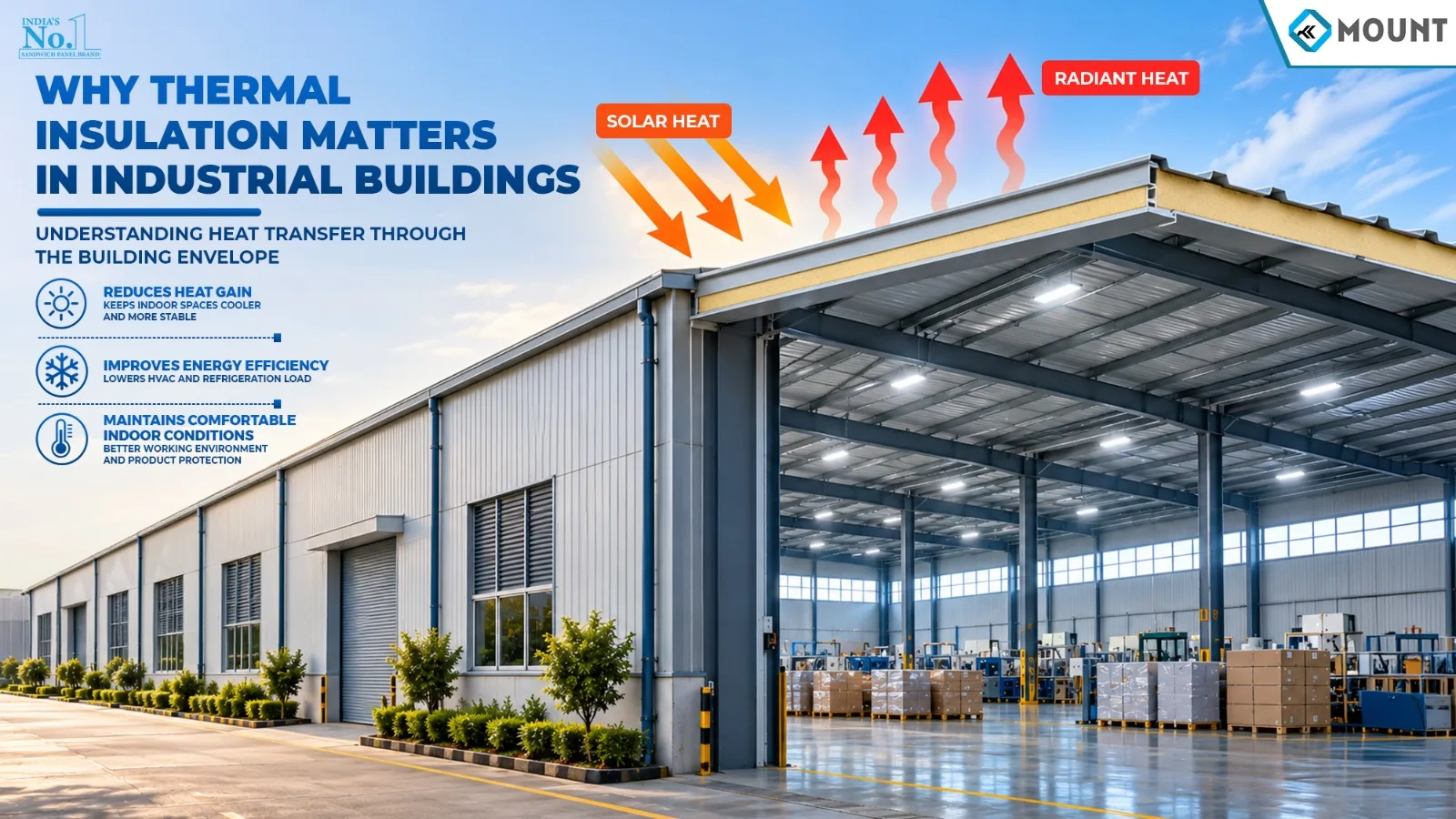
One of the less visible but more expensive consequences of poor roofing is thermal inefficiency. Roofs account for a significant portion of heat gain in large-span buildings.
When insulation performance drops, indoor temperatures rise. Cooling loads increase. Over time, this leads to a measurable spike in energy consumption.
Engineered systems like Mount’s insulated panels for steel buildings help maintain stable internal conditions. By reducing thermal transfer, they bring down dependency on HVAC systems , which, across 15–20 years, becomes a major cost variable.
For facilities operating continuously, even small inefficiencies compound into substantial operational expenses.
Durability Is Not Just About Thickness
A common misconception in roofing is equating thickness with durability. While thickness plays a role, long-term performance depends more on coating quality, joint detailing, and resistance to environmental stress.
In coastal regions, for example, salt-laden air accelerates corrosion. This is where coastal industrial roofing systems require specific engineering considerations , including coating systems and fastening methods designed for aggressive environments.
Similarly, systems exposed to industrial pollutants need protection against chemical reactions that weaken the surface over time. This is where working with an experienced sandwich panel manufacturer becomes critical , not all panels are engineered for the same conditions.
System Integration vs Component-Based Roofing
Another factor that quietly impacts life cycle cost is how the roof is installed.
In many projects, roofing is treated as a combination of separate components , sheets, insulation, fasteners , sourced and assembled independently. This often leads to alignment issues, poor sealing, and inconsistent load distribution.
In contrast, systems like steel building roofing panels designed as part of an integrated solution ensure compatibility across all elements. Joint integrity improves, water ingress risks reduce, and structural behaviour remains predictable.
This system-level approach becomes especially relevant for roofing panels for steel structures, where even minor misalignment can affect overall performance.
Lifecycle Cost: Where the Real Difference Shows
The actual cost of a roof becomes visible only after installation. Maintenance frequency, repair interventions, and energy consumption begin to shape the total cost of ownership.
Roofs that require periodic patchwork, recoating, or replacement of fasteners gradually increase operational expenses. In contrast, engineered systems , including PIR Roof Panels , are designed to maintain consistent performance with minimal intervention.Over a 20-year horizon, this difference is rarely marginal. It often determines whether the roof remains an asset or turns into a recurring liability.
Mount Roofing & Structures: Engineering Beyond Supply
Mount approaches roofing as a system rather than a product. With integrated capabilities across panels, structures, and execution, the focus remains on ensuring long-term performance rather than short-term cost alignment.
Their expertise in sandwich panels for roofing is backed by controlled manufacturing processes, application-specific customisation, and execution precision. This reduces variability at every stage , from design to installation.
For project stakeholders, this translates into predictable performance, reduced maintenance exposure, and better cost control over the building lifecycle.
The 20-Year Perspective
Roofing decisions are often made once but experienced over decades. What appears to be a cost-neutral choice at the beginning can evolve into two very different financial outcomes.
Material engineering plays a defining role in that divergence. It determines how the roof performs under stress, how often it demands attention, and how efficiently it supports operations.
In that sense, the question isn’t which roof costs less today , it’s which one costs less to live with over time.
FAQs
Q1: How do engineered roofing systems reduce long-term maintenance costs?
A: They minimise failure points through better joint design, material bonding, and resistance to environmental stress, reducing the need for frequent repairs.
Q2: Are sandwich panel roofs suitable for chemically aggressive environments?
A: Yes, when designed correctly, they can be used in such environments with appropriate coatings and core materials.
Q3: What role does insulation play in roofing lifecycle cost?
A: Insulation directly affects energy consumption. Better insulation reduces cooling loads and operational expenses over time.
Q4: How do PIR Roof Panels differ from standard insulated panels?
A: They offer improved fire resistance and thermal stability, making them suitable for applications with stricter safety and efficiency requirements.
Q5: Why is system integration important in roofing projects?
A: Integrated systems ensure compatibility between components, reducing risks related to leakage, misalignment, and structural inconsistencies.
Similar Events
 23 October, 2026