 May 21, 2026
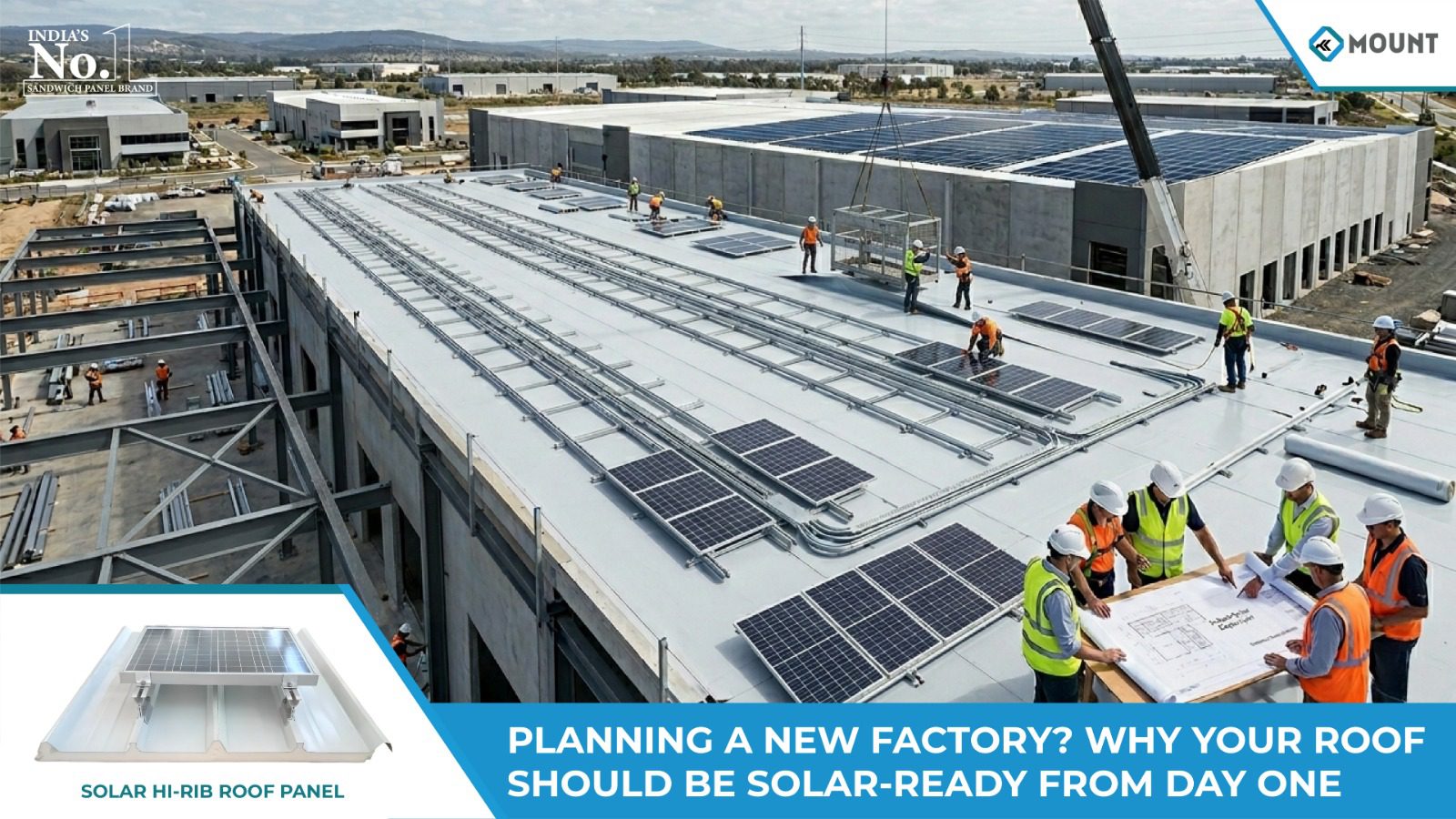
Planning a New Factory? Why Your Roof Should Be Solar-Ready from Day One
When a factory is being planned, most conversations stay focused on production layout, machinery flow, and timelines. Roofing decisions usually come later , treated as an enclosure requirement rather than a strategic asset.
That approach is starting to change.With energy costs rising and solar adoption becoming more viable, the roof is no longer just a covering. It’s becoming a potential energy-generating surface. The problem is, many buildings are not designed for it from the beginning.
By the time solar is considered, structural and layout limitations start showing up , and retrofitting becomes expensive.
What “Solar-Ready” Actually Means (It’s Not Just Space)
A common assumption is that leaving an empty roof area is enough. It isn’t.
A solar-ready roof needs to be planned at multiple levels:
- Structural load capacity for panels + mounting systems
- Roof orientation and slope for optimal solar exposure
- Pre-defined zones free from obstructions
- Compatibility with mounting and fastening systems
- Waterproofing strategy aligned with penetrations
Systems like Solar Roof Sandwich Panel are designed keeping these integrations in mind, so the roof can support solar without rework later.
Load Planning: The First Design Constraint
Solar systems add dead load and live load to the roof. This includes:
- Panel weight
- Mounting structures
- Cable trays and access pathways
- Maintenance loads (human access, equipment)
If this is not accounted for during design, reinforcement becomes necessary later.
For buildings using Solar PUF Roof Panels, integrating load considerations early ensures that purlins, rafters, and connections are sized correctly from the start.Retrofitting typically involves strengthening members , which increases cost and may disrupt operations.
Roof Layout: Small Decisions, Big Impact
Roof usability for solar depends heavily on layout decisions made early.
Common design mistakes that reduce usable solar area:
- Random placement of vents and exhaust systems
- Oversized skylight distribution
- Equipment zones cutting across panel installation areas
- Irregular roof geometry
A planned layout ensures uninterrupted panel zones, improving efficiency.
Using systems like Solar Sandwich Panel for Building Roof, designers can align structural grid and panel layout with solar installation zones.This directly affects generation capacity and long-term ROI.
Mounting Integration and Waterproofing
One of the biggest risks during solar installation is roof penetration.Mounting systems require anchoring, and if the roofing system isn’t designed to accommodate this, it creates potential leakage points.
Typical issues seen in retrofitted systems:
- Improper sealing around anchor points
- Damage to panel coating during installation
- Misalignment between mounting structure and panel joints
With PV Solar Roof Sandwich Panel systems, mounting compatibility is considered during design, reducing the need for invasive modifications later.This keeps the roof watertight even after solar installation.
Thermal Behaviour and Dual Performance
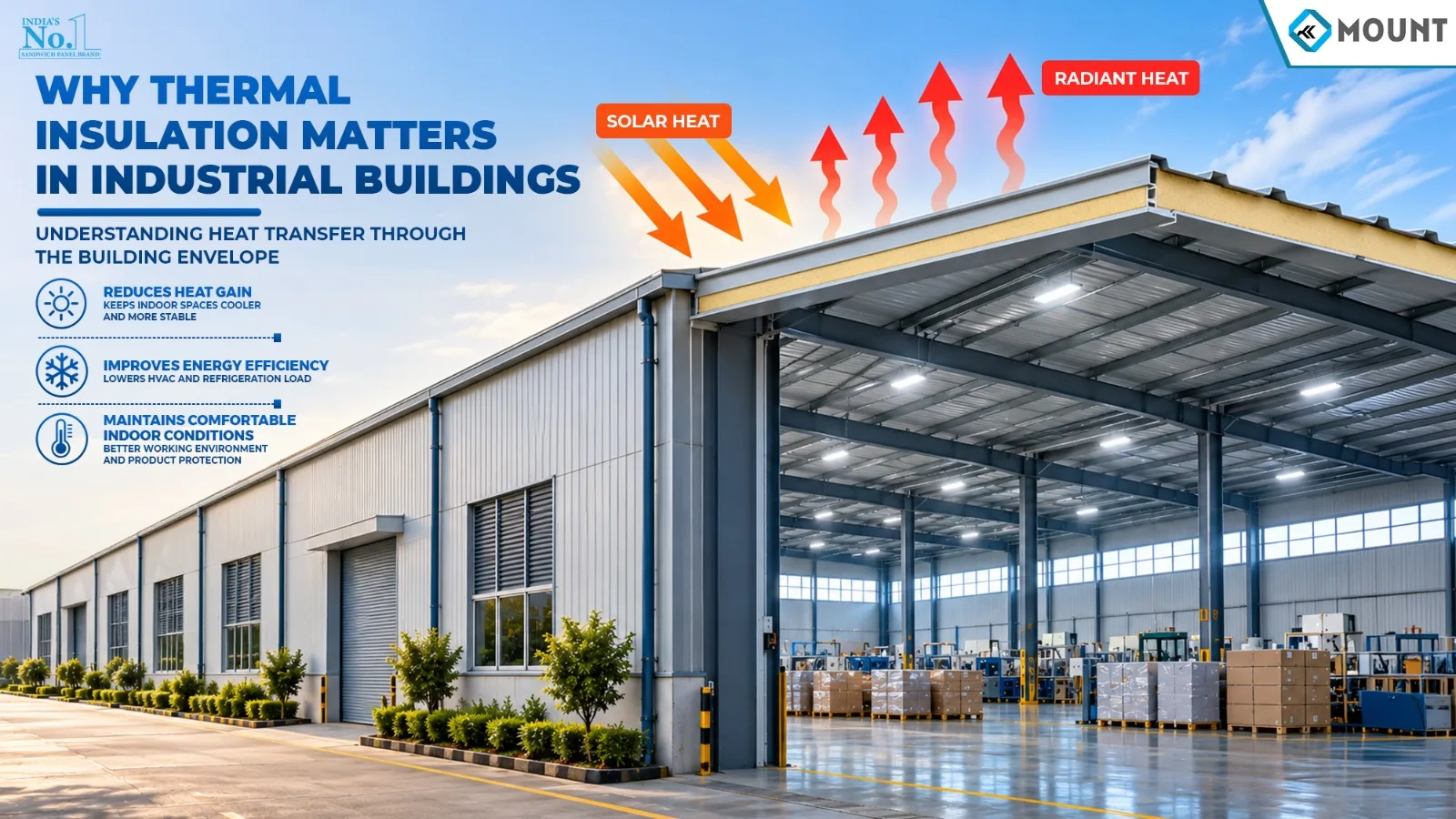
A solar-ready roof doesn’t just generate energy , it also influences thermal performance.
Panels installed on the roof create shading, reducing direct heat gain. When combined with insulated systems like Solar PUF Panels, this leads to:
- Lower internal temperature fluctuations
- Reduced HVAC load
- Improved working conditions inside the facility
So the roof starts performing two roles , insulation and energy generation.
Long-Term Financial Flexibility
One advantage of designing for solar early is flexibility.
The business doesn’t have to install solar immediately. But when the decision is made later, the infrastructure is already ready.
This avoids:
- Structural modifications
- Production downtime
- Additional engineering costs
For facilities using Solar Sandwich Panels, this means faster solar deployment when needed, without disrupting operations.
System Alignment vs Retrofit Challenges
Retrofitting solar onto an existing roof often leads to compromises:
- Limited load capacity
- Reduced usable area
- Higher installation complexity
- Increased risk of leakage
In contrast, systems planned from the beginning , such as h-rib sandwich panels , allow better integration between structure, panel, and mounting system.
The difference is not just technical. It shows up in cost, time, and performance.
Where Mount Roofing & Structures Adds Value
Mount approaches factory roofing with future adaptability in mind.
Instead of treating roofing as a static component, the system is designed considering:
- Structural readiness for additional loads
- Panel compatibility with solar mounting systems
- Long-term performance under combined thermal and structural stress
With solutions like Solar Roof puf Panel, the focus is on reducing the gap between current requirements and future upgrades.
For project teams, this means fewer redesigns and smoother transitions when solar integration is implemented.
Final Takeaway
A factory roof is one of the largest unused surfaces in any industrial facility.Designing it without considering future energy use is becoming a missed opportunity.Solar readiness doesn’t increase complexity at the design stage. It reduces complexity later.Because once the building is operational, changes become more expensive, more disruptive, and harder to justify.Planning for it early keeps that option open , without compromise.
FAQs
- What is the additional load of a typical solar installation on a factory roof?
It varies, but includes panel weight, mounting structure, and maintenance load , all of which must be considered during structural design. - Can existing roofs be upgraded for solar later?
Yes, but it often requires structural reinforcement and may involve downtime. - How do solar panels affect roof waterproofing?
Improper installation can create leakage points, which is why mounting integration must be planned early. - Do solar panels improve thermal performance?
Yes, they provide shading and reduce heat gain, especially when combined with insulated roofing systems. - Why is system integration important for solar-ready roofs?
Because structural, roofing, and mounting systems must work together to ensure performance and durability.
Similar Events
 23 October, 2026