 May 26, 2026
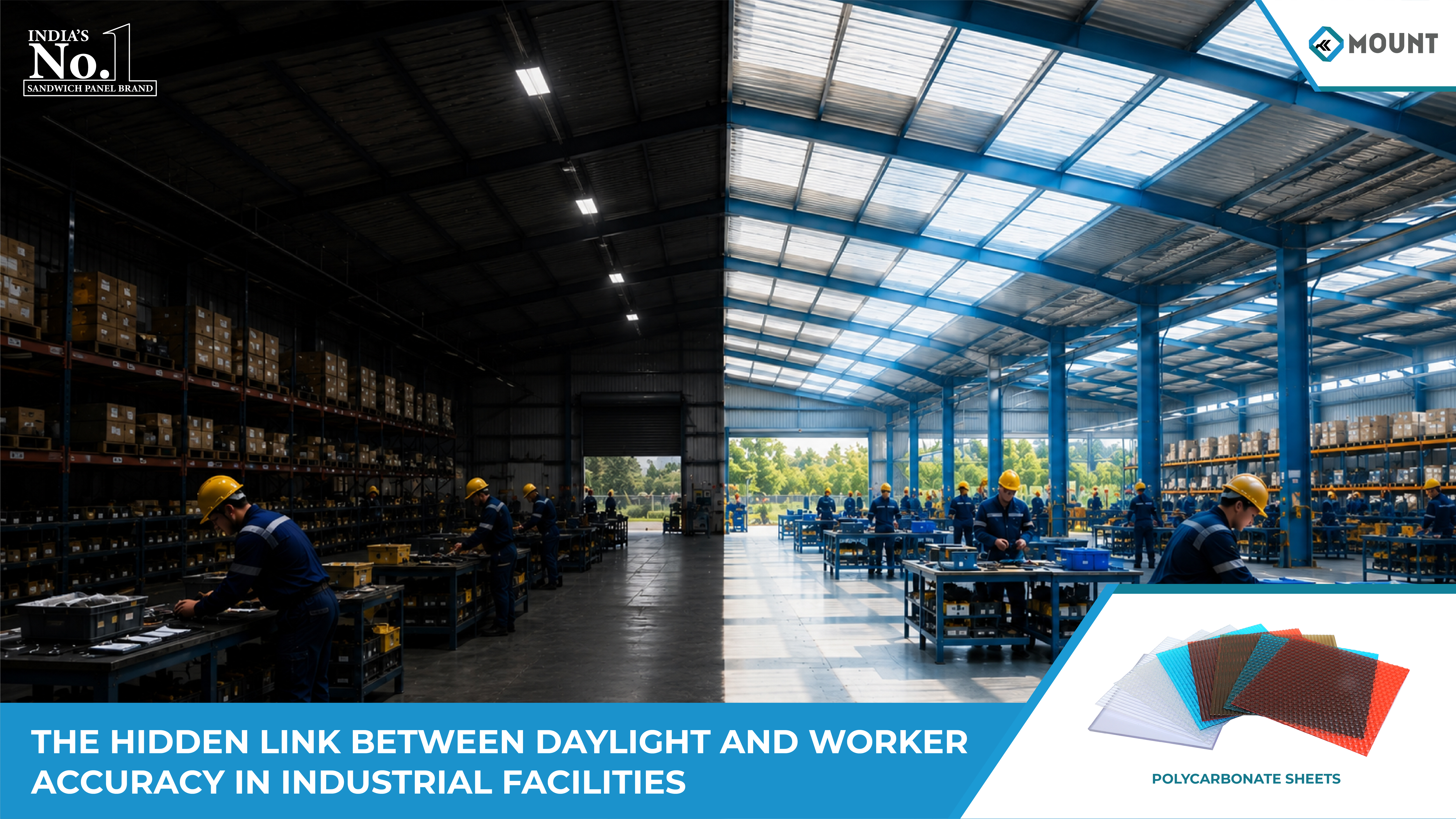
The Hidden Link Between Daylight and Worker Accuracy in Industrial Facilities
In most industrial projects, lighting is treated as a utility , something to be “provided” rather than engineered. Lux levels are calculated, fixtures are installed, and compliance boxes are ticked.
But what gets missed is how lighting actually affects human performance on the shop floor.
Daylight, in particular, changes how people work. Not in a dramatic way, but in small, measurable ways , fewer errors, better focus, more consistency across shifts. Over time, those small improvements start reflecting in output quality and operational efficiency.
Why Artificial Lighting Alone Doesn’t Solve the Problem
Artificial lighting systems are designed for uniformity, but in real conditions, they rarely behave that way.
Common issues observed in industrial facilities:
- Uneven light distribution across large spans
- Glare from fixtures placed at incorrect angles
- Shadow zones near machinery or racks
- Flicker-related fatigue during long shifts
These factors don’t stop work, but they affect precision. In tasks like inspection, assembly, or packaging, even minor visibility issues lead to inconsistencies.This is where natural daylight starts making a difference , not by replacing artificial light, but by stabilizing the overall lighting environment.
How Daylight Improves Worker Accuracy
Daylight provides full-spectrum illumination, which the human eye processes more comfortably than artificial sources.
From an operational standpoint, this leads to:
- Better visual clarity for fine-detail tasks
- Reduced eye strain over long working hours
- Faster visual recognition during inspection processes
- Improved consistency in repetitive tasks
In facilities using polycarbonate sheets for industrial buildings, daylight integration helps distribute natural light evenly across work zones, reducing dependence on artificial lighting during daytime.
The impact isn’t immediate, but over weeks and months, error rates tend to reduce.
The Psychological Impact on Workforce Performance
Lighting doesn’t just affect visibility , it affects alertness.
Workers in naturally lit environments tend to maintain better focus throughout shifts. There’s less fatigue buildup, especially in operations running extended hours.
Key behavioural effects observed:
- Improved attention span during repetitive tasks
- Reduced mental fatigue in long shifts
- Better engagement with work processes
- Lower dependency on break cycles caused by eye strain
In contrast, poorly lit environments , even if technically “adequate” , tend to create dullness and reduced concentration.This is one of the reasons why facilities using transparent polycarbonate sheets for skylight systems often report better working conditions without major operational changes.
Daylight Integration Is Not Just Skylight Placement
A common mistake is treating daylight as an add-on , installing skylights without planning distribution.
In reality, daylight design requires coordination between structure, panel placement, and material selection.
Key design considerations include:
- Placement of daylight panels relative to work zones
- Ratio of daylight panels to opaque roofing
- Height and span of the structure affecting light spread
- Avoidance of direct glare on critical workstations
Working with an experienced polycarbonate sheets manufacturer ensures that light transmission properties are matched with application requirements.Too much light creates glare. Too little defeats the purpose.
Balancing Daylight with Thermal Performance
One concern with daylight systems is heat gain.
Uncontrolled daylight entry can increase internal temperatures, especially in high-exposure regions. This creates a trade-off between visibility and thermal comfort.
To manage this, material selection becomes critical.
- Multiwall polycarbonate sheets reduce heat transfer
- Diffused sheets distribute light without creating hotspots
- UV-protected layers improve durability under exposure
For applications handled by an industrial skylight polycarbonate sheets supplier, the focus is on achieving light transmission without compromising insulation.
This balance determines whether the system improves or disrupts working conditions.
Energy Efficiency and Operational Impact
Daylight reduces the need for artificial lighting during working hours.
In large facilities, this translates into:
- Lower electricity consumption during daytime
- Reduced load on lighting circuits
- Improved energy efficiency metrics
For projects using polycarbonate sheets for commercial roofing, this becomes part of a broader cost optimization strategy , not just a design feature.Over time, the savings from reduced lighting usage contribute to operational efficiency.
Application Beyond Industrial Facilities
Daylight integration isn’t limited to factories.
The same principles apply in large-span public and commercial structures:
- Polycarbonate sheets for malls roofing improve ambient lighting in open areas
- Polycarbonate sheets for airports roofing support large-scale daylight distribution without excessive heat gain
The underlying requirement remains the same , controlled, diffused light that enhances visibility without creating discomfort.
Mount Roofing & Structures: Integrating Daylight at System Level
Mount approaches daylight as part of the roofing system, not an additional feature.
Instead of isolated skylight placement, the integration considers:
- Structural layout and panel positioning
- Compatibility between roofing panels and daylight sheets
- Long-term performance under UV exposure and weather conditions
By aligning daylight solutions with overall roofing design, the system performs consistently , both in terms of illumination and durability.For industrial clients, this reduces the gap between design intent and actual working conditions on-site.
Final Thought
Lighting is rarely questioned once a facility becomes operational. But it quietly affects how work gets done every day.Daylight doesn’t change processes. It improves how those processes are carried out.And in industrial environments, where precision and consistency matter, that difference becomes measurable , not instantly, but over time.
FAQs
- How does daylight improve accuracy in industrial tasks?
It provides better visual clarity and reduces eye strain, leading to fewer errors in precision-based work. - Can daylight completely replace artificial lighting in factories?
No, but it significantly reduces dependency during daytime operations. - Do skylights increase heat inside industrial buildings?
They can if not designed properly. Material selection and placement are critical to control heat gain. - What type of material is best for daylight integration in roofing?
Polycarbonate sheets are widely used due to their light transmission, durability, and insulation properties. - How does Mount Roofing & Structures improve daylight integration?
By designing roofing systems where daylight panels are aligned with structure, materials, and performance requirements.
Similar Events
 23 October, 2026