 Jul 15, 2026
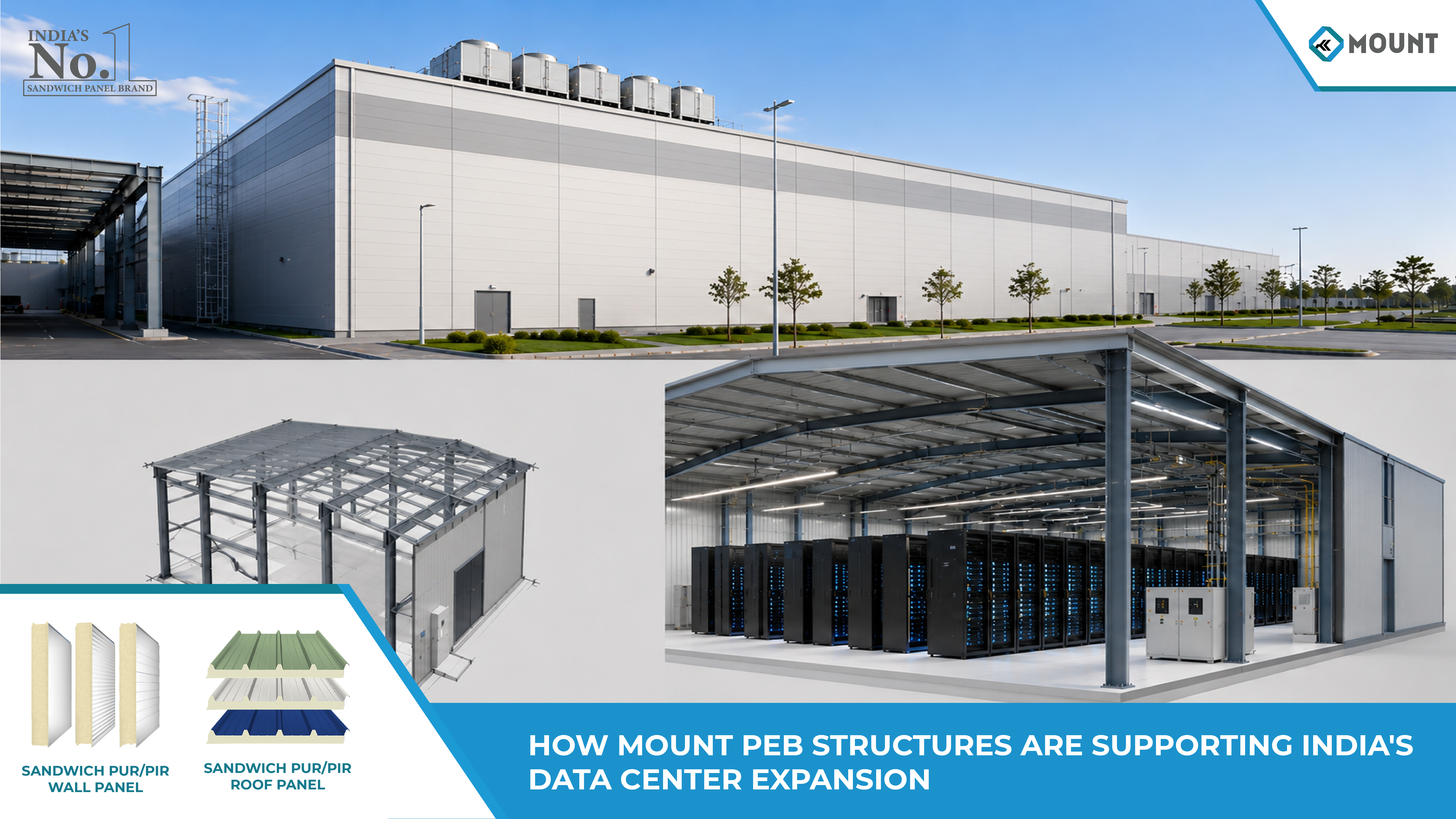
How Mount PEB Structures Are Supporting India’s Data Center Expansion
A few years ago, data centers were discussed mainly within technology circles.
Today, they are influencing real estate decisions, infrastructure investments, power planning, and industrial construction across the country.
Every cloud application, digital payment, AI workload, streaming platform, and enterprise software platform relies on physical infrastructure somewhere. Behind every digital interaction is a facility filled with servers, cooling systems, power equipment, and network infrastructure.
India is building more of those facilities than ever before.
What’s interesting is that the conversation is no longer limited to servers and technology. Developers are paying just as much attention to how these facilities are constructed.
Because in a market where demand is growing rapidly, construction speed has become a strategic advantage.
The Race Isn’t Just About Capacity Anymore
For data center developers, timing matters.
A facility delivered six months late doesn’t simply delay construction. It delays revenue generation, customer onboarding, infrastructure deployment, and market expansion plans.
That’s one reason traditional construction approaches are facing increased scrutiny.
Data center operators need facilities that can be designed, manufactured, erected, and commissioned within compressed timelines. At the same time, they cannot compromise on structural reliability or future scalability.
This combination of requirements has accelerated the adoption of PEB Structures across major data center markets including Bengaluru, Hyderabad, Chennai, Mumbai, and Noida.
The appeal isn’t difficult to understand.
Developers are looking for a construction methodology that keeps pace with the speed of digital infrastructure growth.
Data Centers Need Space Differently Than Other Buildings
Not all industrial buildings are designed around the same priorities.
A manufacturing facility may focus on production flow. A warehouse may prioritize storage density.
Data centers operate differently.
Large uninterrupted floor areas are often preferred because they provide greater flexibility for server layouts, equipment placement, cooling systems, and future infrastructure modifications.
Columns placed in the wrong location can create operational constraints that last for decades.
This is where engineered steel structures offer a practical advantage. Long-span structural systems allow developers to create flexible layouts capable of adapting to changing technology requirements without major structural modifications.
For an industry evolving as quickly as data centers, that flexibility matters.
Expansion Is No Longer a Future Consideration
One pattern is becoming increasingly common across the sector.
Developers are planning future expansion before the first phase is even operational.
A facility designed for current demand may require additional capacity much sooner than expected. Cloud adoption continues to accelerate. AI infrastructure requirements are growing. Enterprise workloads are becoming more data-intensive.
Because of this, scalability is becoming a core design requirement rather than an optional feature.
Many developers now prefer working with a Peb Construction Company capable of supporting phased infrastructure growth instead of treating each expansion as a separate project.
The ability to expand efficiently has become almost as important as the ability to build quickly.
The Building Envelope Has Started Influencing Operating Costs
Data center discussions often focus on servers, cooling systems, and power infrastructure.
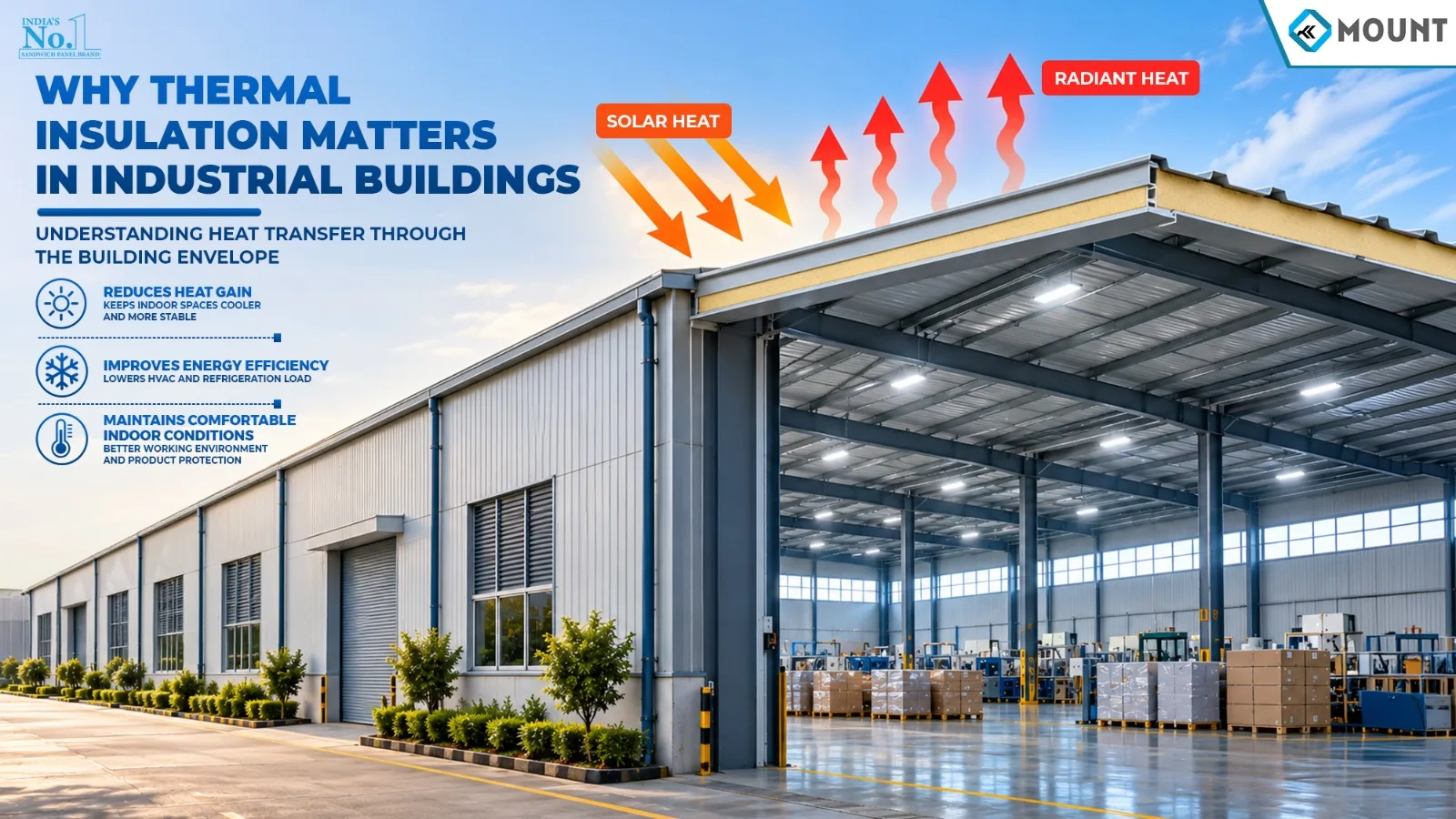
Yet one of the most overlooked contributors to long-term operating efficiency is the building envelope itself.
A poorly designed enclosure increases heat ingress. That additional heat ultimately becomes a cooling challenge.
This is why developers increasingly combine structural steel systems with insulated panels for steel buildings to create more thermally efficient facilities.
The objective isn’t simply constructing a building.
It’s reducing the amount of energy required to maintain stable operating conditions inside the building for years to come.
When facilities operate continuously, even small improvements in thermal performance can have a meaningful impact over the asset lifecycle.
Why Factory-Controlled Construction Is Gaining Ground
Data center projects involve multiple stakeholders working simultaneously.
Civil contractors, electrical teams, cooling specialists, network infrastructure providers, security integrators, and commissioning teams all depend on construction schedules staying on track.
Unpredictability creates problems.
Factory-engineered building systems help reduce many of the variables associated with conventional construction. Structural components are manufactured under controlled conditions before arriving at site ready for assembly.
That predictability is one reason developers increasingly evaluate the capabilities of a Pre-engineered Building Manufacturer long before project execution begins.
The conversation is no longer only about cost.
It’s about certainty.
Data Centers Demand Precision
A data center isn’t a building that can afford significant structural deviations.
Equipment loads, cable routing, cooling infrastructure, raised flooring systems, and future expansion requirements all depend on accurate execution.
This has increased demand for engineering-led construction approaches where design, manufacturing, and installation operate within a coordinated framework.
Many of the world’s most advanced digital infrastructure facilities have adopted this philosophy because it allows greater control over quality, schedule, and scalability.
India’s data center sector is moving in the same direction.
Why Mount Is Becoming a Preferred Infrastructure Partner
The challenge facing developers today extends beyond material procurement.
They need partners capable of supporting large-scale infrastructure growth while maintaining manufacturing consistency and project execution reliability.
Mount Roofing & Structures has invested significantly in expanding its manufacturing capabilities to meet these requirements. With advanced production facilities, substantial steel processing capacity, and expertise across complex infrastructure projects, Mount supports developers building facilities designed for long-term operational performance.
As one of the established Pre-engineered Metal Building Manufacturers, Mount combines engineering expertise with large-scale manufacturing capability to deliver projects where speed, accuracy, and scalability are critical.
The company’s ability to integrate structural systems with pre-engineered building panels and insulated sandwich panel solutions provides an additional advantage for data center developers seeking efficient building envelopes alongside robust structural frameworks.
Building for the Next Phase of India’s Digital Economy
The future growth of India’s digital ecosystem will depend on physical infrastructure.
Every new cloud deployment, AI platform, enterprise application, and digital service ultimately requires data center capacity somewhere.
That means the construction industry has an important role to play in enabling the next phase of technological growth.Developers need facilities that can be delivered faster.Operators need buildings that perform efficiently & Investors need infrastructure capable of adapting to future demand.This is why PEB-based construction continues gaining momentum across the sector.The question is no longer whether data centers will expand Instead The question is whether infrastructure delivery can keep pace.For many developers, that answer increasingly begins with the right structural partner.
FAQs
1. Why are PEB structures becoming popular in data center construction?
They enable faster project execution, provide large clear spans, support future expansion, and allow greater construction predictability compared to many conventional methods.
2. How do insulated panels improve data center buildings?
Insulated panels help reduce heat ingress, improve thermal performance, and support more efficient cooling operations within the facility.
3. Why are clear-span structures important in data centers?
They provide greater flexibility for server layouts, equipment placement, cable routing, and future modifications without structural constraints.
4. Can PEB-based data centers be expanded later?
Yes. One of the major advantages of engineered steel structures is the ability to accommodate phased expansions more efficiently than many conventional building systems.
5. What should developers evaluate when selecting a PEB partner for data center projects?
Manufacturing capacity, engineering expertise, project execution capability, structural design experience, supply reliability, and integration with insulated building systems should all be considered.
Similar Events
 23 October, 2026