 Jul 13, 2026
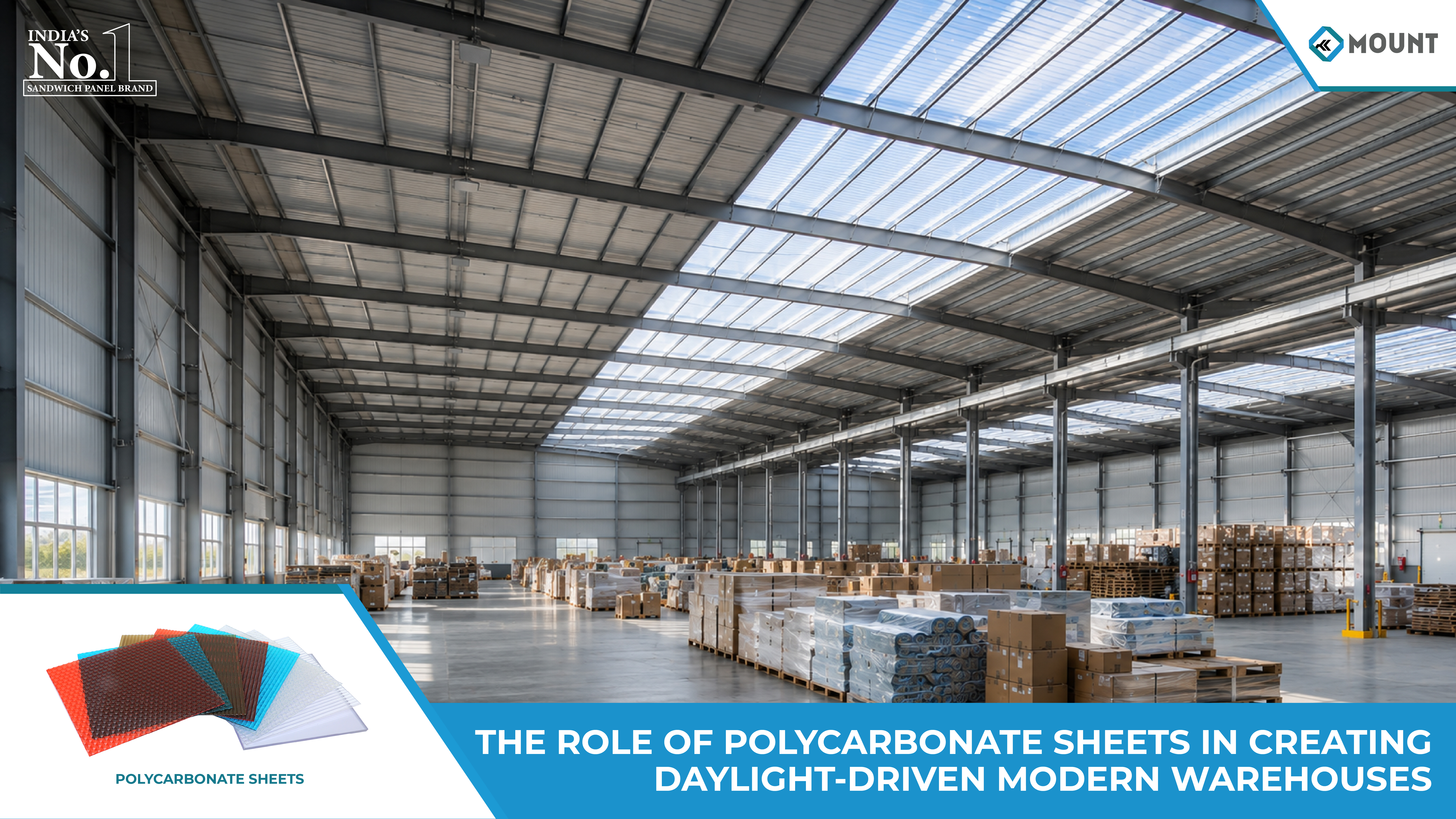
The Role of Polycarbonate Sheets in Creating Daylight-Driven Modern Warehouses
A few years ago, warehouse discussions revolved around storage density, loading bays, clear heights, and material handling equipment.Today, another topic keeps finding its way into design meetings.Daylight.
Not because architects suddenly want brighter buildings. Because warehouse operators are becoming increasingly aware of what artificial lighting costs over the lifetime of a facility.Walk into a modern logistics park around noon and you’ll notice something interesting. Some warehouses feel bright without appearing harsh. Others still rely heavily on artificial lighting despite having abundant sunlight outside.
The difference often comes down to how daylight was planned during the design stage.That’s where polycarbonate roof lighting systems have started changing the conversation.
Warehouses Were Never Designed Around Daylight. Now They Are.
For decades, industrial buildings were designed to keep the weather out and operations running. Natural light was a bonus. If the warehouse felt dark, additional fixtures were installed. If electricity bills increased, it was considered part of operational overhead.
That approach is becoming harder to justify. Energy costs continue to rise. Sustainability targets are becoming stricter. Large occupiers are paying closer attention to operational efficiency than ever before.
As a result, developers are looking at the building envelope differently. Instead of asking how many light fixtures are required, they are asking how much natural light can be used before those fixtures need to switch on.
That shift is driving greater adoption of polycarbonate sheets for warehouses across logistics facilities, manufacturing units, and distribution centres.
The Goal Isn’t More Light. It’s Better Light.
One of the biggest misconceptions about warehouse daylighting is that brighter automatically means better.
Anyone who has worked inside a building with poorly planned skylights knows that’s not true.Direct sunlight can create glare. Excessive brightness can make digital screens difficult to read. Certain workstations become uncomfortable during peak afternoon hours.
Good daylighting is about balance.The objective is to introduce diffused natural light that improves visibility without creating operational challenges.
This is why roof daylighting systems are becoming more sophisticated. Developers are no longer looking for simple, transparent openings in the roof. They’re looking for systems that can deliver usable daylight consistently throughout the day.
The Electricity Savings Are Real, But That’s Not the Whole Story
Most facility owners begin exploring daylighting because of energy consumption. That’s understandable. In large warehouses operating across thousands of square metres, lighting remains one of the major contributors to electricity usage during daytime operations.
But once a facility begins using natural daylight effectively, operators often notice other benefits. Work areas become easier to navigate. Inventory labels become more visible. Inspection processes become more comfortable. Forklift operators frequently work in environments with better visual clarity.
These are operational improvements rather than energy metrics, yet they influence how efficiently the building functions every day. Interestingly, many warehouse operators don’t fully appreciate these benefits until after the building becomes operational.
A Roof Lighting System Has a Tough Job
From the ground, a skylight may appear like a simple component. On the roof, it faces a very different reality. Industrial roofing systems are exposed to heat, heavy rainfall, dust accumulation, UV radiation, temperature fluctuations, and years of environmental exposure.
A material that performs well initially but deteriorates after a few seasons quickly becomes a maintenance issue. That’s one reason developers increasingly work with an experienced polycarbonate sheets supplier when planning daylighting systems.
The focus is not merely on light transmission. Long-term durability matters just as much. After all, replacing roof lighting systems in an operational warehouse is rarely a task anyone looks forward to.
Why Polycarbonate Has Become the Material of Choice
Several daylighting materials have been used in industrial construction over the years. Polycarbonate continues to gain preference because it addresses multiple challenges at the same time.It combines light transmission with impact resistance, weather durability, and UV stability. That combination is particularly valuable in industrial environments where roof systems are expected to perform for years with minimal intervention.
Developers evaluating daylighting solutions often consult a polycarbonate sheets manufacturer early in the design process because daylight performance depends heavily on material quality, profile compatibility, and roof integration. The material itself is only one part of the equation.How it works with the overall roofing system matters equally.
Daylighting Has Moved Beyond Warehouses
The growing adoption of polycarbonate roof lighting isn’t limited to logistics facilities.
Manufacturing plants are using daylighting systems to improve working environments across production areas. Distribution centres are incorporating skylight layouts into large-span roof designs. Industrial campuses are using daylight to reduce daytime energy dependency.
Even agricultural applications have embraced the concept. The use of Polycarbonate sheets for poultry sheds continues to grow because controlled natural light contributes to more stable operating environments while reducing dependence on artificial illumination.
Different industries may use daylight differently.The underlying objective remains remarkably similar.Use available natural light more intelligently.
Why Daylighting Is Being Planned Earlier Than Ever Before
One trend stands out across newer industrial developments. Daylighting discussions are happening much earlier in the project lifecycle.Five years ago, skylights were often treated as optional additions. Today, they are increasingly being incorporated into roof layouts from the beginning. Architects, consultants, and project teams are evaluating daylight distribution, thermal performance, structural integration, and maintenance considerations as part of a single design strategy.
This explains the growing demand for solutions from a polycarbonate sheet for skylights manufacturer capable of supporting both performance and installation requirements. Daylight is no longer an afterthought. It’s becoming part of the building’s operational strategy.
Why Businesses Are Choosing Mount Polycarbonate Solutions
Industrial buildings are expected to do more today than they were a decade ago. They need to support operational efficiency, sustainability objectives, employee comfort, and long-term performance simultaneously.
Mount Roofing & Structures helps developers achieve that balance through advanced daylighting solutions engineered for industrial environments. Mount Polycarbonate Sheets are designed to integrate with modern roofing systems while providing reliable light transmission, weather resistance, and long-term durability. For project teams designing warehouses, logistics parks, manufacturing facilities, and distribution centres, daylight is increasingly viewed as a resource rather than a challenge.
The buildings being developed today are not simply larger than those built before. They’re expected to work harder. And increasingly, they’re being designed to make better use of the sunlight already available above them.
FAQs
1. Why are Mount polycarbonate sheets commonly used in warehouse skylights?
They allow controlled natural light penetration while offering durability, impact resistance, UV protection, and compatibility with industrial roofing systems.
2. Can Mount polycarbonate daylighting systems reduce electricity consumption?
Yes. By increasing daylight availability during operational hours, facilities can reduce their dependence on artificial lighting during the day.
3. Do polycarbonate sheets affect thermal performance?
When properly specified and integrated into the roofing system, polycarbonate sheets can provide daylight while helping maintain overall building performance.
4. Are Mount polycarbonate sheets suitable for harsh industrial environments?
Yes. Mount polycarbonate sheets are designed to withstand UV exposure, weather conditions, temperature fluctuations, and long-term outdoor use.
5. Why should daylighting be considered during the design stage rather than later?
Early planning allows better integration with roofing layouts, structural design, daylight distribution requirements, and overall facility performance objectives.
Similar Events
 23 October, 2026