 Aug 5, 2026
Coastal Manufacturing Is Growing. Is Your Roofing Ready for Salt, Laden Air?
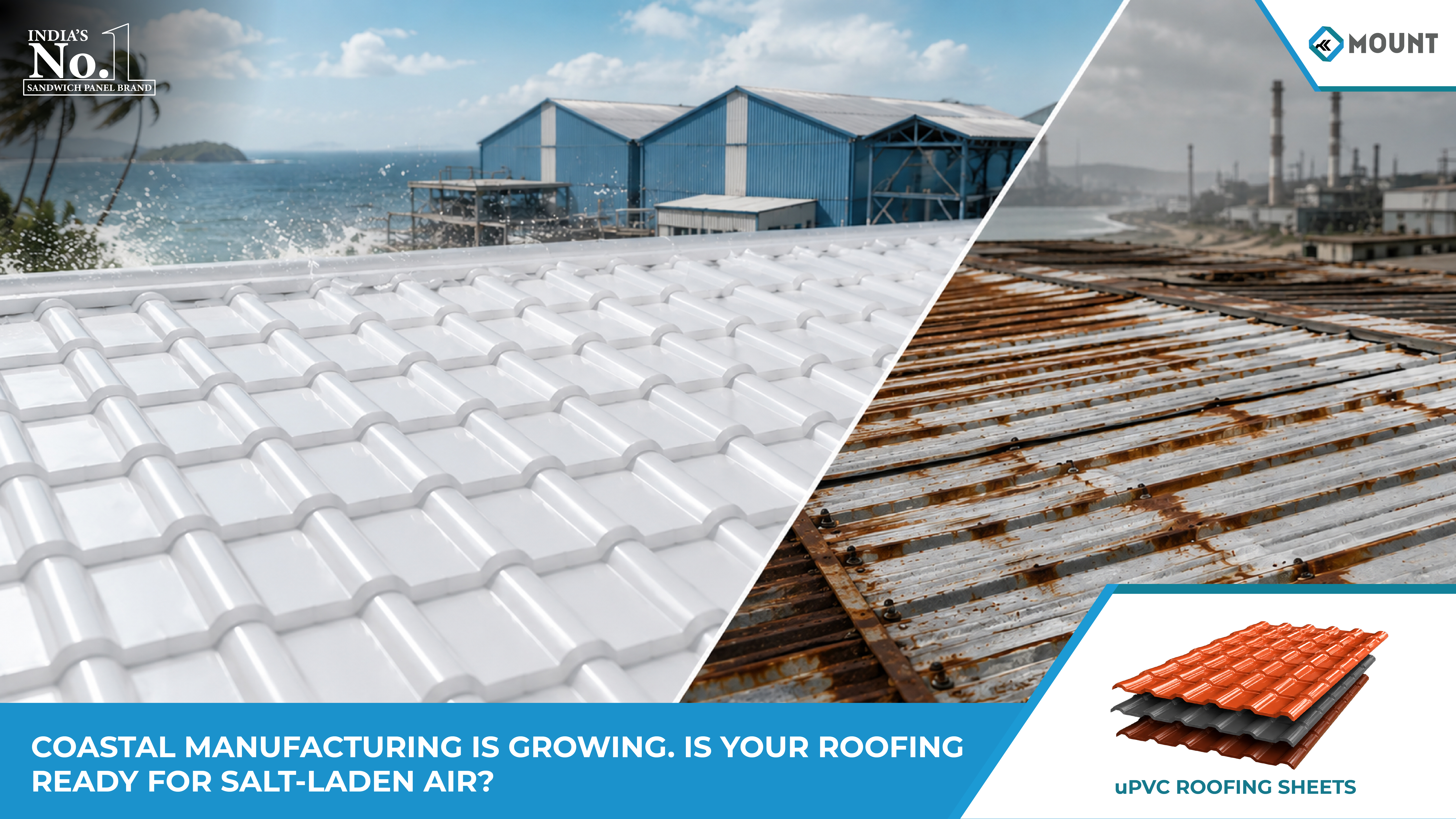
Drive along India’s western or eastern seaboard today, and you’ll see it everywhere, new sheds going up along port roads, export units clustering around logistics corridors, food processing plants expanding within a few kilometres of the coastline. Coastal manufacturing isn’t a niche anymore; it’s where a large share of India’s industrial growth is actually happening. But there’s a catch that doesn’t show up in the investment brochures: the same coastal air that makes these locations attractive for trade is quietly working against every roof built above them.
Salt doesn’t need much encouragement to do damage. Carried inland on humid coastal winds, it settles on metal surfaces, works its way into joints, and sits there, especially in the months between heavy rain spells when there’s nothing to wash it off. Add in the humidity that barely drops below uncomfortable, the intensity of tropical sun for most of the year, and monsoon rainfall that can be relentless for weeks, and you’ve got an environment that tests roofing far harder than an inland facility ever will, which is exactly why demand for heat proof roofing sheets is rising fast across coastal industrial parks.
Why Roofs Deteriorate Faster Near the Coast
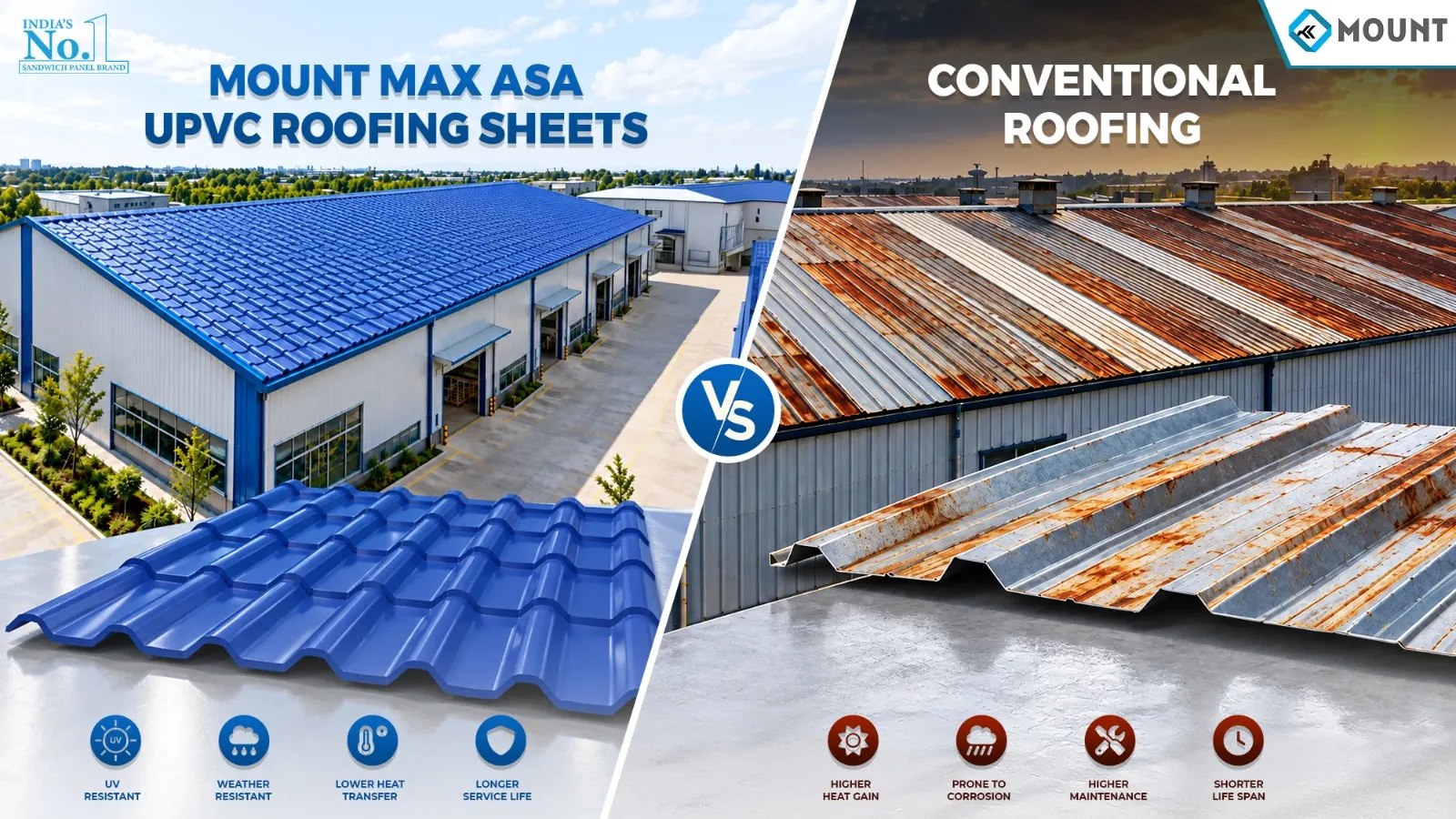
The mechanism is straightforward once you understand it. Salt is an electrolyte, and on any conventional metal roofing sheet, it accelerates the electrochemical reaction that causes rust. This is why facilities near the coast so often need corrosion resistant industrial roofing far sooner in their planning process than those built even fifty kilometres inland. Waiting until the first signs of rust appear is usually too late to avoid a costly mid, life roof replacement.
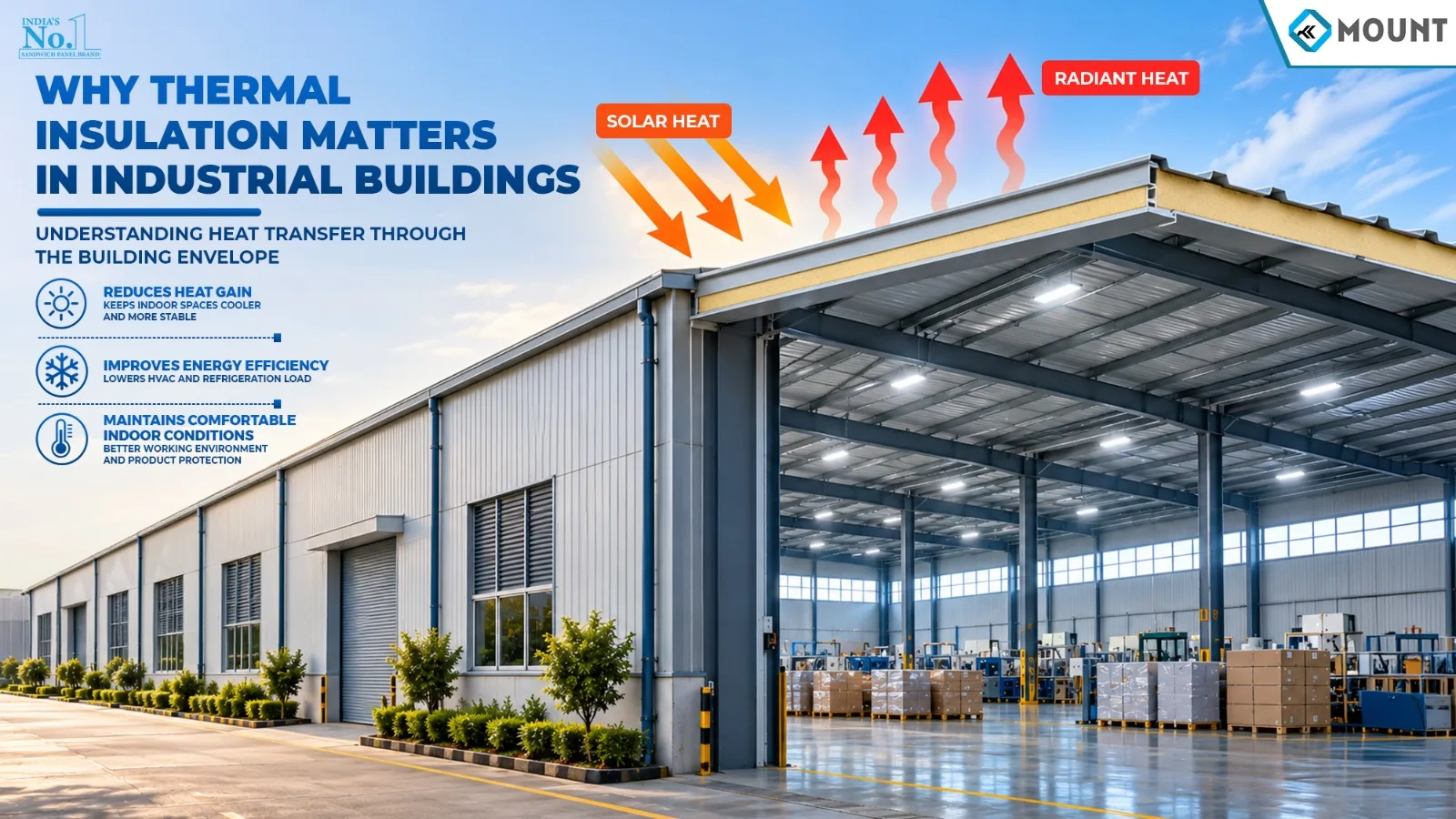
Heat adds its own pressure. Coastal regions in India often combine high ambient temperatures with high humidity, and a roof that isn’t built to manage this ends up radiating heat into the building below, driving up cooling costs for temperature-sensitive operations. This is one reason heat-proof roofing sheets have become a serious specification point for coastal manufacturing units.
Sunlight, too, behaves differently near open coastline, with less cloud cover and higher UV intensity for large parts of the year. Roofing materials that aren’t formulated to resist this kind of exposure tend to degrade, discolour, or turn brittle well before their expected service life is over, which is exactly why Mount UV resistant roof sheets have become a non-negotiable line item for facilities being planned along India’s coast.
And then there’s the rain itself. Coastal belts don’t just get rain, they get it in intense, sustained bursts, often accompanied by wind. A roof that can’t shed water fast enough, or that lets moisture seep in at the seams, sets the stage for everything from insulation damage to mold growth inside the facility.
What to Actually Look For in a Coastal Roofing Material
Given all this, the smarter approach for facility planners is choosing a roofing material engineered for these conditions from the outset, not retrofitting problems later. Waterproof uPVC roofing sheets are increasingly the material of choice here, precisely because uPVC as a substrate doesn’t rust, doesn’t corrode electrochemically the way steel does, and holds up to sustained moisture exposure without the maintenance burden that metal sheeting carries in salt, heavy air.
Of course, not every uPVC sheet on the market is built to the same standard, and this is where specification really matters. When evaluating options, facility managers should be looking closely at panel thickness, UV stabilisation, and how the manufacturer tests for coastal,grade durability; the difference between an adequate sheet and one of the best uPVC roofing sheets available in the market often comes down to details that aren’t obvious on a spec sheet at first glance.
How Mount uPVC Roofing Sheets Perform in Aggressive Coastal Conditions
This is precisely the gap Mount uPVC Roofing Sheets are built to close. As a dedicated uPVC roofing manufacturer, Mount engineers its sheets specifically to withstand the combination of salt exposure, chemical fumes, and moisture that coastal and industrial sites deal with daily, a consideration that matters just as much for chemical plants and food processing units as it does for warehouses sitting a stone’s throw from a port.
Because uPVC doesn’t corrode the way galvanised steel does, Mount’s sheets hold their structural integrity through years of salt laden air without the rust streaking or seam failure that shortens the life of conventional roofing. That resistance to chemical exposure also makes them a practical fit for manufacturing environments where airborne fumes and coastal humidity compound each other over time.
For businesses comparing costs against long term reliability, Mount’s positioning as a source of affordable uPVC roofing sheets matters just as much as the technical specification. Lower lifetime maintenance costs, fewer emergency repairs, and a longer effective service life all factor into the real cost of a roof, not just the invoice on installation day. Facilities looking to buy uPVC sheets for a new build or a roof replacement get the advantage of working with a manufacturer that understands coastal conditions as an engineering brief, not an afterthought.
Choose a Roofing Partner That Understands Coastal Conditions
Roofing decisions made for coastal manufacturing facilities carry consequences that show up years down the line, not on day one. Mount Roofing & Structures works with businesses across ports, industrial corridors, and export hubs to specify affordable uPVC roofing sheets engineered for exactly the conditions they’ll face, not a generic solution adapted after the fact. For operations where downtime and structural reliability aren’t negotiable, that’s the difference a genuinely coastal, engineered roof makes.
FAQs
1 . How does salt exposure differ from general humidity in terms of roofing material degradation?
Salt acts as an electrolyte that accelerates electrochemical corrosion in metals, which is a fundamentally different, and typically faster, degradation process than the general moisture absorption or condensation issues caused by humidity alone.
2. What uPVC sheet specifications should be checked before installing on a coastal facility?
Key specifications include sheet thickness, UV stabilisation additives, chemical resistance ratings, and manufacturer testing data for salt, spray or coastal grade durability, since these details determine actual field performance more than surface appearance.
3. Can uPVC roofing sheets be used in facilities with both coastal exposure and chemical fume generation, such as chemical plants?
Yes. uPVC’s inherent resistance to chemical exposure and corrosion makes it suitable for facilities where coastal humidity and airborne industrial chemicals act together, a combination that accelerates deterioration in conventional metal roofing.
4. How much additional maintenance cost can be expected for metal roofing in coastal zones compared to inland facilities?
While the exact figure varies by location and material grade, metal roofing near the coast typically requires more frequent recoating, fastener replacement, and corrosion treatment than the same material used inland, due to accelerated salt driven degradation.
5. Does UV exposure affect uPVC roofing sheets differently in coastal regions compared to inland locations?
Coastal regions often experience higher and more consistent UV intensity due to less cloud cover, which means UV stabilised uPVC formulations are particularly important for maintaining colour retention and structural integrity over the sheet’s service life.
Similar Events
 23 October, 2026