 Jun 3, 2026
Cold Storage Failures in Monsoon: Where Exactly Systems Break Down
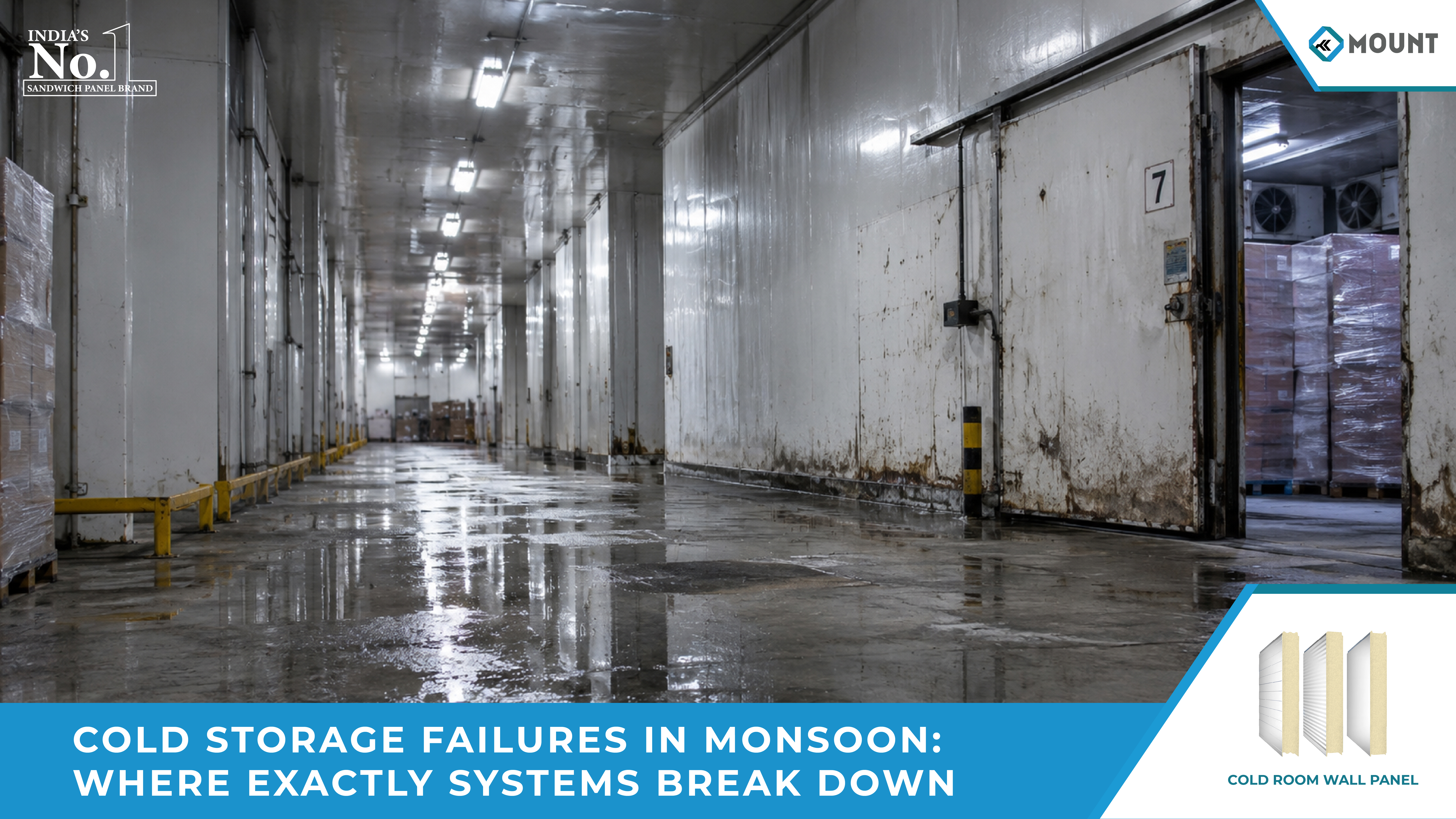
Cold storage structures will face issues during the monsoon period that are otherwise hidden during the other seasons. Buildings which seem to function efficiently during the dry season will eventually experience difficulties such as internal sweating, inability to maintain a cool temperature, and increased compressor load due to high humidity levels outside.
For cold rooms handling food products, dairy inventory, pharmaceuticals, seeds, or perishables, even minor insulation failure can create operational disruption. A small opening around a panel joint or moisture entering the insulation core may gradually affect temperature consistency across the entire storage zone. In many facilities, product damage during monsoon months begins long before teams identify visible leakage.
The common assumption is that refrigeration equipment is responsible whenever cooling performance drops. In reality, cooling systems are frequently compensating for failures happening elsewhere ,weakened panel insulation, vapor leakage, poor sealing, thermal bridging, or water ingress through exposed joints.
This is exactly why industrial developers now place greater importance on engineered cold storage puf panels capable of maintaining insulation integrity under humid environmental conditions.
Moisture Entry Through Weak Panel Connections
In times of heavy rains, moisture tends to enter the system through weak spots and not necessarily from any opening that may be visible. Weak seals in joints, loose bolts, and uneven panels tend to let water vapor into the insulated building.
Once moisture reaches the insulation layer, thermal efficiency starts dropping. Internal wall dampness, sweating surfaces, and cooling instability typically follow.
Cold storage operators commonly notice:
- Dampness near wall intersections
- Water seepage close to panel joints
- Reduction in cooling retention
- Surface sweating inside chambers
- Uneven internal temperatures
Over time, insulation affected by moisture loses its ability to maintain controlled thermal separation. This becomes one of the primary reasons industrial facilities now prefer technically engineered puf panels for cold storage instead of basic insulated assemblies.
Why Condensation Increases During Monsoon
Condensation problems become more aggressive during monsoon because external air carries substantially higher moisture content. Inside cold storage environments, surface temperatures remain significantly lower than outside atmospheric conditions. When humid air reaches colder surfaces, moisture begins collecting around ceilings, joints, corners, and metal sections.
Facilities storing pharmaceuticals or processed food products cannot afford uncontrolled internal moisture because condensation directly affects hygiene conditions and storage quality.
In practical operating conditions, condensation may lead to:
- Water droplets falling from ceilings
- Bacterial growth around damp areas
- Packaging deterioration
- Frost buildup near evaporator zones
- Moisture contamination of stored inventory
Properly engineered insulated panels for cold storage help reduce this issue by limiting thermal transfer and maintaining stronger vapor control across the structure.
Thermal Leakage Creates Continuous Cooling Loss
One of the earliest operational signs of panel inefficiency is excessive refrigeration cycling. During monsoon conditions, refrigeration systems work harder because humidity and external heat pressure increase around the building envelope.
If panel insulation density is inconsistent or sealing systems weaken, cold air loss accelerates rapidly.
This usually results in:
- Compressor overworking
- Higher electricity consumption
- Temperature fluctuation inside storage chambers
- Uneven cooling distribution
- Increased maintenance frequency
In many older facilities, operators continue servicing refrigeration equipment repeatedly without realizing the real issue originates from aging sandwich panels for cold storage or deteriorating insulation systems.
Joint Failure Often Starts Small
Cold storage structures depend heavily on panel connection accuracy. A refrigeration system may function correctly, but poorly engineered joints can still compromise overall thermal performance.
During monsoon months, external temperature shifts combined with internal cooling pressure create continuous expansion and contraction around panel junctions. Over time, weak locking systems begin loosening.
Typical failure points include:
- Air leakage near corners
- Gaps developing between panels
- Water entering through fastening points
- Sealant separation
- Reduced vapor tightness
This is why professional cold room panel installation has a direct impact on long-term operating stability.
Moisture Exposure and Structural Corrosion
Humidity-related corrosion usually develops gradually. Metal surfaces exposed to trapped moisture begin deteriorating internally before visible damage appears outside.
Facilities operating near coastal regions or industrial processing zones often face accelerated corrosion because humid air continuously interacts with roofing and wall systems.
Long-term exposure may eventually lead to:
- Rust around panel edges
- Surface coating deterioration
- Weakening of fastening systems
- Higher maintenance frequency
- Reduced operational lifespan of panels
Cold storage infrastructure designed without adequate moisture resistance often becomes expensive to maintain after repeated monsoon exposure.
Why Insulated Panels Matter More Than Ever During Monsoon
Cold storage environments require much tighter environmental control than standard industrial buildings. The structure itself functions as part of the cooling system. Once insulation quality weakens, refrigeration efficiency drops almost immediately.
Modern insulated panel systems help facilities maintain:
- Stable internal temperature zones
- Better humidity resistance
- Reduced thermal transfer
- Improved airtightness
- Lower refrigeration stress
- Cleaner and more hygienic storage environments
For industrial cold chain operators, insulation quality directly affects operational consistency and energy expenditure.
How Mount Cold Storage Panels Address These Conditions
As an experienced insulated panel manufacturer, Mount Roofing and Structures develops cold storage systems intended for demanding industrial environments where humidity control and thermal stability remain operational priorities.
Mount Cold Storage Panels are engineered with attention to:
- Insulation consistency
- Moisture-resistant construction
- Precision joint alignment
- Reduced thermal bridging
- Improved sealing performance
- Long-term durability under humid conditions
These systems are widely used across food processing units, dairy infrastructure, pharmaceutical storage facilities, frozen chambers, and industrial cold chain projects requiring controlled environmental performance.
For businesses evaluating cold storage panels for food industry applications, insulation stability and sealing precision have become equally important as refrigeration capacity itself.
Signs Your Cold Storage System May Be Underperforming
Several operational indicators usually appear before major failure occurs.
Common warning signs include:
- Water droplets on ceilings or wall surfaces
- Rising electricity bills
- Excess frost formation
- Temperature instability
- Damp insulation smell
- Rust formation near joints
- Continuous compressor cycling
- Frequent service requirements
Ignoring these conditions often increases operational losses during prolonged monsoon periods.
What to Evaluate Before Selecting Cold Storage Panels
Cold storage infrastructure should be planned with long-term operating conditions in mind rather than only installation cost.
Important evaluation areas include:
- Insulation density
- Panel thickness suitability
- Vapor-tight joint systems
- Moisture resistance capability
- Corrosion protection standards
- Energy efficiency performance
- Maintenance requirements over time
Businesses searching for the Best Cold Storage & Cold Room Manufacturer In India increasingly focus on long-term thermal reliability, structural durability, and lifecycle operating efficiency.
Conclusion
The monsoon environment poses consistent challenges to cold storage facilities. Any deterioration in the efficiency of insulation, the vapor seal, or the integrity of the panels results in the failure of refrigeration systems to sustain ideal conditions within the unit. Spoilage is more likely to occur, expenses will increase, and repairs will be required more often.
Insulated panels that have been scientifically engineered assist facilities in maintaining stable temperatures despite extended periods of moisture exposure. Facilities utilizing scientific innovations like Mount Cold Storage Panels will benefit from improved insulation capabilities and moisture resistance.
FAQs
Q1. Why do cold storage facilities experience higher power consumption during monsoon months?
External humidity increases thermal pressure on the structure, forcing refrigeration systems to run longer to maintain internal temperatures.
Q2. How does moisture affect cold storage insulation performance?
Moisture entering the insulation core reduces thermal resistance, causing faster cooling loss and temperature inconsistency.
Q3. Why are panel joints critical in cold storage infrastructure?
Improperly sealed joints allow air leakage, moisture penetration, and thermal bridging, all of which affect cooling efficiency.
Q4. Are insulated panels important for pharmaceutical cold storage facilities?
Yes. Stable insulation performance helps maintain controlled temperatures required for sensitive pharmaceutical inventory and regulated storage environments.
Q5. What factors should businesses evaluate before selecting cold storage panel systems?
Businesses should assess insulation density, sealing quality, vapor resistance, corrosion protection, thermal conductivity, and long-term maintenance performance.
Similar Events
 23 October, 2026