 Nov 14, 2026
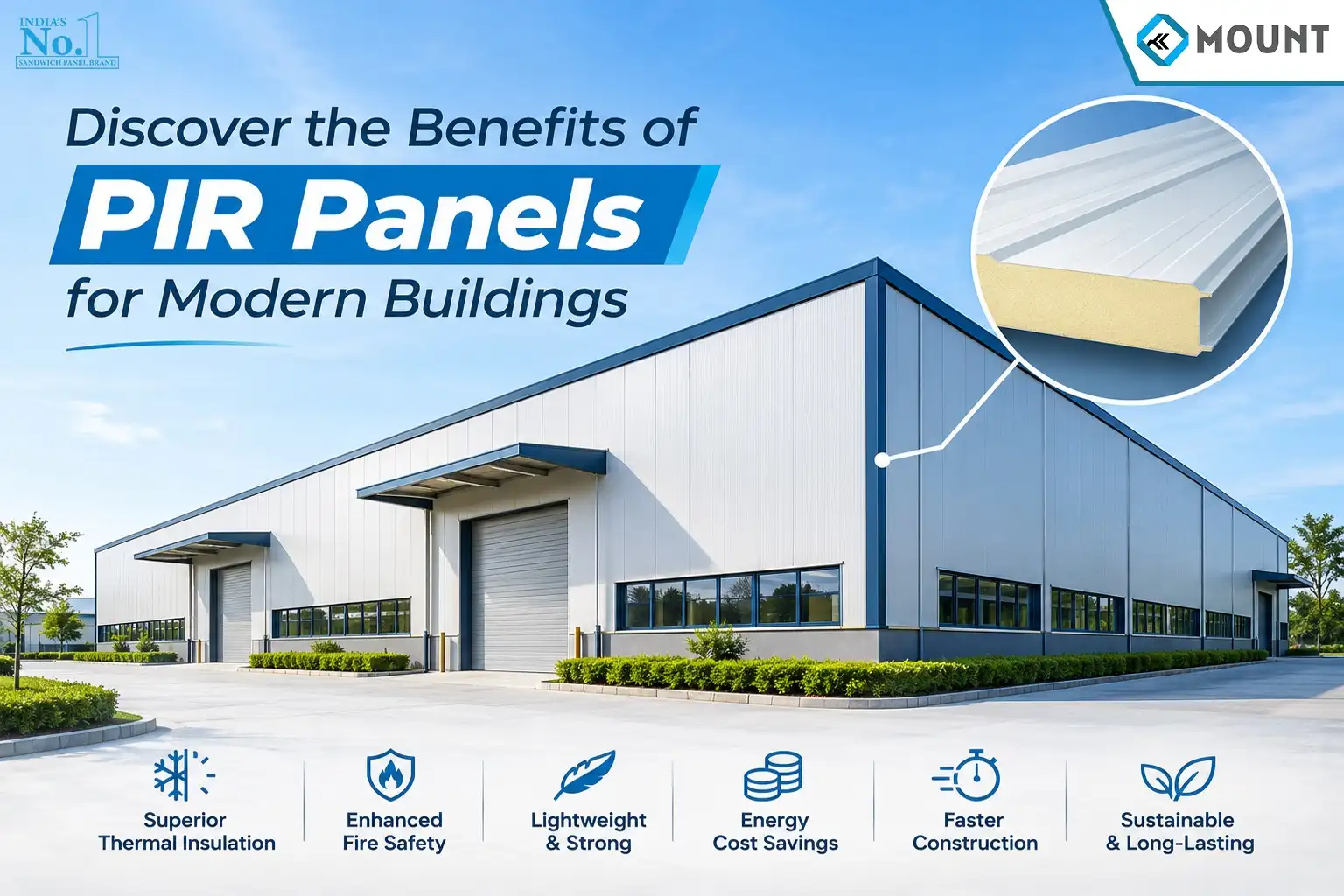
Discover the Benefits of PIR Panels for Modern Buildings
Choosing the right insulation material is essential for creating energy-efficient and comfortable buildings. Whether it is an industrial warehouse, manufacturing facility, commercial building or temperature-controlled space, proper insulation helps manage indoor temperatures and improve building performance.
A PIR panel is one of the insulation solutions used in modern construction. It combines a rigid insulation core with protective outer sheets, offering thermal insulation and practical installation benefits.
But what exactly is a PIR panel? What is its full form, and why is it used in industrial and commercial buildings?
Let’s explore its features, benefits, applications and installation considerations.
What Is a PIR Panel?
A PIR panel is an insulated sandwich panel made using a rigid Polyisocyanurate (PIR) foam core placed between two outer facing materials, commonly metal sheets.
The insulation core helps reduce heat transfer, while the outer layers provide protection and contribute to the panel’s structural performance.
PIR panels are commonly used in industrial and commercial construction, including warehouses, factories, pharmaceutical facilities, food processing units and temperature-controlled buildings.
What Is the Full Form of PIR Panel?
The full form of PIR is Polyisocyanurate.
PIR is a rigid foam insulation material related to polyurethane. It is used in insulation systems because of its thermal properties and distinct fire-performance characteristics.
PIR panels are available in different thicknesses and configurations to suit various roofing and wall applications.
6 Important Benefits of PIR Panels
PIR panels offer several advantages for modern construction. Their suitability depends on the building design, selected specifications and installation quality.
1. Excellent Thermal Insulation
One of the main reasons builders consider PIR insulation panels is their ability to reduce heat transfer.
The rigid foam core helps limit the movement of heat through roofs and walls. This can help maintain more stable indoor temperatures, particularly in buildings exposed to high outdoor temperatures.
PIR panels can be considered for:
- Industrial warehouses.
- Manufacturing facilities.
- Food processing units.
- Pharmaceutical buildings.
- Cold storage facilities.
- Commercial buildings.
The appropriate panel thickness should be selected according to the required thermal performance and building conditions.
2. Better Energy Efficiency
Poorly insulated roofs and walls can allow unwanted heat to enter a building, increasing the workload on cooling systems.
PIR panels can help reduce heat transfer through the building envelope. When combined with proper ventilation, suitable roofing design and efficient HVAC systems, they can contribute to better energy management.
The actual energy savings depend on the building’s design, climate, insulation thickness, air leakage and operating conditions.
3. Improved Fire Performance
Fire safety is an important consideration when selecting insulation materials.
PIR insulation is formulated to provide different fire-performance characteristics from conventional polyurethane insulation. Under certain fire conditions, PIR foam can form a char layer that may help slow heat transfer.
However, PIR panels are not fireproof.
Understanding PIR Panel Fire Rating
The PIR panel fire rating depends on the specific product, panel construction and applicable fire-test standard.
Before selecting a PIR panel, check:
- The manufacturer’s fire-test certificate.
- Applicable fire classification.
- Panel thickness and core formulation.
- Metal facing materials.
- Joint and installation details.
- Whether the test covers the complete panel assembly.
Do not assume that the fire rating of one panel configuration applies to every product or thickness. For projects with strict fire-safety requirements, consult the manufacturer’s test reports and the project’s fire consultant.
4. Durable and Long-Lasting Construction
PIR sandwich panels combine an insulation core with protective outer facings.
When the correct metal coating, panel thickness and installation method are selected, they can provide a durable building-envelope solution.
Their long-term performance depends on material quality, environmental exposure, corrosion protection, joint sealing and regular maintenance.
5. Lightweight Construction
PIR panels combine insulation and outer facings into one factory-manufactured component.
This integrated construction can simplify building-envelope installation compared with using several separate layers of roofing or wall materials.
However, actual panel weight varies with thickness, core density and facing materials. Structural loading should always be checked before installation.
6. Efficient Installation
PIR panels are manufactured in standard or project-specific dimensions and installed using compatible fasteners and jointing systems.
Their integrated construction can help streamline roofing and wall installation in industrial and prefabricated buildings.
Correct alignment, fastening and joint sealing are essential to achieve the expected performance.
Different Types of PIR Panels
PIR panels are available in different configurations depending on their intended use.
1. PIR Insulated Wall Panels
PIR insulated wall panels are designed for external wall cladding and internal partition applications.
They consist of a rigid PIR foam core between two facing materials, commonly metal sheets.
Common applications include:
- Industrial buildings.
- Warehouses.
- Pharmaceutical facilities.
- Food processing plants.
- Cleanroom environments.
- Commercial buildings.
When choosing insulated wall panels, consider the required thermal performance, panel thickness, wind loading, fixing arrangements and fire-safety requirements.
Explore Mount’s insulated wall panel solutions for more information.
2. PIR Sandwich Panels
A PIR sandwich panel consists of a rigid insulation core bonded between two outer facings.
This construction combines insulation and protective surfaces in one building component.
PIR sandwich panels can be considered for:
- Industrial roofing.
- External wall cladding.
- Manufacturing facilities.
- Temperature-controlled buildings.
- Warehouses.
- Modular construction.
The right specification depends on the building’s structural and insulation requirements.
You can also explore Mount’s sandwich panel solutions for different insulated panel options.
3. PIR Roof Panels
PIR roof panels are designed for insulated roofing applications in industrial and commercial buildings.
They generally feature a profiled metal surface to support roof installation and drainage. The insulation core helps reduce heat transfer through the roof.
Before selecting PIR roof panels, evaluate panel thickness, roof profile, structural loading, metal coating, fixing arrangements and fire-test documentation.
Explore Mount’s fire-retardant PIR roof panels for product information.
What About Kingspan PIR Panels?
Kingspan is a manufacturer brand, while PIR refers to the insulation material.
When comparing Kingspan PIR panels with products from other manufacturers, buyers should evaluate technical specifications rather than relying only on brand names.
Important factors include thermal conductivity, panel thickness, fire-test documentation, metal facings, structural performance, jointing systems and warranty conditions.
Where Are PIR Panels Used?
PIR panels are suitable for several industrial and commercial applications where insulated roofing or wall systems are required.
Industrial Warehouses
PIR panels can help reduce heat transfer through warehouse roofs and walls, supporting better indoor temperature management.
Manufacturing Facilities
Manufacturing buildings may use insulated panels to help maintain more stable indoor conditions for production areas and equipment environments.
Food Processing Units
PIR panels can be considered for insulated building enclosures where temperature management and hygienic design are important.
Pharmaceutical Facilities
These panels can form part of building-envelope systems designed to support controlled internal environments.
Cold Storage Facilities
PIR insulation can be considered for cold storage applications when the panel thickness, joint sealing and complete cold-room design meet the required operating conditions.
Commercial Buildings
PIR panels can also be used for insulated roofing and wall construction in suitable commercial projects.
PIR Panel Installation: Important Steps to Follow
Proper installation is essential for achieving the expected thermal and structural performance of PIR panels.
Planning and Preparation
Before installation, check the building drawings, supporting structure, panel dimensions, required thickness and fastening arrangements.
The project team should also review the manufacturer’s installation instructions and plan the required jointing, sealing and flashing details.
Step-by-Step Installation
Step 1: Inspect the Supporting Structure
Check that the steel structure, purlins or wall framing are aligned and prepared for panel installation.
Step 2: Verify Panel Specifications
Confirm that the delivered panels match the approved drawings, dimensions, thickness and facing specifications.
Step 3: Position the Panels
Lift and position the panels using suitable handling equipment and the manufacturer’s recommended procedures.
Step 4: Fix the Panels
Secure the panels using compatible fasteners and fixing arrangements specified for the roof or wall system.
Step 5: Seal the Panel Joints
Align the joints correctly and follow the recommended jointing and sealing procedure to help minimise air leakage.
Step 6: Complete Finishing Work
Install the required flashings, closures and accessories around edges, corners and openings.
Step 7: Inspect the Installation
Check alignment, fastening, joint sealing and surface condition before completing the installation.
Installation should be carried out by trained professionals following the manufacturer’s technical instructions and project-specific safety requirements.
How to Choose the Right PIR Panel?
Choosing the right PIR panel requires more than comparing prices or thicknesses.
Consider these important factors before purchasing:
| Factor | What to check |
| Thermal performance | Thermal conductivity and required U-value |
| Panel thickness | Building insulation requirements |
| Fire performance | Applicable classification and test reports |
| Core density | Manufacturer’s declared specification |
| Facing material | PPGI, PPGL, aluminium or other suitable options |
| Panel type | Roof, wall or internal partition |
| Structural requirements | Span, loading and fixing arrangement |
| Installation | Joint design and accessories |
Request the manufacturer’s technical datasheet and relevant test certificates before finalising your purchase.
Conclusion
PIR panels are an important insulation option for modern industrial and commercial construction. Their rigid foam core helps reduce heat transfer, while the outer facings provide protection and contribute to the panel’s overall performance.
From PIR insulated wall panels to PIR sandwich roofing systems, different configurations can support a range of building requirements.
However, selecting the right panel requires careful consideration of thermal performance, fire-test documentation, facing materials, structural requirements and installation quality.
Understanding these factors can help builders, architects and project owners make informed decisions when planning an insulated building.
If you are planning an industrial or commercial construction project, explore Mount’s insulated panel solutions to understand the available options for your building requirements.
Frequently Asked Questions About PIR Panels
1. What is the full form of PIR panel?
PIR stands for Polyisocyanurate. A PIR panel is an insulated sandwich panel made using a rigid PIR foam core between two facing materials.
2. What is a PIR panel used for?
PIR panels are used in industrial buildings, warehouses, manufacturing facilities, pharmaceutical buildings, food processing units and temperature-controlled facilities.
3. Are PIR panels good for insulation?
Yes. PIR foam has low thermal conductivity, which helps reduce heat transfer through roofs and walls. Actual insulation performance depends on the panel thickness, construction and installation.
4. What is the PIR panel fire rating?
There is no single fire rating that applies to every PIR panel. It depends on the specific product, panel construction, thickness and applicable fire-test standard. Always request the manufacturer’s test documentation.
5. Are PIR panels fireproof?
No. PIR panels should not be described as fireproof. Their fire performance must be established through relevant testing and certification.
6. What is the difference between PIR and PUF panels?
PIR and PUF panels use related but different insulation chemistries. Both provide thermal insulation, but their formulations and fire-performance characteristics differ. The appropriate choice depends on project requirements and verified technical specifications.
7. What are PIR insulated wall panels?
PIR insulated wall panels are composite panels with a rigid PIR foam core between two facing materials. They are used for insulated external walls and internal partitions.
8. What is the difference between Kingspan PIR panels and other PIR panels?
Kingspan is a manufacturer brand, while PIR describes the insulation material. Buyers should compare thermal performance, fire-test results, panel thickness, facings, structural specifications and warranty conditions.
9. What thicknesses are available in PIR panels?
PIR panel thicknesses vary by manufacturer and product configuration. Mount’s published PIR roof panel information lists thickness options from 30 mm to 200 mm. Confirm current availability with the manufacturer.
10. How much do PIR panels cost in India?
PIR panel prices depend on thickness, core density, metal facing, coating, dimensions, order quantity and transportation. Request a project-specific quotation for accurate pricing.
11. Can PIR panels be used for cold storage?
Yes. PIR panels can be considered for cold storage when the insulation thickness, joint sealing and complete cold-room design meet the required operating conditions.
Similar Events
 12 November, 2026