 Nov 12, 2026
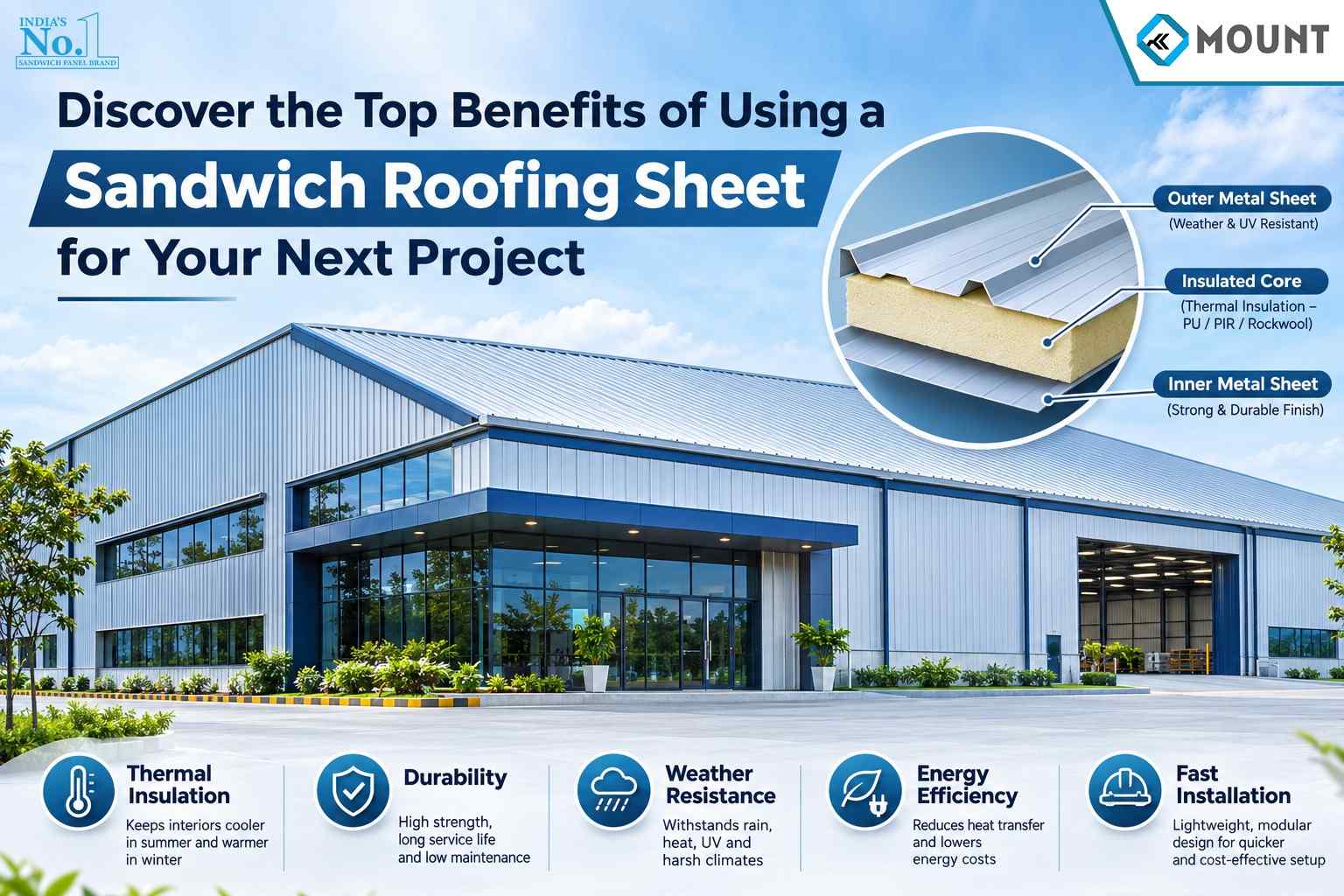
Discover the Top Benefits of Using a Sandwich Roofing Sheet for Your Next Project
Choosing the right roofing material is an important decision for any industrial or commercial construction project. A roof must do more than protect a building from rain and sunlight. It should also help maintain indoor temperatures, support structural requirements and provide long-term performance with manageable maintenance costs.
A sandwich roofing sheet is a practical option for projects that require both structural strength and thermal insulation. Manufactured using two outer metal sheets with an insulating core between them, these roofing panels combine multiple functional layers into a single building component.
From factories and warehouses to cold storage facilities and commercial buildings, insulated roofing panels are increasingly used in modern construction because of their insulation properties, installation efficiency and design flexibility.
But are sandwich roofing sheets suitable for your project? Let’s explore their key benefits, available types, cost factors and applications to help you make an informed decision.
What Is a Sandwich Roofing Sheet?
A sandwich roofing sheet is an insulated roofing panel made from two protective outer facings bonded to a core insulation material. The outer layers are commonly manufactured using coated metal sheets, while the central core may consist of Polyurethane (PUR), Polyisocyanurate (PIR) or Rockwool, depending on the panel specification.
This layered construction combines roofing protection, structural performance and thermal insulation in one integrated product.
Unlike conventional single-layer metal roofing sheets, sandwich roofing panels include an insulation core that helps reduce heat transfer between the external environment and the building interior.
Main Components of a Sandwich Roofing Sheet
- Outer Metal Sheets
The upper and lower facings provide surface protection, structural support and resistance to environmental exposure. Common material options include PPGI, PPGL, aluminium and other specified metal facings.
- Insulation Core
The central insulation layer helps reduce heat transfer through the roof. Common options include:
- PUR (Polyurethane): Provides effective thermal insulation for industrial and commercial buildings.
- PIR (Polyisocyanurate): Offers thermal insulation with enhanced fire-performance characteristics compared with conventional PUR formulations, subject to product testing.
- Rockwool: A mineral wool insulation option valued for its fire and acoustic performance.
- Jointing and Fixing System
Tongue-and-groove, camlock or other specified jointing arrangements help connect panels. Appropriate fasteners and installation details are essential for maintaining roof integrity and weather protection.
Importance of Choosing the Right Roofing Materials
Roofing materials influence the internal environment, structural requirements, energy consumption and maintenance needs of a building.
For industrial facilities, excessive heat entering through the roof can increase cooling requirements and create uncomfortable working conditions. Warehouses and storage facilities may also require better temperature management to protect certain products.
Selecting appropriate roofing materials can help address these challenges.
Important considerations include:
- Thermal insulation requirements.
- Structural load capacity.
- Weather and corrosion resistance.
- Fire-performance requirements.
- Installation time and complexity.
- Maintenance requirements.
- Overall project cost.
For buildings where temperature management is important, insulated roofing panels can provide an integrated alternative to conventional metal sheets with separately installed insulation.
Benefits of Sandwich Roofing Sheets
1. Excellent Thermal Insulation Properties
One of the main advantages of sandwich roofing sheets is their ability to reduce heat transfer through the roof.
The insulation core creates a thermal barrier between the external roofing surface and the building interior. This helps maintain more stable indoor temperatures compared with an uninsulated single-layer metal roof.
How Do Thermal Insulation Sheets Improve Building Performance?
During hot weather, conventional metal roofing can transfer considerable heat into the building. Insulated roofing panels reduce this heat transfer, helping maintain more comfortable indoor conditions.
This can be particularly useful for:
- Manufacturing facilities.
- Industrial warehouses.
- Food processing units.
- Cold storage buildings.
- Pharmaceutical facilities.
- Commercial complexes.
Better insulation can also reduce the cooling load placed on air-conditioning and refrigeration systems, depending on building design, operating conditions and insulation specifications.
Comparison with Traditional Roofing Materials
| Feature | Conventional Metal Roofing | Sandwich Roofing Sheet |
| Construction | Single metal layer | Two facings with an insulation core |
| Thermal insulation | Limited without additional insulation | Integrated insulation |
| Heat transfer | Generally higher | Reduced through the insulation core |
| Installation | Separate insulation may be needed | Integrated roofing panel system |
| Structural weight | Depends on sheet specification | Depends on panel thickness and materials |
| Maintenance | Depends on material and coating | Depends on facings, joints and installation |
The actual thermal performance depends on insulation material, thickness, thermal conductivity, joints and installation quality.
2. Lightweight Roofing Materials with Structural Benefits
Weight is an important factor when selecting roofing materials, particularly for large industrial buildings and warehouses.
Sandwich roofing panels combine metal facings with a lightweight insulation core, offering an integrated roofing solution without requiring separate insulation layers.
Advantages of Lightweight Roofing Materials
Reduced Structural Load
Compared with some heavier traditional roofing assemblies, appropriately specified sandwich panels can reduce the overall dead load of the roofing system.
This may help optimize structural design, although the actual load must be calculated using the selected panel specifications.
Convenient Handling and Installation
Factory-manufactured panels are supplied in specified dimensions, making transportation, positioning and installation more organized.
Suitable for Large Roofing Areas
Sandwich panels are available in different lengths and thicknesses, allowing manufacturers to configure panels according to project requirements.
Integration with Steel Structures
These panels can be installed over suitable steel purlins and structural frameworks, making them useful for pre-engineered buildings and industrial construction.
Mount’s Pre-Engineered Building Solutions can be explored for projects where insulated roofing systems need to be coordinated with steel building structures.
3. Durability and Long-Term Performance
Industrial roofing systems must withstand regular exposure to sunlight, rain, wind, dust and changing environmental conditions.
A sandwich roofing sheet combines protective metal facings with an insulation core, providing an integrated roofing system designed for different building applications.
Factors That Influence Durability
Quality of Metal Facings
The type, thickness and protective coating of the outer metal sheets influence resistance to corrosion and environmental exposure.
Insulation Core Quality
The insulation core should have consistent properties and strong bonding with the outer facings.
Joint and Fastening Design
Properly designed panel joints and suitable fasteners help prevent water penetration and maintain roof integrity.
Protective Coatings
Appropriate surface coatings help protect metal facings against corrosion, depending on the environmental conditions.
Installation Quality
Correct alignment, sealing, flashing and drainage arrangements are essential for long-term roofing performance.
Regular inspections of joints, fasteners, gutters and exposed surfaces also help identify maintenance requirements early.
4. Cost-Effectiveness and Better Long-Term Value
The initial purchase price is only one part of the total cost of a roofing system.
Sandwich roofing sheets combine insulation and metal roofing into a single panel, which can simplify material coordination and reduce the need for separate insulation installation.
For projects requiring thermal performance, this integrated construction can provide long-term operational benefits.
Factors Affecting Sandwich Roofing Sheets Price
The sandwich roofing sheets price depends on several technical and commercial factors.
- Insulation Core Material
PUR, PIR and Rockwool panels have different manufacturing processes and performance characteristics, which influence pricing.
- Panel Thickness
Thicker insulation cores generally require more material and can increase the panel price.
- Metal Sheet Thickness
The thickness and grade of the outer metal facings influence material consumption, strength and overall cost.
- Surface Coating
Different protective coatings and finishes may have different costs depending on the required corrosion resistance and appearance.
- Panel Dimensions
Panel length, effective width and custom manufacturing requirements influence production, transportation and handling costs.
- Project Quantity
Order volume and manufacturing requirements can influence the commercial quotation.
- Transportation and Installation
Delivery distance, site accessibility, lifting equipment and installation requirements contribute to the total project cost.
How to Evaluate Roofing Cost Effectively
Before comparing quotations, check:
- Insulation material and thickness.
- Metal facing material and thickness.
- Thermal performance specifications.
- Panel effective width and length.
- Jointing and fixing arrangements.
- Transportation and installation charges.
- Warranty and maintenance requirements.
Request a detailed quotation based on your building dimensions and performance requirements rather than comparing only the price per square metre.
Types of Sandwich Roofing Sheets
Different insulated roofing panels are available to meet specific structural, thermal and fire-performance requirements.
The appropriate selection depends on the building application, environmental conditions, insulation requirements and applicable safety standards.
1. PUR and PUF Insulated Roofing Panels
PUR (Polyurethane) insulated panels are commonly referred to as PUF sandwich panels in the Indian construction market.
They consist of a rigid polyurethane foam core between two metal facings.
Features of PUF Roofing Panels
- Effective thermal insulation.
- Lightweight composite construction.
- Suitable for industrial and commercial roofing.
- Factory-manufactured panel dimensions.
- Integration with suitable steel building systems.
- Different insulation thickness options.
These panels are commonly considered for factories, warehouses, commercial buildings and temperature-controlled facilities.
Explore Mount’s PUF Sandwich Roofing Panels to learn more about available panel configurations and specifications.
2. PIR Insulated Roofing Panels
PIR (Polyisocyanurate) panels use a modified rigid foam insulation core designed to provide thermal insulation with enhanced fire-performance characteristics compared with conventional PUR formulations.
Features of PIR Roofing Panels
- Effective thermal insulation.
- Enhanced fire-performance potential.
- Lightweight composite construction.
- Suitable for selected industrial and commercial applications.
- Available in different thickness configurations.
Fire performance depends on the complete panel assembly, formulation, facings, joints and test certification. Always check the relevant test reports and project fire-safety requirements before selection.
3. Rockwool Sandwich Roofing Panels
Rockwool sandwich panels use mineral wool as their central insulation material.
They are often considered for applications where fire resistance and acoustic performance are important design requirements.
Features of Rockwool Roofing Panels
- Mineral wool insulation core.
- Non-combustible insulation material.
- Useful acoustic insulation properties.
- Suitable for selected industrial applications.
- Available in different panel configurations.
The appropriate panel should be selected according to the building’s fire strategy, acoustic requirements and structural design.
4. Metal Sandwich Panels
Metal sandwich panels consist of two metal facings with an insulating core between them.
The outer metal layers provide protection and structural performance, while the central core contributes thermal or acoustic insulation depending on its composition.
Features and Benefits
- Integrated roofing construction.
- Multiple insulation core options.
- Different metal facing materials.
- Customizable panel dimensions.
- Compatibility with suitable prefabricated roofing systems.
These panels are used in industrial buildings, warehouses, commercial facilities and other applications where insulation and weather protection are required.
Prefabricated Roofing Systems: Customization and Installation
Prefabricated roofing systems use factory-manufactured components that are assembled at the construction site.
Sandwich roofing panels are suitable for these systems because they can be manufactured according to project-specific dimensions and installed over compatible structural frameworks.
Customization Options
Before selecting a sandwich roofing sheet, consider the following specifications:
Panel Thickness
The required thickness depends on the building’s insulation requirements and operating conditions.
Metal Facing Material
Options may include PPGI, PPGL, aluminium and other specified facings.
Panel Length
Custom panel lengths can help reduce unnecessary joints, depending on transportation and installation limitations.
Roof Profile
The roofing profile should be selected according to drainage, structural and architectural requirements.
Jointing System
Tongue-and-groove or other compatible jointing systems should be selected according to the panel design.
Colour and Finish
Colour and coating options can be selected based on architectural requirements and environmental exposure.
Installation Process of Sandwich Roofing Sheets
Correct installation is essential for achieving the intended thermal and weather-protection performance.
A typical installation process involves:
Step 1: Structural Inspection
Check the supporting steel structure, purlin spacing, alignment and load-bearing requirements before installation.
Step 2: Panel Measurement and Planning
Confirm panel dimensions, installation direction, overlap or joint details and roof drainage arrangements.
Step 3: Panel Positioning
Lift and position panels carefully using suitable equipment to prevent damage to the outer facings and insulation core.
Step 4: Fastening and Jointing
Secure panels using the specified fasteners and approved jointing details.
Step 5: Flashing and Sealing
Install ridge caps, side flashings, gutters and sealing arrangements to protect vulnerable roof connections.
Step 6: Final Inspection
Inspect alignment, fasteners, joints, drainage and surface condition before completing the roofing work.
Installation should follow the manufacturer’s technical instructions and the approved project drawings.
Applications of Sandwich Roofing Sheets
Sandwich roofing sheets are used across different industrial and commercial sectors because they combine insulation and roofing protection in one system.
Industrial Manufacturing Facilities
Factories can use insulated roofing panels to reduce heat transfer through the roof and improve indoor working conditions.
Warehouses and Logistics Centres
Insulated roofing panels are suitable for warehouses where indoor temperature management and weather protection are important.
Cold Storage Facilities
Cold storage buildings require carefully designed insulated building envelopes. Sandwich roofing panels can form part of the complete roof and wall insulation system.
Food Processing Industries
Food processing facilities may use insulated panels to support temperature-controlled and hygienic building environments.
Pharmaceutical and Cleanroom Facilities
Selected insulated roofing systems can be integrated into buildings requiring controlled indoor conditions.
Commercial Buildings
Shopping complexes, offices and other commercial facilities can use sandwich roofing panels where insulation and building performance are important considerations.
Why Choose Mount for Sandwich Roofing Sheet Solutions?
Selecting the right roofing manufacturer is important for ensuring that the panel specifications match your building’s structural and insulation requirements.
Mount manufactures insulated sandwich panels for industrial, commercial and temperature-controlled building applications.
Its roofing panel solutions use PUR and PIR insulation cores with different metal facing options and thickness configurations to suit project requirements.
Mount’s roofing panel range includes:
- PUR and PIR insulated roof panels.
- Different panel thickness configurations.
- Multiple metal facing options.
- Custom panel lengths.
- Tongue-and-groove fixing arrangements.
- Roofing solutions for warehouses, factories and cold storage facilities.
Mount also offers related PUF panel solutions and wall sandwich panels for projects requiring coordinated roof and wall insulation systems.
For industrial and commercial construction projects, combining suitable roofing panels with an appropriately designed structural framework is important for achieving the intended building performance.
Explore Mount’s roofing panel solutions and discuss your project requirements to identify a suitable configuration.
Conclusion: Choose the Right Sandwich Roofing Sheet for Long-Term Performance
Sandwich roofing sheets provide an integrated solution for projects that require roofing protection, thermal insulation and structural efficiency.
Their insulated construction, lightweight characteristics, customization options and compatibility with prefabricated roofing systems make them suitable for many industrial and commercial applications.
However, choosing the right panel requires careful evaluation of insulation material, panel thickness, metal facings, fire-performance requirements, structural compatibility and installation quality.
Whether you are planning a factory, warehouse, cold storage facility or commercial building, selecting the right sandwich roofing sheet can help improve building performance and long-term value.
Evaluate your project’s requirements and consult an experienced manufacturer to identify the appropriate insulated roofing solution.
Frequently Asked Questions About Sandwich Roofing Sheets
1. What is a sandwich roofing sheet?
A sandwich roofing sheet is an insulated roofing panel made of two outer metal facings with an insulation core between them. The core may consist of PUR, PIR or Rockwool, depending on the product specification.
2. What are the main benefits of sandwich roofing sheets?
The main benefits include thermal insulation, integrated roofing construction, reduced heat transfer, lightweight composite design, installation efficiency and suitability for different industrial and commercial applications.
3. What materials are used in sandwich roofing panels?
Common insulation materials include polyurethane (PUR), polyisocyanurate (PIR) and Rockwool. Outer facings may include PPGI, PPGL, aluminium and other specified metal materials.
4. How do sandwich roofing sheets provide thermal insulation?
The insulation core between the outer metal sheets reduces heat transfer through the roofing system. Its effectiveness depends on the core material, thickness, thermal conductivity and installation quality.
5. What factors affect sandwich roofing sheets price in India?
Price depends on the insulation material, panel thickness, metal facing thickness, coating, panel dimensions, order quantity, transportation and installation requirements.
6. Are sandwich roofing sheets suitable for industrial buildings?
Yes. They are used in factories, warehouses, manufacturing facilities and other industrial buildings where insulation, roofing protection and efficient installation are important.
7. What is the difference between PUR and PIR roofing panels?
Both are rigid foam insulation materials used in sandwich panels. PIR formulations generally offer enhanced fire-performance characteristics compared with conventional PUR formulations. The actual performance should be verified through product-specific test reports.
8. Are sandwich roofing panels suitable for cold storage?
Yes. They can form part of a cold storage building envelope. The appropriate insulation thickness, jointing system and vapour-control details must be selected according to the required temperature and operating conditions.
9. Are sandwich roofing sheets lightweight?
They are composite panels with an insulation core and metal facings. Their weight varies according to core density, thickness and metal specifications. They can be lighter than some conventional multi-layer roofing assemblies.
10. How long do sandwich roofing sheets last?
Their service life depends on metal facing quality, protective coatings, environmental exposure, installation quality and maintenance. Regular inspections of fasteners, joints and exposed surfaces help maintain roofing performance.
11. Can sandwich roofing sheets be customized?
Yes. Manufacturers can offer different insulation materials, thicknesses, metal facings, panel lengths, colours and roofing profiles according to project requirements.
Similar Events
 11 November, 2026