 Sep 21, 2026
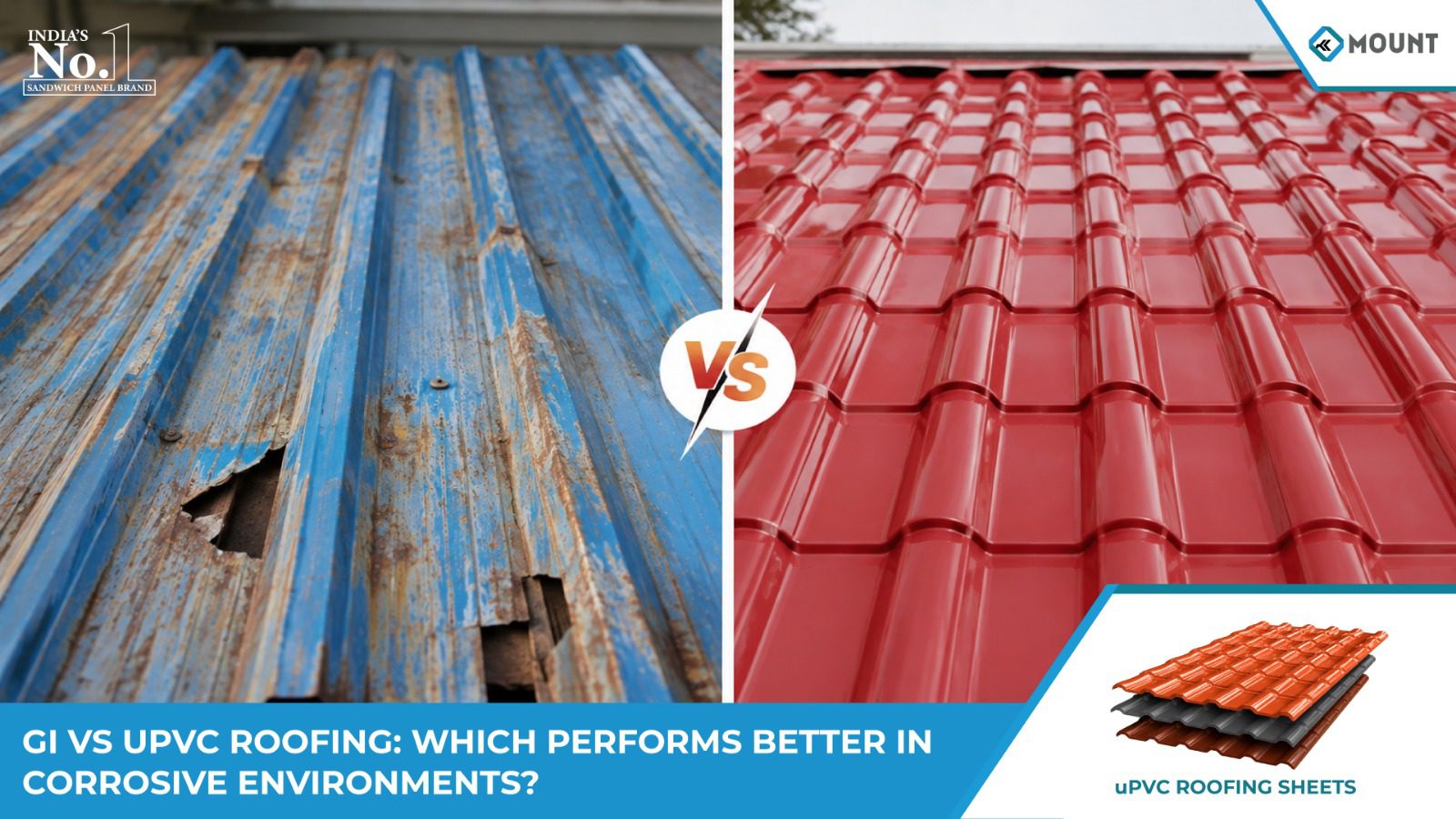
GI vs UPVC Roofing: Which Performs Better in Corrosive Environments?
Roofing selection in an industrial facility cannot be reduced to the initial material price. In a corrosive environment, the roof is continuously exposed to moisture, humidity, airborne pollutants, salt-laden air and, in some facilities, chemical vapours. The way a roofing material responds to that exposure directly influences maintenance frequency, leakage risk and the expected service life of the building envelope.
GI and UPVC represent two fundamentally different material approaches. GI relies on a metallic substrate protected by a zinc coating, while UPVC is a polymer-based roofing material that does not rely on a sacrificial metallic coating for corrosion protection. Neither should be treated as universally superior; the appropriate choice depends on exposure severity, chemical compatibility, temperature, structural requirements, maintenance expectations and project lifecycle considerations. Research on galvanized steel confirms that chloride exposure and wet conditions can accelerate corrosion, particularly in marine environments.
How GI Roofing Responds to Corrosive Environments
Galvanized iron or galvanized steel roofing uses a zinc coating to protect the underlying steel. The zinc provides barrier and sacrificial protection, meaning the coating can continue to protect exposed steel while it remains intact.
This makes GI a practical roofing material across many industrial and general-purpose applications. However, its performance depends strongly on the exposure environment and the quality and thickness of the protective coating.
In a facility exposed to salt, industrial pollutants or persistent moisture, the zinc layer can progressively deteriorate. Research into galvanized roofing has demonstrated that chloride-containing environments can be particularly aggressive to zinc-coated steel. This does not mean every GI roof will fail quickly; rather, it highlights why the coating specification and environmental classification need to be considered before selecting the material.
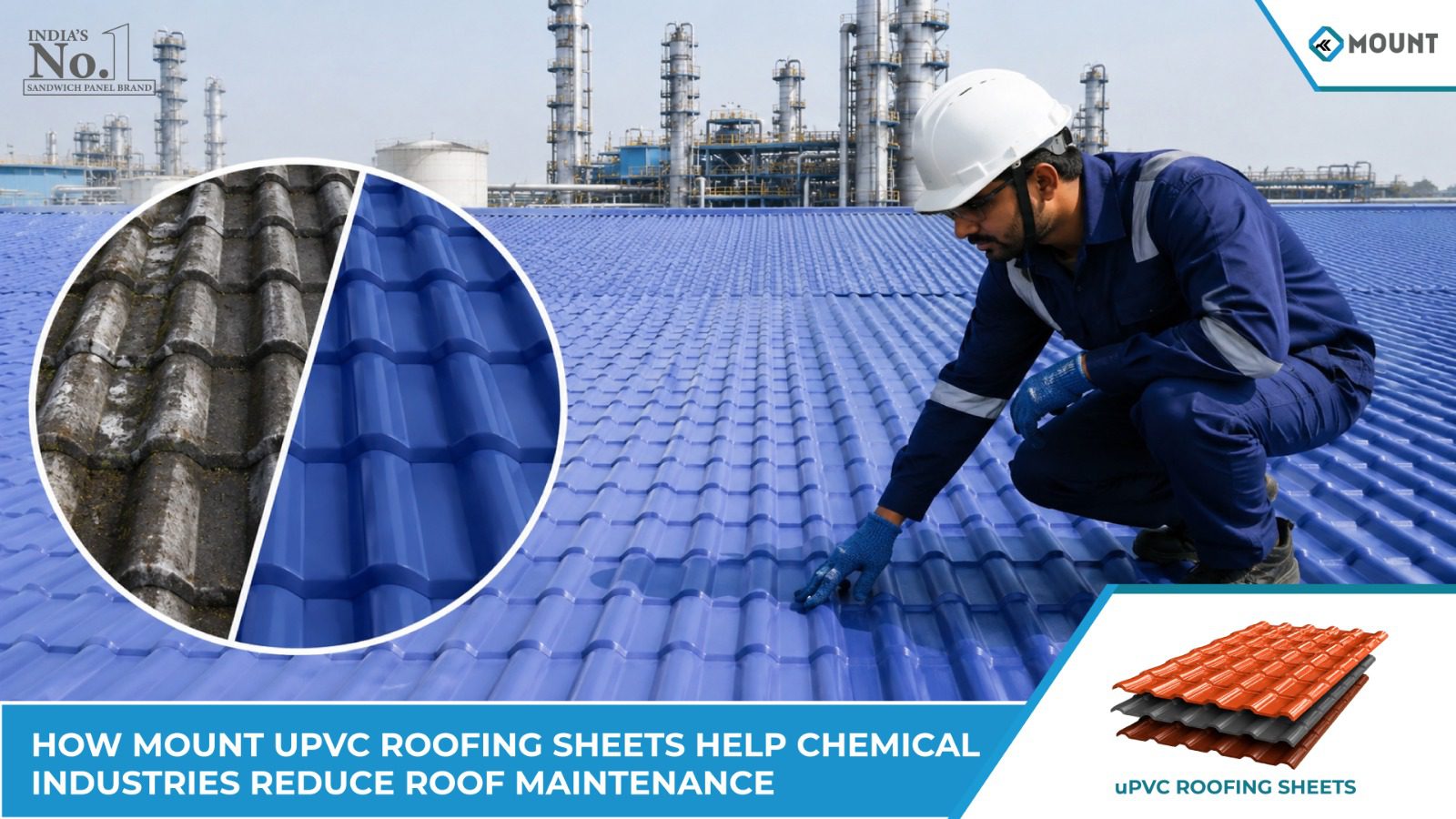
For UPVC Roofing Sheets, the corrosion mechanism is fundamentally different because the roofing substrate is polymeric rather than steel.
What Changes With UPVC Roofing?
UPVC does not rust in the way galvanized steel does because it contains no steel substrate requiring sacrificial zinc protection. This makes it particularly relevant where the dominant concern is atmospheric or chemical corrosion.
For UPVC Roofing Sheets Manufacturer in India, the important technical consideration is therefore not simply whether the product is polymer-based, but whether its material formulation and specification are appropriate for the intended environment.
uPVC generally offers good resistance to many acids, alkalis, salts and aqueous environments. However, chemical resistance is not universal. Certain solvents and aggressive chemicals can affect PVC, and resistance can vary with concentration and temperature.
A chemical plant should therefore identify the substances present around the roof, their concentrations, operating temperatures and likely exposure before approving any roofing material.
Moisture and Humidity Change the Equation
Humidity alone does not automatically make GI unsuitable. Galvanized steel can perform effectively when the zinc coating is appropriately specified for the environment. The challenge becomes more pronounced when moisture combines with chlorides, pollutants or repeated wet-dry cycles.
This is particularly relevant for coastal facilities. Recent research on galvanized steel exposed to marine environments found that chloride deposition, humidity and time of wetness influence atmospheric corrosion behaviour.
In such conditions, heat resistant uPVC roofing sheets can become relevant where the project requires a non-metallic roof with resistance to moisture and corrosion. Their suitability still needs to be evaluated against the temperature range, solar exposure, wind loads and the specific product specification.
The roof design itself also matters. Drainage, overlaps, fixings, flashings and areas where water can accumulate influence the actual exposure experienced by any roofing material.
Chemical Exposure Requires a More Specific Assessment
Industrial pollutants create a different challenge from ordinary atmospheric exposure. Chemical plants, fertilizer units and certain manufacturing facilities can release vapours or particulates that settle on roof surfaces.
GI performance in these environments depends on the zinc coating, atmospheric conditions and the specific contaminants involved. The zinc layer is protective, but it remains a material that can be consumed or degraded under aggressive exposure.
For UPVC Roofing Sheets for Chemical Industries, the attraction is the inherent corrosion resistance of the polymeric roofing material. But chemical compatibility must still be established against the actual process environment. A statement that UPVC is “chemical resistant” should never replace a material compatibility assessment.
The correct specification therefore begins with identifying the exposure,not with deciding that one roofing material is better in every industrial application.
UV Exposure and Temperature Also Matter
Corrosion is only one part of roofing performance. Outdoor roofing materials are exposed to solar radiation, elevated surface temperatures, thermal cycling, rain and wind throughout their service life.
GI roofing responds to these conditions through its metallic coating and, where specified, additional paint or protective systems. UPVC roofing relies on the formulation and weathering characteristics of the polymer and any stabilising layers incorporated into the product.
This makes UPVC Roofing Sheets for Fertilizer Industry a consideration where corrosion and chemical exposure are significant, but the specification should still account for the facility’s operating temperature, roof orientation, structural system and local climatic conditions.
A material selected for chemical resistance still needs to meet the structural and environmental requirements of the roof as a whole.
Maintenance: Where Material Selection Becomes a Lifecycle Decision
The real difference between materials often becomes visible after installation. GI roofs in aggressive environments may require closer inspection of coatings, fasteners, cut edges, laps and other vulnerable locations. Once corrosion affects the protective system, maintenance may involve cleaning, treatment, recoating or replacement of affected components.
For corrosion resistant roofing sheet applications, UPVC can reduce corrosion-related maintenance because the material does not depend on a zinc coating to protect a steel substrate. That can be valuable in facilities where repeated roof access is difficult or operational disruption carries a cost.
However, low maintenance does not mean zero maintenance. Drainage systems, fasteners, flashings, physical damage and roof interfaces still require periodic inspection regardless of the roofing material.
Where Mount UPVC Roofing Sheets Become Relevant
Mount UPVC roofing sheets are designed for industrial roofing applications where corrosion, moisture and environmental exposure are important considerations. They can be evaluated for chemical-processing facilities, fertilizer units, manufacturing plants, warehouses and other industrial buildings where the roofing environment may be more aggressive than a conventional commercial application.
For Industrial UPVC roofing sheets, the specification should consider the complete system: sheet profile, structural support spacing, fixing arrangement, roof slope, wind loads, drainage and environmental exposure.
Mount’s approach is to treat roofing as part of the building envelope rather than as an isolated sheet. Its wider manufacturing portfolio includes PEB structures, insulated sandwich panels, polycarbonate roofing systems and other industrial building products, allowing roofing requirements to be considered alongside the structural and operational characteristics of the facility.
GI or UPVC? Start With the Environment
The more useful question is not “Which material is better?” but “Which material is better suited to this exposure?”
GI can remain a practical choice where the coating specification, environment and maintenance programme are appropriate. In more aggressive environments involving salt-laden air, persistent humidity or chemical exposure, a non-metallic roofing system such as UPVC may offer advantages in corrosion-related maintenance.
For UPVC Roofing Sheets, project teams should therefore evaluate chemical compatibility, weathering characteristics, structural requirements, temperature exposure, installation details and expected service conditions alongside the initial purchase price.
Mount brings this application-led approach into industrial roofing, helping developers, consultants and EPC contractors select roofing systems according to the actual conditions the building will face.
Why Choose Mount for Corrosive-Environment Roofing?
A roofing system for a corrosive facility needs to be specified around exposure, not simply material cost. The right decision requires understanding the environment, identifying the dominant deterioration mechanisms and selecting a roofing system that can be maintained realistically over its operating life.
Mount Roofing & Structures combines industrial roofing manufacturing with a broader building-solutions portfolio, allowing project teams to approach roof selection from a building-envelope perspective. Where UPVC is technically appropriate, Mount can provide a corrosion-resistant roofing option designed for demanding industrial environments.
For UPVC Roofing Sheets for Chemical Processing Plants, the value lies in matching material characteristics to the actual operating environment. That is the foundation for a roof that is easier to maintain, technically appropriate and better aligned with long-term facility requirements.
FAQs
Q. Is UPVC always better than GI roofing in coastal environments?
A. Not automatically. GI can perform effectively when the appropriate coating system, detailing and maintenance programme are specified for the exposure. UPVC becomes particularly relevant where corrosion resistance and reduced corrosion-related maintenance are major requirements.
Q. Does GI roofing corrode in every industrial environment?
A. No. Corrosion depends on exposure severity, moisture, pollutants, chlorides, coating condition, temperature and detailing. The protective zinc coating provides corrosion protection, but its effectiveness depends on the environment and coating specification.
Q. Can UPVC roofing withstand chemical exposure?
A. UPVC has good resistance to many chemical environments, but it is not universally resistant to every chemical. The specific chemical, concentration, temperature and exposure duration should be checked against the product’s compatibility data before specification.
Q. Does UPVC require no maintenance?
A. No. While it can reduce corrosion-related maintenance, the complete roof still requires inspection of fixings, drainage, flashings, joints and physical condition.
Q. What should an industrial project team consider before choosing GI or UPVC?
A. The evaluation should include chemical exposure, salt and humidity levels, UV exposure, temperature, wind loads, structural support, roof geometry, drainage, fixing systems, maintenance access, expected service conditions and lifecycle cost. The initial material price should be considered alongside these technical factors rather than used as the sole selection criterion.
Similar Events