 Sep 18, 2026
How Mount UPVC Roofing Sheets Help Chemical Industries Reduce Roof Maintenance
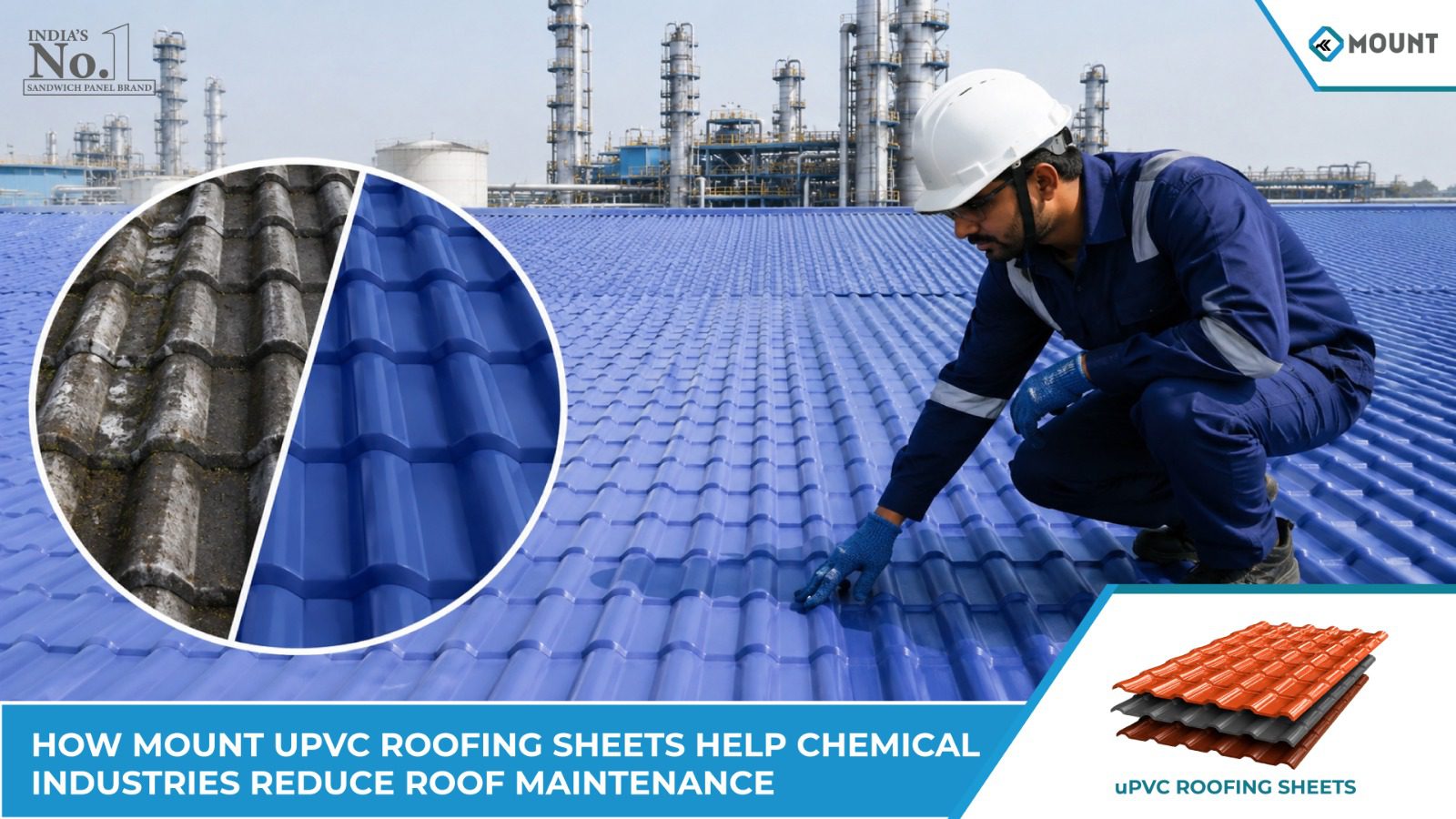
In chemical manufacturing, the roof is exposed to a combination of conditions that ordinary industrial roofing may not have been designed to handle. Chemical fumes, process vapours, humidity, airborne pollutants and persistent moisture can accelerate corrosion on exposed metal surfaces. Once corrosion begins around fasteners, overlaps or cut edges, small defects can develop into leakage points that require repeated maintenance.
For a chemical plant, the cost of this deterioration extends beyond the repair itself. Roof access can interrupt operations, recurring inspections consume maintenance resources, and water ingress can affect equipment, stored materials or production areas. This makes material selection an important part of lifecycle planning. UPVC Roofing Sheets offer an alternative approach for industrial environments where corrosion and moisture resistance are important considerations.
Why Chemical Environments Are Different
A roofing material that performs adequately in a general industrial building may encounter a substantially different exposure profile inside a chemical-processing facility. Fumes released through vents and exhaust systems can settle on roof surfaces, while humidity and condensation can create conditions that accelerate corrosion of susceptible metal components.
The degree of chemical exposure varies considerably between facilities. Fertilizer manufacturing, chemical processing, pharmaceutical production, metal treatment and other process industries can involve different substances and concentrations. Consequently, roofing should be selected against the actual chemical environment rather than based on a generic assumption that every industrial roof faces the same conditions.
For uPVC roofing sheets for chemical processing plants, chemical compatibility is therefore a key specification criterion. PVC/uPVC generally demonstrates good resistance to many acids, alkalis, salts and aqueous environments, although resistance depends on the specific chemical, concentration, temperature and exposure duration.
Corrosion Can Become a Recurring Maintenance Issue
Metal roofing depends on the integrity of its protective coating and the condition of exposed interfaces. In aggressive environments, chemical exposure can progressively affect coatings and vulnerable areas. Once the underlying metal becomes exposed, corrosion can spread and eventually compromise the roofing system.
A corrosion resistant roofing sheet changes the material strategy by using a polymer-based roofing material rather than relying on a metallic surface to remain protected from the surrounding environment. uPVC itself does not undergo the conventional rusting mechanism associated with steel.
That does not mean a uPVC roof is immune to every chemical. Chemical compatibility must always be checked against the substances present at the site. PVC resistance varies with chemical type, concentration and temperature, with some solvents and aggressive chemicals capable of affecting the material.
For chemical plants, this makes a chemical-exposure assessment an essential part of roof specification.
Moisture Resistance Adds Another Layer of Protection
Chemical facilities frequently operate in environments where humidity, wash-down processes, condensation or monsoon exposure can place additional demands on the roof. Water itself may not be the primary cause of deterioration, but persistent moisture can accelerate corrosion when it reaches vulnerable metal components.
UPVC roofing sheets for chemical industries provide a roofing surface that is inherently resistant to moisture. PVC is essentially non-porous and has very low water absorption, making it suitable for applications where moisture exposure is a regular operating condition.
However, roof performance still depends on proper drainage, slope, overlaps, fasteners, flashings and installation. A corrosion-resistant sheet cannot compensate for poor detailing that allows water to remain trapped around joints or penetrations.
Lower Maintenance Starts With Material Selection
Roof maintenance becomes expensive when the same failure points repeatedly require attention. Frequent repainting, corrosion treatment, replacement of damaged sheets and leakage repairs can create a recurring maintenance cycle.
For heat resistant uPVC roofing sheets, the material’s resistance to corrosion and moisture can reduce the exposure-related deterioration associated with conventional metal roofing in suitable applications. The actual maintenance requirement will still depend on the chemical environment, installation quality, roof geometry and operating conditions.
The important distinction is that low maintenance should be approached as a lifecycle objective rather than a claim that a roof requires no inspection. Industrial roofs should continue to be inspected for fastener condition, drainage, physical damage, joints and interfaces.
Chemical Resistance Must Be Evaluated Scientifically
Chemical resistance should never be assumed simply because a roofing sheet is described as uPVC. Different chemicals interact differently with PVC, and temperature can alter material behaviour.
For example, PVC generally shows good resistance to diluted acids and alkalis, while certain ketones, aromatic hydrocarbons and chlorinated solvents can attack the material.
This makes UPVC Roofing Sheet Manufacturers an important part of the technical evaluation. The manufacturer should be able to provide appropriate product information and help establish whether the material is suitable for the facility’s exposure conditions.
For a chemical-processing plant, the specification process should therefore identify the chemicals present, their concentration, operating temperature, exposure frequency and likely deposition on the roof before the roofing material is finalised.
Mount UPVC Roofing Sheets for Industrial Applications
Mount’s UPVC roofing range is intended for industrial roofing applications where material selection needs to account for demanding environmental conditions. The product approach is particularly relevant to chemical-processing facilities, fertilizer units, manufacturing plants, storage areas and other industrial buildings where corrosion and moisture exposure can influence roof maintenance.
Industrial UPVC roofing sheets can be used as part of a broader roofing strategy where the building requires a lightweight, moisture-resistant and corrosion-resistant roof covering. The final system still needs to be engineered around structural support spacing, wind loads, roof geometry, drainage and the appropriate fixing arrangement.
This is important because the roofing sheet is only one component of the completed roof. Long-term reliability depends on how the material, supporting structure and installation details work together.
Where UPVC Roofing Can Deliver Lifecycle Value
The strongest case for uPVC roofing is not simply its initial resistance to corrosion. It is the potential to reduce exposure-related deterioration over the operating life of a suitable industrial facility.
For UPVC Roofing Sheets Manufacturer in India, manufacturing consistency, dimensional control and product specification are therefore important considerations for industrial procurement teams. Project owners should evaluate the sheet’s material characteristics alongside thickness, profile, fixing requirements, environmental compatibility and installation methodology.
In chemical and fertilizer facilities, where roof replacement or extensive repair can involve operational disruption, reducing recurring corrosion-related intervention can have practical value. The exact lifecycle benefit will depend on the facility’s exposure conditions and maintenance programme.
Why Mount for Chemical Industry Roofing?
Mount approaches industrial roofing as a building-envelope requirement rather than a simple sheet purchase. Its product portfolio spans roofing, insulated panels, PEB structures, polycarbonate systems and other building components, allowing project teams to consider the roof alongside the wider industrial structure.
For UPVC Roofing Sheets for Fertilizer Industry, the material selection process should begin with the exposure environment, not with a standard roofing specification. Mount’s role is to support that decision with an industrial roofing product and manufacturing capability suited to the project’s requirements.
When chemical exposure, moisture and maintenance requirements are part of the design brief, choosing a roofing material with appropriate chemical compatibility can help reduce avoidable deterioration and support more predictable facility maintenance. Mount Roofing & Structures provides the product expertise and industrial roofing capability to help project teams make that specification with the operating environment in mind.
FAQs
Q. Why are uPVC roofing sheets considered for chemical-processing facilities?
A. uPVC offers resistance to corrosion and good resistance to many acids, alkalis, salts and aqueous environments. However, suitability depends on the specific chemicals, concentration and temperature present at the facility.
Q. Can uPVC roofing eliminate roof maintenance in chemical plants?
A. No roofing material should be treated as maintenance-free. uPVC can reduce certain corrosion-related maintenance requirements, but the roof still requires inspection of drainage, fixings, joints, flashings and physical condition.
Q. Is uPVC resistant to every industrial chemical?
A. No. Chemical resistance varies significantly. Certain solvents, aromatic hydrocarbons, ketones and other aggressive chemicals can affect PVC, so compatibility should be verified against the actual process environment before specification.
Q. What should be considered when specifying uPVC roofing for a fertilizer plant?
A. The project team should evaluate chemical exposure, humidity, temperature, wind loads, structural support spacing, drainage, fixing systems and the expected service environment. Chemical compatibility should be assessed against the actual substances encountered at the facility.
Q. Does switching from metal to uPVC automatically reduce lifecycle costs?
A. Not automatically. Lifecycle cost depends on material price, installation, expected service life, maintenance requirements, exposure conditions and replacement requirements. The benefit of uPVC should be evaluated through the specific operating environment rather than assumed from the material alone.
Similar Events
 23 October, 2026