 May 13, 2026
Heat, UV and Ordinary Roofs: Why Industrial Spaces Need a Smarter Roofing Material
If you’ve spent time inside an industrial shed in April or May, you already know this , the heat inside never matches what’s outside. It’s always worse.Most people assume it’s because of machines, production load, or lack of ventilation. But in a lot of cases, the roof is doing most of the damage.
Industrial roofs take direct sunlight all day, every day. And not just heat , UV exposure keeps working on the material quietly. What looks fine during installation starts behaving very differently after a few years.That’s where the gap shows up , between a roof that was “good enough” at the start and one that was actually engineered for long-term use.
The Heat Problem Starts from the Top
A typical metal roof absorbs heat through the day and slowly releases it inside. There’s no real barrier stopping that transfer.By afternoon, the internal temperature builds up. Fans don’t help much. Even air conditioning ends up working harder than it should.
In large industrial spaces, this turns into a daily pattern , higher energy usage, uncomfortable working conditions, and inconsistent internal environments.Systems built with Solar Roof Sandwich Panel setups behave differently. They don’t allow that same level of heat transfer, so the internal temperature doesn’t swing as much.
It’s not dramatic on day one. But over time, the difference becomes obvious in energy bills and working conditions.
UV Damage Is Slower , But More Permanent
Heat is visible. UV damage is not.For the first year or two, nothing really stands out. Then the surface starts fading slightly. After that, it gets brittle. Small cracks begin to appear.Once that outer layer weakens, everything underneath becomes exposed , moisture, temperature changes, all of it.
This is where materials like Solar PUF Panels hold up better. The coatings are designed to handle long-term exposure, so the surface doesn’t break down as quickly.In practical terms, that means fewer repairs and less frequent replacements.
Expansion, Contraction , and Small Failures Adding Up
Roofs don’t stay static. They expand in the heat, contract when it cools down. This happens every single day.
In ordinary systems, this movement starts affecting joints and fasteners. Not immediately, but gradually.
A small gap forms. Then another. Over time, these become entry points , for air, for moisture, sometimes even for leaks.Panels like h-rib sandwich panels are built to handle this movement better. The way they’re designed allows some flexibility without compromising the joint.
It’s one of those things you don’t notice early on, but it prevents a lot of issues later.
Inside the Building, the Effects Are Real
This isn’t just about the roof itself.
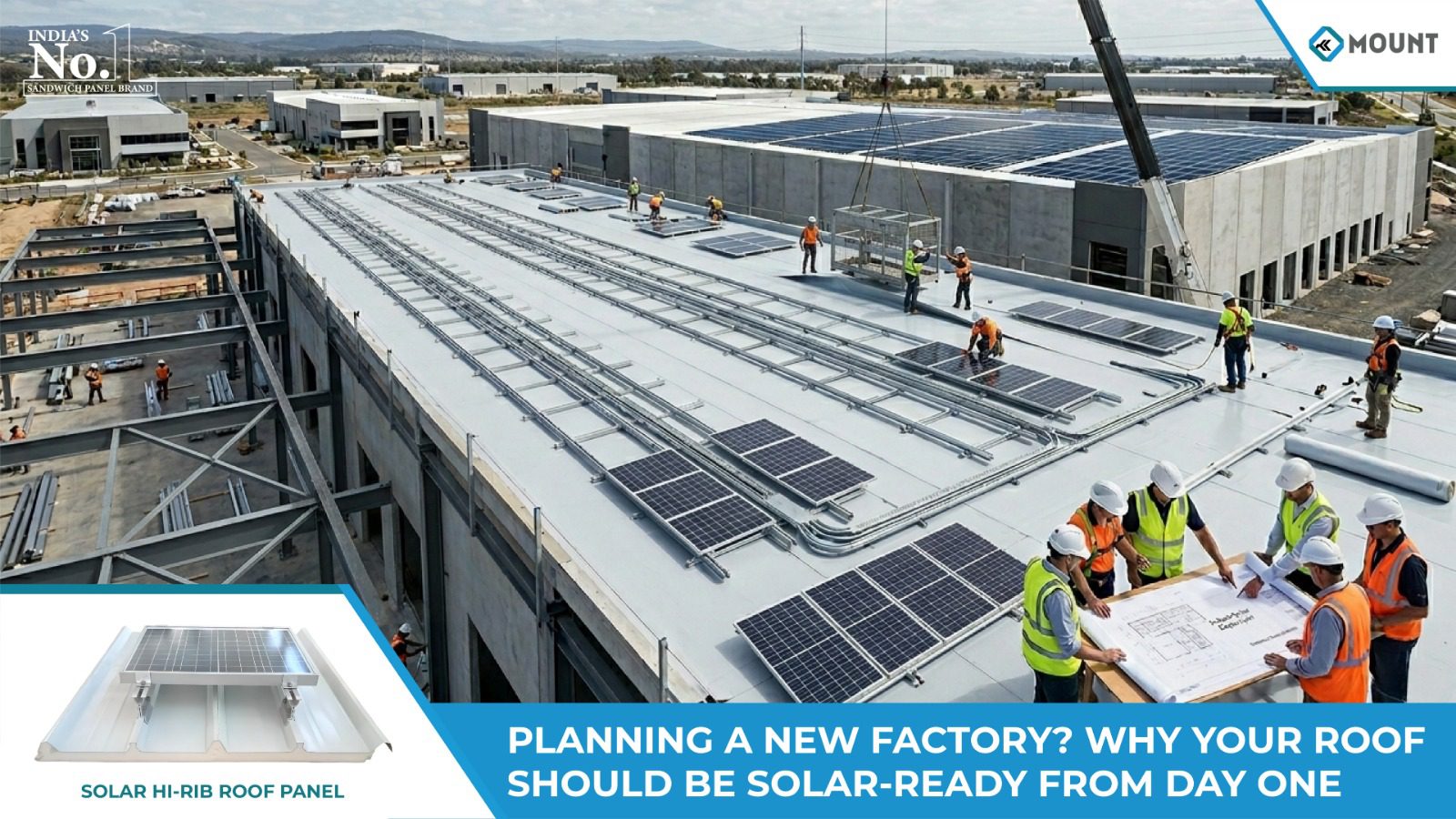
When internal temperatures stay high, people slow down. Machines behave differently. In some industries, even product quality can get affected.You’ll see it in warehouses, manufacturing units, even processing plants.In setups where PV Solar Roof Sandwich Panel systems are used, there’s an added advantage , some of that exposure is actually converted into usable energy.
So instead of only dealing with heat, the roof starts contributing something back.
Why “Basic Roofing” Becomes Expensive Later
At the start, most roofing options look similar. Same thickness, similar finish, comparable cost.But what matters is how they age.
Ordinary roofs start needing attention sooner , repainting, sealing, fixing joints. None of it feels major individually, but it keeps coming back.Engineered systems like Solar Sandwich Panel for Building Roof setups reduce that cycle. Not completely, but enough to make a difference over time.It’s less about avoiding all maintenance and more about avoiding constant maintenance.
It’s Not Just Material , It’s How the System Works Together
One mistake that still happens on many projects is treating roofing as separate pieces , sheets, insulation, fasteners , all handled independently.That’s where inconsistencies creep in.
When the system is designed together, like in Solar PUF Roof Panels, the components actually work with each other. Alignment is better. Sealing is tighter. Performance stays more predictable.That difference doesn’t show in drawings. It shows after a few seasons of use.
Where Mount Comes In
Mount doesn’t approach roofing as a standalone supply job. The focus is more on how the system performs after installation.That means looking at heat behaviour, exposure conditions, how the structure will respond over time , not just what gets installed on day one.
With solutions like Solar Sandwich Panels, the idea is to reduce long-term variability. Fewer surprises, fewer fixes, more consistency.For clients, that usually means less time spent reacting to problems later.
A Roof That Doesn’t Demand Attention
The best roofing systems are usually the ones no one talks about after installation.No recurring leaks. No constant overheating. No regular patchwork.
Heat and UV exposure are constant , they don’t stop. So the material has to be chosen with that in mind.Because over 10–15 years, the difference between an ordinary roof and a well-engineered one isn’t subtle.It shows up in costs, in maintenance effort, and in how smoothly the facility runs.
FAQs
Q1: Why do industrial buildings feel hotter than outside temperatures?
A: Because roofs absorb and transfer heat inside, especially when there’s no insulation layer to control it.
Q2: How does UV exposure affect roofing materials over time?
A: It weakens surface coatings, leading to cracks, brittleness, and faster material degradation.
Q3: What makes Solar Sandwich Panels different from regular roofing sheets?
A: They combine insulation with structural strength and can also support solar integration in some systems.
Q4: Do engineered panels completely eliminate maintenance?
A: No, but they reduce the frequency and severity of issues compared to basic roofing systems.
Q5: How does Mount Roofing & Structures improve long-term roofing performance?
A: By designing roofing as a complete system, focusing on how materials behave under real operating conditions rather than just installation specs.
Similar Events