 Jun 1, 2026
Monsoon Stress Test: Can Your Roofing System Handle Moisture, Load, and Temperature Swings?
The monsoon season for such buildings does not merely represent a seasonal weather condition; it represents a trial of their performance in structural terms. The effect of continuous rainfall, humidity retention, temperature changes, and load from winds can reveal flaws that have previously gone unnoticed until the onset of dry weather. In the case of industrial buildings such as factories, warehouses, cold storage units, and other heavy steel structures, leakage can result in loss of production capacity, damage to goods stored, corrosion problems, and high maintenance costs.
Industrial roofs are subject to failure in terms of leakages, thermal performance, structural integrity, and durability due to their construction characteristics and the environmental conditions they endure. Roofing systems in industry today are required to do much more than protect the building below.
This shift has increased demand for sandwich panels for roofing and advanced roofing panels for steel structures designed specifically for Indian climate conditions.
The Three Biggest Monsoon Threats to Roofing Systems
Moisture Intrusion and Water Seepage
Moisture remains one of the most destructive elements for industrial roofing systems. During heavy monsoon exposure, poorly sealed roofing joints and low-grade metal sheets become vulnerable to water ingress. Small leak points gradually develop into widespread seepage issues, affecting insulation performance and structural integrity.
Water accumulation inside roofing assemblies often leads to:
- Corrosion beneath sheet overlaps
- Condensation buildup inside industrial spaces
- Mold and fungal growth
- Damage to electrical systems and stored materials
- Rust formation across support members
Industries operating in coastal and high-humidity regions face even greater exposure risks, increasing the need for coastal industrial roofing systems with advanced weather-resistant properties.
Structural Load During Heavy Rainfall
Industrial roofs experience significant stress during monsoon storms. Water pooling caused by poor drainage design increases static load pressure on roofing sheets and purlin systems. Combined with strong wind uplift forces, this creates long-term deformation risks.
Common structural failures include:
- Roof sagging
- Bent metal sheets
- Fastener loosening
- Joint separation
- Progressive structural fatigue
This is particularly critical in large-span factories and warehouses where roof stability directly impacts operational continuity. Engineered steel building roofing panels with superior load-bearing capability help reduce these risks during extended monsoon exposure.
Temperature Swings and Thermal Stress
Indian monsoons create rapid thermal fluctuations. Roof surfaces often experience intense daytime heat followed by sudden cooling from rainfall. This repeated expansion and contraction cycle places continuous stress on roofing materials.
Over time, thermal movement can result in:
- Surface cracking
- Gap formation around joints
- Sealant failure
- Reduced insulation efficiency
- Increased indoor heat retention
Buildings without proper insulated roofing also experience higher cooling loads, affecting operational energy costs. This is why thermal stability has become a major consideration in modern industrial roofing selection.
How Sandwich Roof Panels Perform Better in Monsoon Conditions
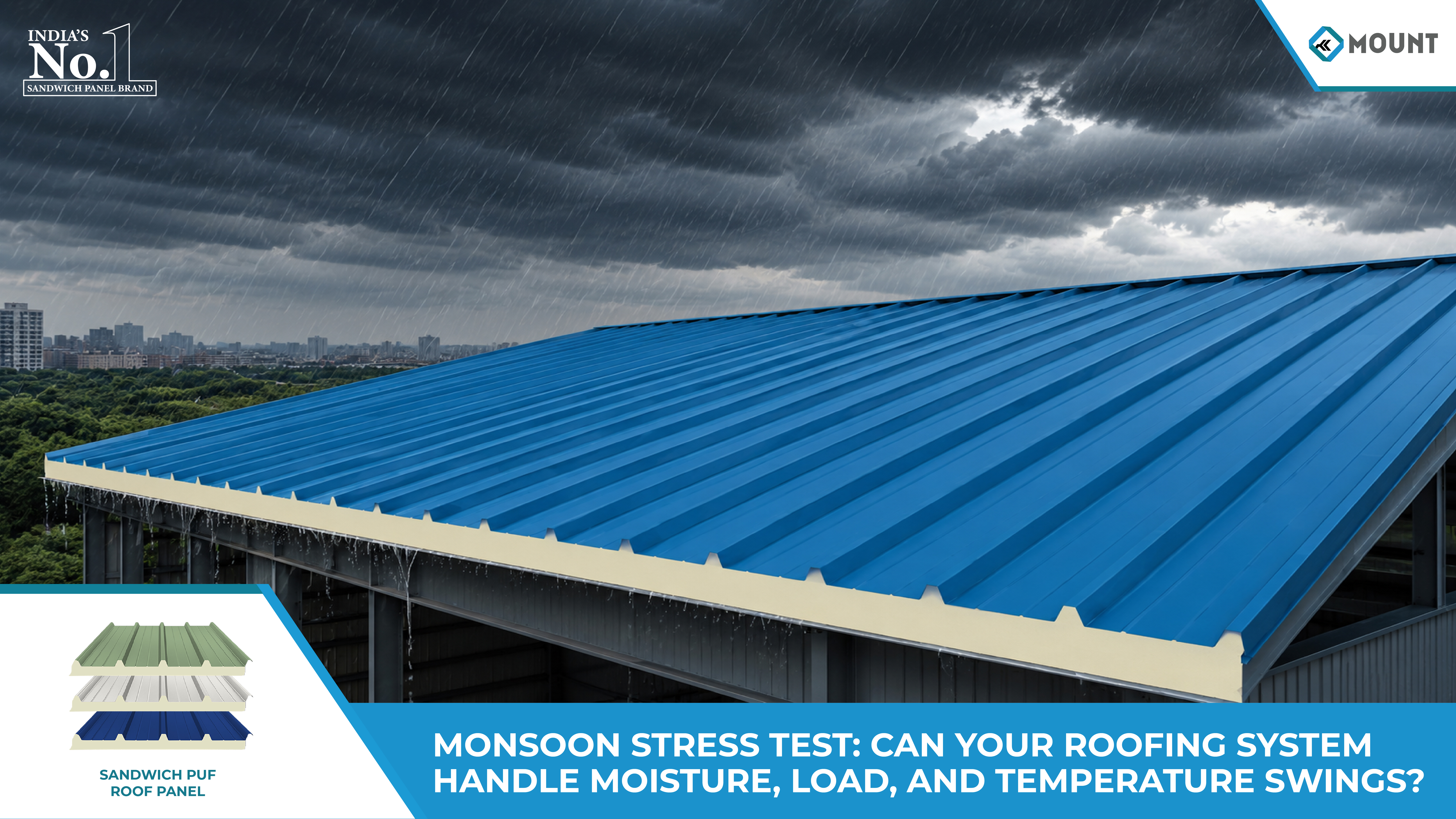
Modern sandwich panels for roofing are engineered to address the environmental challenges that traditional roofing systems struggle to withstand. These multi-layer insulated roofing systems combine external metal sheets with an insulated core to deliver structural strength, moisture resistance, and thermal efficiency within a single integrated panel.
Unlike conventional single-sheet roofing systems, sandwich panels create a controlled barrier against heat transfer and moisture penetration.
Key performance advantages include:
- Reduced leakage risk through precision joint systems
- Improved thermal insulation during fluctuating weather conditions
- Lower internal condensation formation
- Better resistance to corrosion and humidity exposure
- Enhanced structural rigidity during heavy rainfall and wind pressure
- Reduced maintenance cycles over long-term use
Advanced PIR Roof Panels are particularly effective for industrial environments requiring thermal consistency and moisture control. Their insulation properties help stabilize indoor temperatures while supporting energy-efficient building operations.
For large-scale industrial developments, insulated panels for steel buildings also contribute to reduced HVAC dependency and lower lifecycle maintenance costs.
Why Mount Sandwich Roof Panels Are Built for Extreme Weather
As a leading sandwich panel manufacturer, Mount Roofing and Structures designs roofing systems engineered for demanding industrial environments and aggressive monsoon exposure conditions.
Mount’s sandwich roof panels are manufactured using precision-engineered metal facings and high-quality insulated cores that support both structural durability and thermal performance. The panels are developed for applications including:
- Manufacturing facilities
- Warehouses
- Cold storage units
- Commercial steel structures
- Industrial processing plants
- Prefabricated buildings
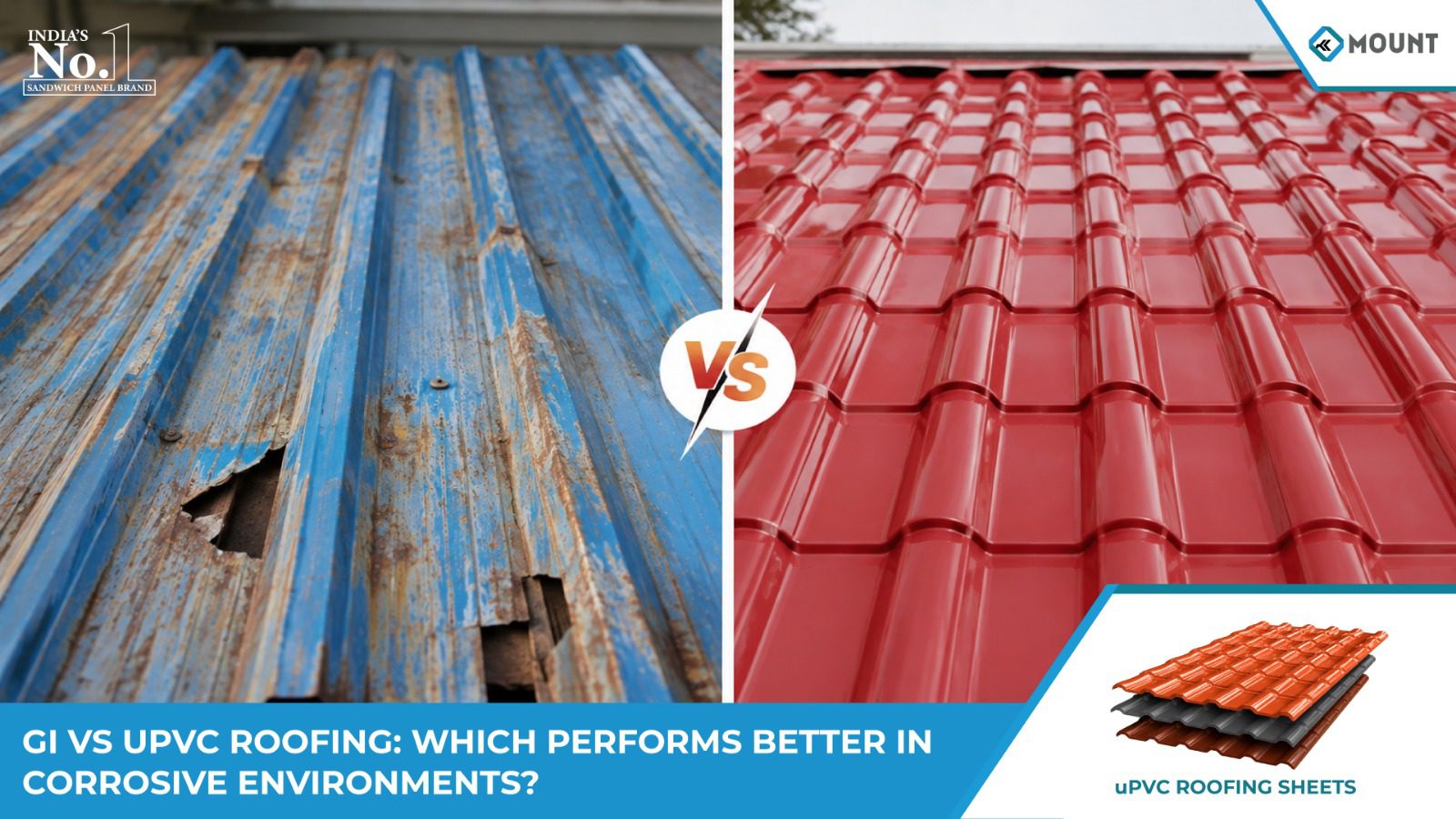
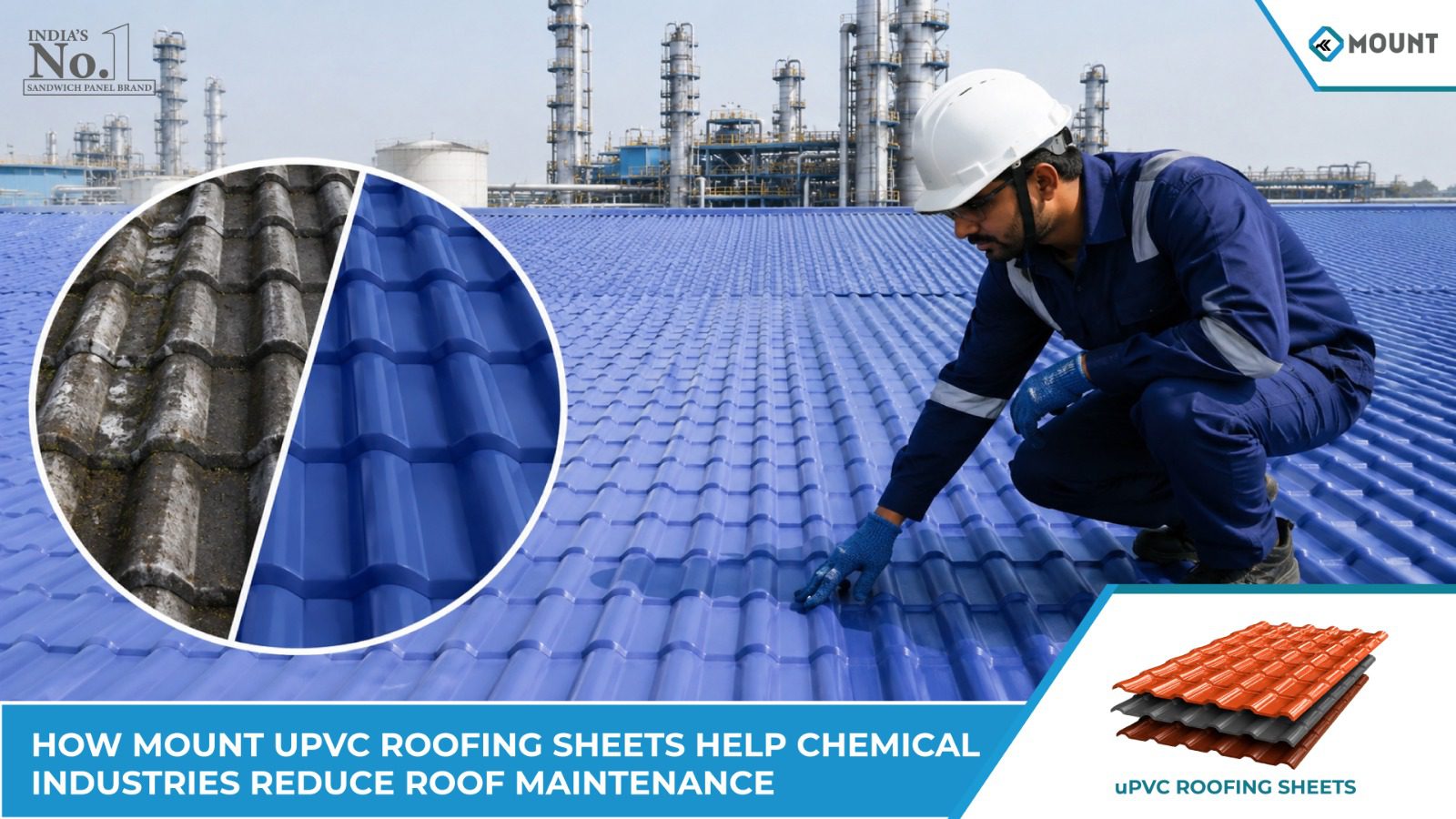
For sectors exposed to chemically aggressive environments, Mount also provides corrosion resistant industrial roofing solutions suitable for long-term operational reliability. In industrial processing zones and manufacturing clusters, these systems support the growing requirement for durable roofing solutions for chemical plants where moisture, chemical vapors, and fluctuating temperatures accelerate roof deterioration.
The company’s focus on engineered durability, installation precision, and weather-tested materials positions Mount as a long-term roofing solutions provider rather than a short-term product supplier.
Warning Signs Your Existing Roof May Fail This Monsoon
Industrial roofing failures rarely happen without warning. Early identification can help prevent large-scale repair costs and operational interruptions.
Key warning signs include:
- Repeated water leakage during rainfall
- Rust patches around joints and fasteners
- Excessive indoor heat buildup
- Condensation dripping from roof interiors
- Bent or uneven roofing sheets
- Rising cooling and ventilation costs
- Water stains on ceilings or wall junctions
- Loose fastening systems after storms
Ignoring these indicators often results in accelerated structural deterioration during peak monsoon months.
Choosing the Right Roofing System for Long-Term Protection
Selecting the right industrial roofing system requires evaluating long-term structural and environmental performance rather than focusing only on initial installation costs.
Important considerations include:
- Insulation efficiency
- Moisture resistance capability
- Structural load-bearing strength
- Corrosion protection standards
- Thermal performance stability
- Quality of fastening systems
- Installation accuracy
- Maintenance requirements over lifecycle use
Advanced insulated roofing systems deliver measurable operational advantages when designed specifically for industrial and commercial infrastructure. Businesses increasingly prefer engineered roofing assemblies that reduce future repair exposure while improving energy performance.
Conclusion
Monsoon conditions place every roofing system under continuous structural and environmental stress. Ineffective designs that may suffer moisture penetration, thermal expansion, wind uplift, and humidity will lead to a shorter lifespan for low-quality roof constructions. In manufacturing plants, this may manifest in the form of plant downtime, machinery malfunctions, and increasing maintenance expenses.
Insulated roofs that have been developed through proper engineering provide a viable solution for this problem. In terms of highly advanced solutions like Mount Sandwich roof panels, companies can be assured of quality performance despite monsoons.
The business organizations of today’s generation cannot afford to purchase just any roof, but roofs designed with high standards of engineering.
FAQs
Q : What makes sandwich roof panels the ideal choice for industrial structures during the monsoon season?
A: Sandwich roof panels offer insulation, waterproofing, and structural stability, which makes them more efficient compared to traditional roof panels during long rains and humidity.
Q : Can PIR roof panels be used in temperature-sensitive industrial applications?
A: Yes, because of their high thermal efficiency, they can be used in cold storage, food processing, pharmaceutical, and temperature-controlled warehouses.
Q : In what ways do insulated roofs help to prevent condensation from forming in factories?
A: Insulating roofs help to minimize temperature variations between the outer and inner surfaces, thus minimizing condensation within factories.
Q : Which sectors benefit the most from having corrosion-resistant roofing?
A: Chemical processing firms, coastal factories, fertilizer companies, marine facilities, and heavy industries will benefit from corrosion-resistant roofing.
Q : How often should industrial roofing systems be inspected before monsoon season?
A: Industrial roofs should ideally undergo professional inspection at least once before the onset of monsoon season to identify loose fasteners, damaged joints, drainage blockages, and early corrosion signs.
Similar Events