 Sep 23, 2026
Natural Daylight in Industrial Buildings: 7 Smart Uses of Mount Polycarbonate Sheets
Natural daylight can play a practical role in the design of large industrial buildings. Warehouses, manufacturing plants and workshops often have extensive roof areas and deep internal spaces where artificial lighting may otherwise remain operational throughout daylight hours. A well-planned daylighting strategy can introduce useful illumination into these spaces while allowing the roof to continue performing its primary functions of weather protection and environmental separation.
This makes polycarbonate roofing sheets more than a translucent roofing component. Their value depends on how they are integrated into the roof: the selected profile, light-transmission characteristics, orientation, spacing, UV protection, structural detailing and maintenance access all influence the finished result. Mount’s polycarbonate range is positioned for industrial roofing, warehouses, commercial spaces and other applications requiring natural daylight and weather protection.
Why Natural Daylight Needs to Be Designed
Daylighting is most effective when it is considered during roof planning rather than added after the building has been designed. A daylight opening that is too small may have limited impact on the interior, while excessive transparent area can create unwanted solar heat gain or glare depending on the product and orientation.
The objective is controlled daylight distribution. The roof profile, building orientation, internal layout, roof height and position of work areas should all be considered when determining where translucent sections are required.
For industrial skylight sheets, compatibility with the primary roof system is equally important. The daylighting element needs to work with the roof profile, support spacing, fasteners, overlaps and drainage details so that introducing natural light does not compromise weather protection.
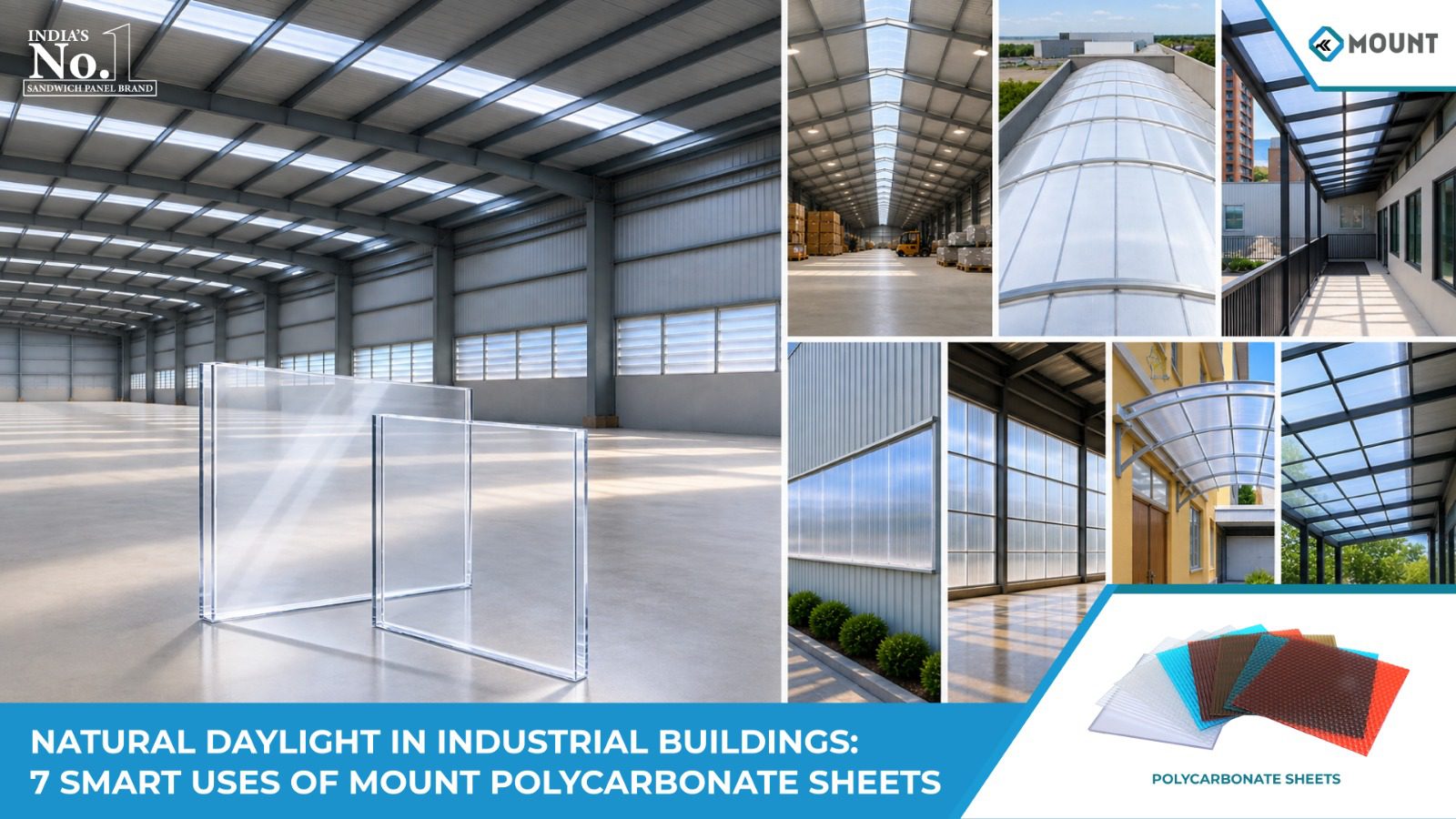
7 Smart Applications for Polycarbonate Daylighting
1. Warehouses and Distribution Centres
Warehouses typically have large floor areas and considerable roof spans. Daylight introduced through strategically positioned translucent roof sections can improve visibility across storage and circulation areas during daylight hours.
For polycarbonate sheets for warehouses, the objective should be even distribution of usable light rather than concentrating daylight in isolated patches. Rack orientation, aisle layout and roof geometry should be considered when planning daylighting locations.
2. Manufacturing Plants
Production floors require adequate visibility around machinery, workstations, inspection areas and material-handling routes. Introducing daylight through selected roof zones can supplement artificial illumination during suitable daylight conditions.
Polycarbonate roofing for industrial buildings can therefore be incorporated into larger metal roofing systems, with translucent sections positioned according to the internal process layout. The final design should consider the plant’s thermal environment, roof exposure and maintenance requirements.
3. Logistics and Loading Areas
Loading bays and dispatch zones frequently have large covered areas where workers and equipment operate during the day. Daylighting can improve visual conditions without requiring the entire roof to become translucent.
The use of daylight roof panels in selected roof locations allows designers to create a balance between opaque roof coverage and daylight transmission. Areas around loading docks, pedestrian routes and inspection zones can be evaluated individually during the roof-design stage.
4. Workshops and Fabrication Areas
Workshops can benefit from natural illumination around fabrication benches, assembly stations and inspection areas. Daylight can supplement artificial lighting during daytime operations while retaining a weather-resistant roof enclosure.
For polycarbonate sheets for industrial sheds, impact resistance and weather durability become important considerations because the roof may be exposed to wind, rain, dust and occasional site activity. Mount describes its polycarbonate sheets as lightweight, impact-resistant and weatherproof, with UV protection incorporated into the product offering.
5. Agricultural Buildings
Agricultural storage buildings, covered work areas and selected farm structures can also use translucent roofing sections to introduce daylight into otherwise enclosed spaces. The appropriate product and installation method depend on the building’s exposure, ventilation strategy and intended use.
Daylighting can be particularly useful where the building requires regular daytime access but does not require continuous artificial illumination.
6. Commercial-Industrial Buildings
Large showrooms, service facilities, workshops and mixed-use commercial-industrial buildings can incorporate daylighting into roof design to improve the interior environment.
Here, industrial daylighting solutions need to balance functional illumination with architectural requirements. The roof profile, visible appearance, light transmission and surrounding opaque roofing should be considered together so that the daylighting elements form part of the overall building design.
7. Large-Span Industrial Structures
Large-span structures such as production halls, logistics centres and industrial sheds present another opportunity. Their extensive roof areas allow daylighting sections to be distributed across multiple zones rather than concentrating illumination at one location.
Mount’s broader building-system portfolio includes PEB structures, sandwich panels and polycarbonate roofing, allowing daylighting to be considered alongside the structural and roof-envelope requirements of a project.
Light Transmission Is Only One Specification
Selecting a translucent sheet based solely on how much light it transmits can lead to an incomplete design. Diffusion, UV protection, impact resistance, weather exposure and thermal behaviour also need to be considered.
UV protected polycarbonate sheets can be relevant for industrial applications where the roofing material is exposed to prolonged solar radiation. Mount states that its polycarbonate range incorporates UV protection alongside weather resistance and impact resistance.
The desired daylight level should also be considered alongside the building’s artificial lighting system. The purpose is generally to supplement electrical lighting during appropriate daylight conditions, not to assume that daylight will replace artificial illumination under every operating condition.
Roof Integration and Installation Detailing
A polycarbonate daylighting panel needs to interface correctly with the surrounding roof sheets. Profile compatibility, sheet overlap, fastener placement, washers, support spacing and thermal movement all require attention during installation.
For polycarbonate roof sheets, the detailing should also maintain the roof’s drainage path. Incorrect overlaps or poorly positioned fixings can create leakage points regardless of the inherent weather resistance of the sheet.
Maintenance planning should include inspection of fasteners, overlaps, accumulated dirt, physical damage and adjacent roof interfaces. The accessibility of translucent sections should be considered when designing the roof so that inspection can be carried out safely.
Mount Polycarbonate Sheets for Industrial Daylighting
Mount’s Mount Lite range is manufactured for applications including industrial roofing, commercial spaces, warehouses, greenhouses and architectural projects. The company describes the range as lightweight, impact-resistant and weatherproof, with thermal-insulation and UV-protection characteristics.
Mount also lists polycarbonate sheets among its integrated manufacturing portfolio alongside PEBs, sandwich panels, uPVC roofing sheets and roofing accessories.
For project teams, this integrated capability can be useful when daylighting needs to be coordinated with the wider roof system. Mount’s stated polycarbonate-sheet production capacity is 350 tonnes per month, supporting project-scale requirements where significant quantities of roofing daylighting material are needed.
Designing Daylight Into the Roof From the Start
Natural daylight works best when it is treated as a roof-design parameter rather than an afterthought. The right combination of translucent area, positioning, profile compatibility, structural support and installation detailing can introduce useful daylight while preserving the functional requirements of the roof.
For polycarbonate sheets for factories, the specification should therefore begin with the building’s internal layout and operating requirements. Manufacturing processes, warehouse aisles, loading zones, roof orientation, climate, maintenance access and the surrounding opaque roofing system all influence the final daylighting strategy.
Mount Roofing & Structures brings polycarbonate manufacturing together with broader roofing and structural capabilities, giving industrial project teams a coordinated route to planning daylighting within the building envelope. For facilities where natural illumination, roof durability and construction compatibility all matter, that approach allows daylighting to be engineered into the roof from the beginning rather than modified later.
FAQs
Q. Where should polycarbonate daylighting panels be positioned on an industrial roof?
A. Positioning should be based on roof geometry, building orientation, internal work areas, required daylight distribution and the surrounding opaque roof system. The goal is useful and reasonably uniform illumination rather than simply maximising translucent roof area.
Q. Do polycarbonate sheets completely replace artificial lighting?
A. No. Daylighting can supplement artificial lighting during suitable daylight conditions, but electrical lighting remains necessary when natural illumination is insufficient or unavailable.
Q. What should be checked when integrating polycarbonate sheets with metal roofing?
A. Profile compatibility, support spacing, overlaps, fasteners, sealing details, thermal movement and drainage should all be reviewed before installation. The polycarbonate section needs to function as part of the complete roof assembly.
Q. Are polycarbonate sheets suitable for large industrial buildings?
A. Yes, they can be incorporated into warehouses, industrial sheds, manufacturing plants and other large-roof structures where the product specification and structural detailing are appropriate. Mount lists industrial roofing and warehouses among its polycarbonate applications.
Q. What factors should an industrial project team evaluate before selecting a polycarbonate daylighting system?
A. The evaluation should include light transmission, diffusion characteristics, UV protection, impact resistance, weather exposure, profile compatibility, structural support, fixing methodology, roof orientation, maintenance access and integration with the primary roofing system.
Similar Events