 Jul 27, 2026
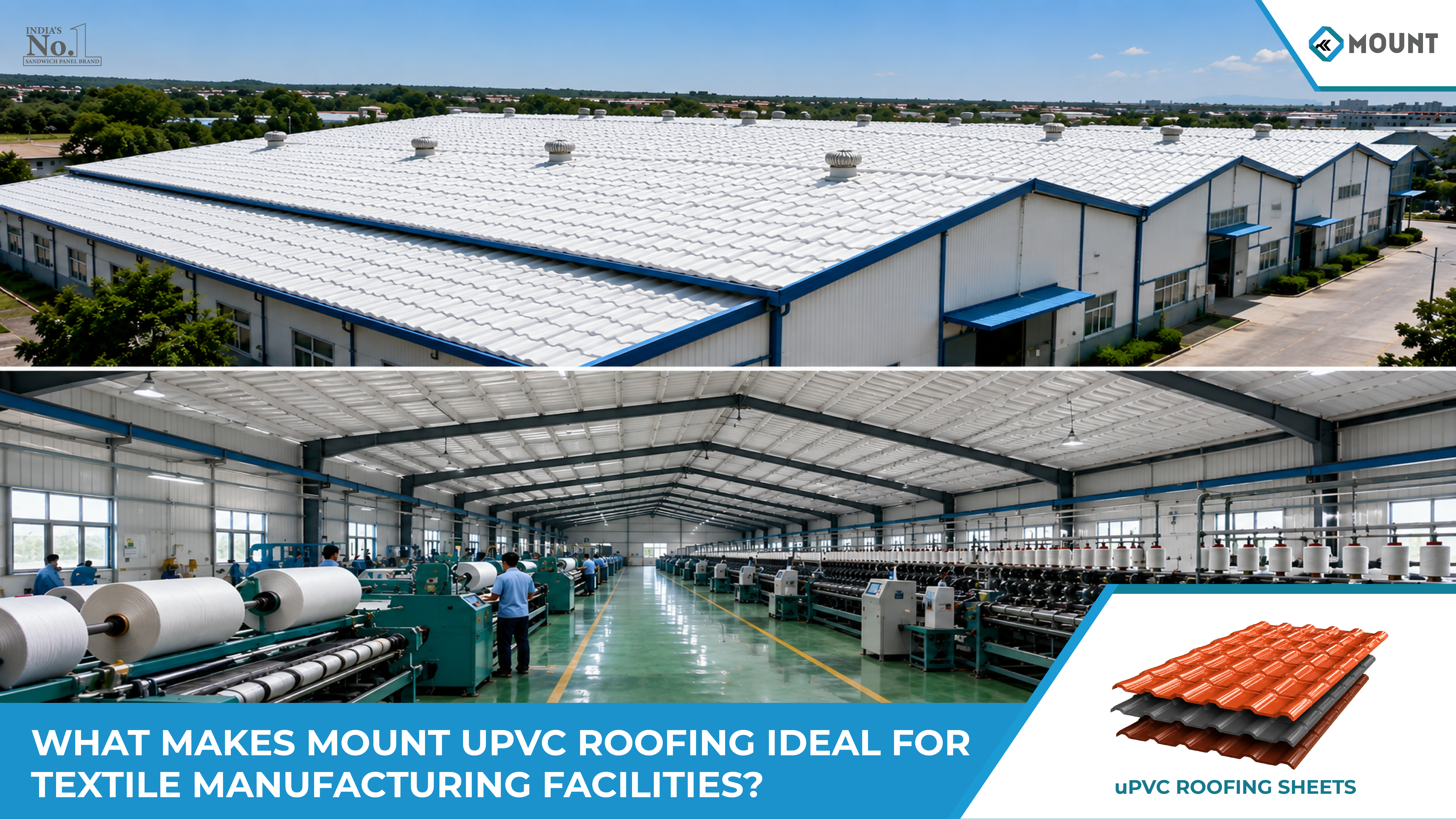
What Makes Mount UPVC Roofing Ideal for Textile Manufacturing Facilities?
Walk through any textile manufacturing facility and one thing becomes obvious very quickly.These buildings work hard.Spinning machinery operates continuously. Weaving units generate heat throughout the day. Processing plants deal with moisture, steam, and changing environmental conditions. Production schedules rarely slow down because of the weather outside.
Yet many discussions about productivity focus on machinery, automation, and workforce efficiency.The roof rarely gets the same attention.That’s surprising because the roof directly influences several factors textile manufacturers deal with every day,indoor temperatures, condensation, equipment protection, maintenance requirements, and overall working conditions.
In fact, some of the most common challenges inside textile facilities start above the production floor.
Heat Is More Than a Comfort Issue
Anyone who has spent time inside a spinning mill during summer understands the challenge.Large industrial roofs absorb solar radiation throughout the day. As roof temperatures rise, heat gradually transfers into the facility below.
The impact extends beyond worker comfort.Higher indoor temperatures can affect production environments, increase ventilation requirements, and place additional pressure on cooling systems. In facilities operating around the clock, even small increases in heat gain can influence operational costs over time.This explains why textile manufacturers increasingly evaluate roofing systems based on thermal behaviour rather than simply weather protection.The conversation has shifted toward solutions such as heat resistant uPVC roofing sheets, particularly in regions where high ambient temperatures are a year-round concern.
Textile Facilities Have a Unique Relationship With Moisture
Unlike many industrial sectors, textile manufacturing often involves careful control of environmental conditions.
- Humidity levels influence yarn quality.
- Processing areas may generate moisture.
- Temperature variations can affect internal conditions across different production zones.
This creates an interesting challenge for building designers. The roof must help manage environmental exposure without introducing additional moisture-related issues.
Condensation, in particular, can become problematic. When warm indoor air meets cooler roof surfaces, water droplets can form. Over time, this can affect equipment, stored materials, and operational environments.
For textile facilities, controlling moisture is not simply a maintenance objective. It is part of maintaining production consistency.
Corrosion Is Not Limited to Coastal Industries
When people think about roof corrosion, coastal environments usually come to mind. Textile facilities face their own version of the problem.High humidity, airborne contaminants, moisture-rich operating conditions, and continuous industrial activity can gradually affect conventional roofing materials. Once corrosion begins, maintenance requirements often increase year after year.
This is one reason many textile manufacturers are moving toward roofing systems that are inherently resistant to corrosion rather than relying solely on protective coatings.The goal is to reduce long-term maintenance intervention while improving roof reliability throughout the facility lifecycle.
Why Roof Maintenance Becomes a Production Concern
In some industries, roof repairs are simply another maintenance activity.
In textile manufacturing, the situation is different.
- Roof leaks can affect machinery.
- Moisture can damage raw materials.
- Unexpected maintenance work can disrupt production schedules.
- The cost of the repair itself is often only a small part of the problem.
- The bigger concern is operational disruption.
This is why facility owners increasingly prioritize roofing systems that require minimal ongoing intervention. A roof that performs consistently year after year provides value far beyond the material itself.
It helps keep production moving.
The Industry Is Looking Beyond Conventional Roofing
Many textile plants were originally constructed using roofing systems that reflected the standards of their time. Today’s expectations are different.
Manufacturers are looking for roofing solutions that address multiple challenges simultaneously: heat management, moisture resistance, durability, weather protection, and lifecycle performance.
This shift has contributed to growing demand for thermal insulation roofing sheets capable of supporting more stable indoor environments while reducing long-term operational pressures.
The emphasis is no longer on simply covering the building.
It’s on creating a better-performing facility.
Why UPVC Roofing Fits Textile Applications
UPVC roofing has gained traction across textile facilities because it aligns closely with the operational realities of the industry.
Textile buildings require roofing systems that can tolerate humid environments, resist corrosion, and perform reliably despite continuous industrial activity.
At the same time, they must withstand external weather conditions including heavy rainfall, UV exposure, and seasonal temperature fluctuations.
Products such as waterproof uPVC roofing sheets help address moisture-related concerns while supporting long-term roof integrity. Their durability becomes particularly valuable in facilities where uninterrupted operations are a priority.
The less time spent addressing roof-related issues, the more time facility teams can focus on production.
UV Exposure Is a Long-Term Challenge
Roofs in India face relentless sunlight throughout much of the year.
Over time, UV exposure can affect material stability and long-term performance.
For industrial facilities expected to operate for decades, this becomes an important consideration.
This explains why UV resistant roof sheets continue gaining preference across sectors that place a strong emphasis on lifecycle value.
Textile manufacturers are increasingly evaluating roofing materials based on how they perform after ten or fifteen years, not simply how they perform after installation.
The conversation has become far more long-term.
Noise Matters More Than People Expect
Textile facilities are already busy environments.
During monsoon season, excessive roof noise can create additional discomfort inside production spaces.
While roofing selection is rarely driven solely by acoustic considerations, many facility owners appreciate the contribution of soundproof roofing sheets toward creating a more controlled internal environment.
It’s another example of how roofing systems influence day-to-day operations in ways that often go unnoticed until they become a problem.
Why Textile Manufacturers Are Choosing Mount
Textile manufacturing facilities operate under demanding conditions.The roofing system must support productivity, withstand environmental exposure, and remain dependable through years of continuous operation.
Mount Roofing & Structures understands these requirements through extensive experience serving industrial sectors where reliability is critical. Its UPVC roofing solutions are engineered to address challenges commonly encountered in spinning mills, weaving units, garment manufacturing facilities, and textile processing plants.
For businesses evaluating the best uPVC roofing sheets and durable uPVC roofing sheets India can offer, the objective extends beyond roof coverage.
It’s about creating a facility capable of maintaining operational efficiency despite changing weather conditions, rising energy costs, and the demands of continuous manufacturing.Because in textile production, consistency matters.The roof should contribute to that consistency, not work against it.
FAQs
1. Why are textile facilities increasingly adopting UPVC roofing?
UPVC roofing offers corrosion resistance, moisture protection, thermal benefits, and reduced maintenance requirements, making it well suited for textile manufacturing environments.
2. How does roofing affect conditions inside a textile plant?
Roofing influences heat gain, moisture control, condensation risk, worker comfort, and overall environmental stability within the facility.
3. Can UPVC roofing help reduce maintenance costs?
Yes. UPVC roofing systems are designed to resist corrosion and weather-related deterioration, helping reduce the frequency of repairs and maintenance interventions.
4. Why is condensation control important in textile manufacturing?
Condensation can affect machinery, stored materials, and production conditions, making moisture management an important operational consideration.
5. What factors should textile manufacturers consider when selecting roofing materials?
Thermal performance, corrosion resistance, moisture protection, UV stability, durability, maintenance requirements, and suitability for continuous industrial operations should all be evaluated.
Similar Events