 Aug 12, 2026
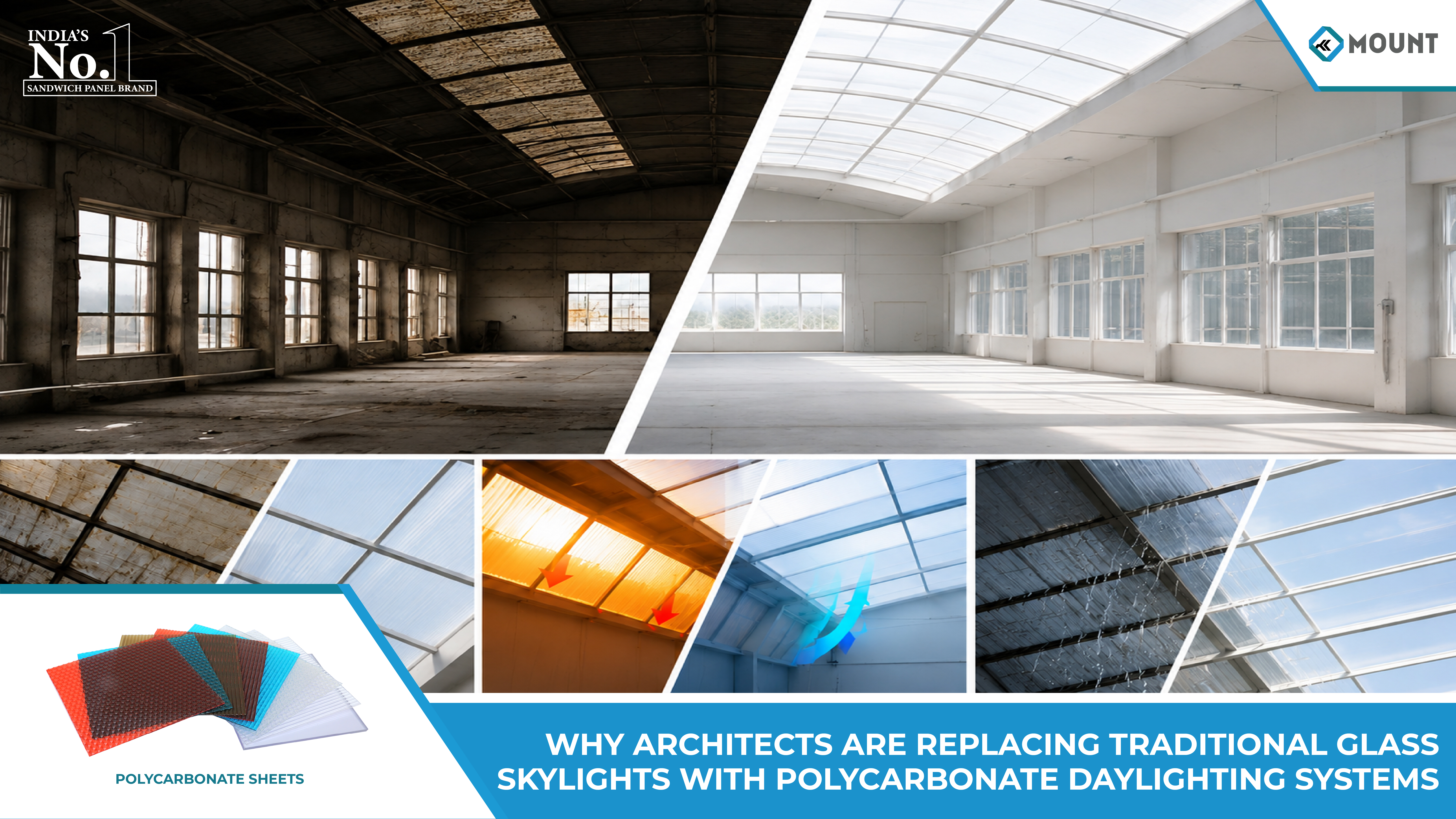
Why Architects Are Replacing Traditional Glass Skylights with Polycarbonate Daylighting Systems
For decades, glass was the default answer whenever a project called for natural light. It looked premium, it let sunlight pour in, and it satisfied the aesthetic brief. But ask any structural engineer or facilities manager who has managed a glass skylight installation for a decade, and a different story emerges, one of cracked panes, condensation issues, escalating maintenance contracts, and roof structures that had to be over-engineered just to carry the dead weight of glazing. That gap between design intent and operational reality is precisely why architects working on warehouses, manufacturing plants, and large-span commercial buildings are re-evaluating their daylighting specifications.
Polycarbonate sheets have moved from a niche alternative to a mainstream specification choice in industrial and institutional roofing. The shift isn’t cosmetic; it’s driven by measurable differences in impact resistance, structural load, weather durability, and long-term cost of ownership.
The Structural Case Against Glass
Glass is brittle. Under hailstorm impact, thermal stress, or even routine maintenance foot traffic, it fractures, and when it fractures, it becomes a safety liability that requires immediate remediation. Polycarbonate, by contrast, has an impact strength roughly 200 times greater than glass of comparable thickness. For facility owners in regions prone to hail, seismic movement, or heavy monsoon loading, that resistance translates directly into fewer emergency repairs and lower insurance risk.
There’s also the matter of dead load. Glass panels require heavier purlins, additional bracing, and reinforced framing to safely support their weight. Mount’s Multiwall polycarbonate sheets, with their hollow wall construction, weigh a fraction of an equivalent glass panel while still delivering strong thermal insulation values. Architects working on retrofit projects, where the existing steel structure cannot support additional loading, find this weight advantage particularly useful,it opens up daylighting options that would otherwise require a full structural upgrade.
Light Diffusion Without the Glare
Raw sunlight through a clear glass skylight often creates hotspots and glare that make interior spaces uncomfortable rather than pleasant. Mount’s Solid polycarbonate sheets and their multiwall counterparts are engineered with diffusion properties that scatter incoming light evenly across a floor plate. This matters enormously in warehouses and manufacturing plants, where uniform illumination reduces shadowing on work surfaces and lowers the strain of relying on overhead artificial lighting throughout the day.
Co,extruded UV,protective layers add another dimension. Instead of yellowing or losing light transmission over years of sun exposure , a common failure mode in lower,grade glazing systems , properly manufactured transparent roofing sheets retain their clarity and diffusion characteristics well beyond a decade of field exposure.
Built for Weather, Not Just for Looks
Roofing systems in industrial and logistics environments are rarely pampered. They face thermal cycling, wind uplift, driving rain, and in coastal regions, salt,laden air. Polycarbonate’s inherent flexibility allows it to expand and contract with temperature swings without the micro,cracking that eventually compromises glass seals. This is one reason polycarbonate roofing sheets manufacturer specifications increasingly appear in tenders for logistics parks and cold chain facilities, where roof integrity directly affects operational uptime.
Maintenance schedules shrink accordingly. Where glass demands regular reglazing, seal replacement, and careful cleaning to avoid scratching, polycarbonate’s coated surfaces are engineered to shed dirt and resist the abrasion that comes with routine upkeep , a genuine operating expense reduction over the life of the roof.
Daylighting as a Design and Performance Strategy
Beyond the material science, there’s a broader design conversation happening. Facility owners now treat daylighting as a performance metric, not a decorative feature. Reducing reliance on artificial lighting during daylight hours cuts energy consumption, and evenly diffused natural light has been linked to improved occupant comfort and productivity in warehouse and office environments alike. Educational institutions and public infrastructure projects, where budgets are scrutinized and occupant wellbeing is a stated design goal, are among the sectors adopting transparent corrugated roofing sheets for exactly this reason , they deliver daylight performance without the long term liabilities of glazed systems.
Greenhouse and controlled environment agriculture projects present a related but distinct requirement: sheets that transmit sufficient light for plant growth while managing heat gain. This is where selecting the best multiwall polycarbonate sheets for greenhouses becomes a technical decision involving wall configuration, light transmission percentage, and thermal performance , not a generic material choice.
Mount’s Approach to Daylighting Systems
At Mount Roofing & Structures, daylighting specifications are treated as an engineering exercise, not an afterthought. Our polycarbonate sheet range is manufactured to hold consistent light transmission, UV resistance, and impact performance across large project volumes , the kind of consistency that matters when a logistics park or manufacturing client is fitting out several buildings on the same timeline. We work directly with architects and contractors to match sheet thickness, wall configuration, and UV coating specification to the actual structural and climatic conditions of a site, rather than defaulting to a single standard product.
If your next project calls for a daylighting system that performs as well on year ten as it does on day one, it’s worth speaking with Mount before finalizing your roofing specification.
FAQs
Q:What thickness of multiwall polycarbonate sheet is typically specified for industrial roofing spans?
A :Specification depends on span length, wind load zone, and purlin spacing, but 10mm to 16mm multiwall configurations are common for warehouse and manufacturing roofing, with thicker profiles used where snow or wind loads are significant.
Q:How does polycarbonate’s thermal expansion affect fixing and installation design?
A :Because polycarbonate expands and contracts more than glass under temperature change, fixings must allow for movement , typically through oversized holes and proper washer detailing , to prevent stress cracking at fastening points.
Q:Does UV coating affect light transmission over the sheet’s service life?
A :A properly co,extruded UV layer is designed to protect against degradation without significantly reducing initial light transmission, and quality sheets maintain the majority of their transmission performance well into their warranted service period.
Q:Can polycarbonate sheets be integrated with existing steel or aluminum roofing profiles?
A :Yes, most polycarbonate roofing and daylighting sheets are manufactured in profiles compatible with standard trapezoidal and corrugated metal roofing systems, allowing daylighting strips to be integrated without redesigning the entire roof structure.
Q:What differentiates a greenhouse,grade polycarbonate sheet from a standard industrial roofing sheet?
Greenhouse grade sheets are engineered for specific light diffusion and transmission percentages suited to plant growth, along with anti condensation treatments, whereas standard industrial sheets prioritize structural daylighting and glare reduction over horticultural light requirements.
Similar Events
 23 October, 2026