 Jul 24, 2026
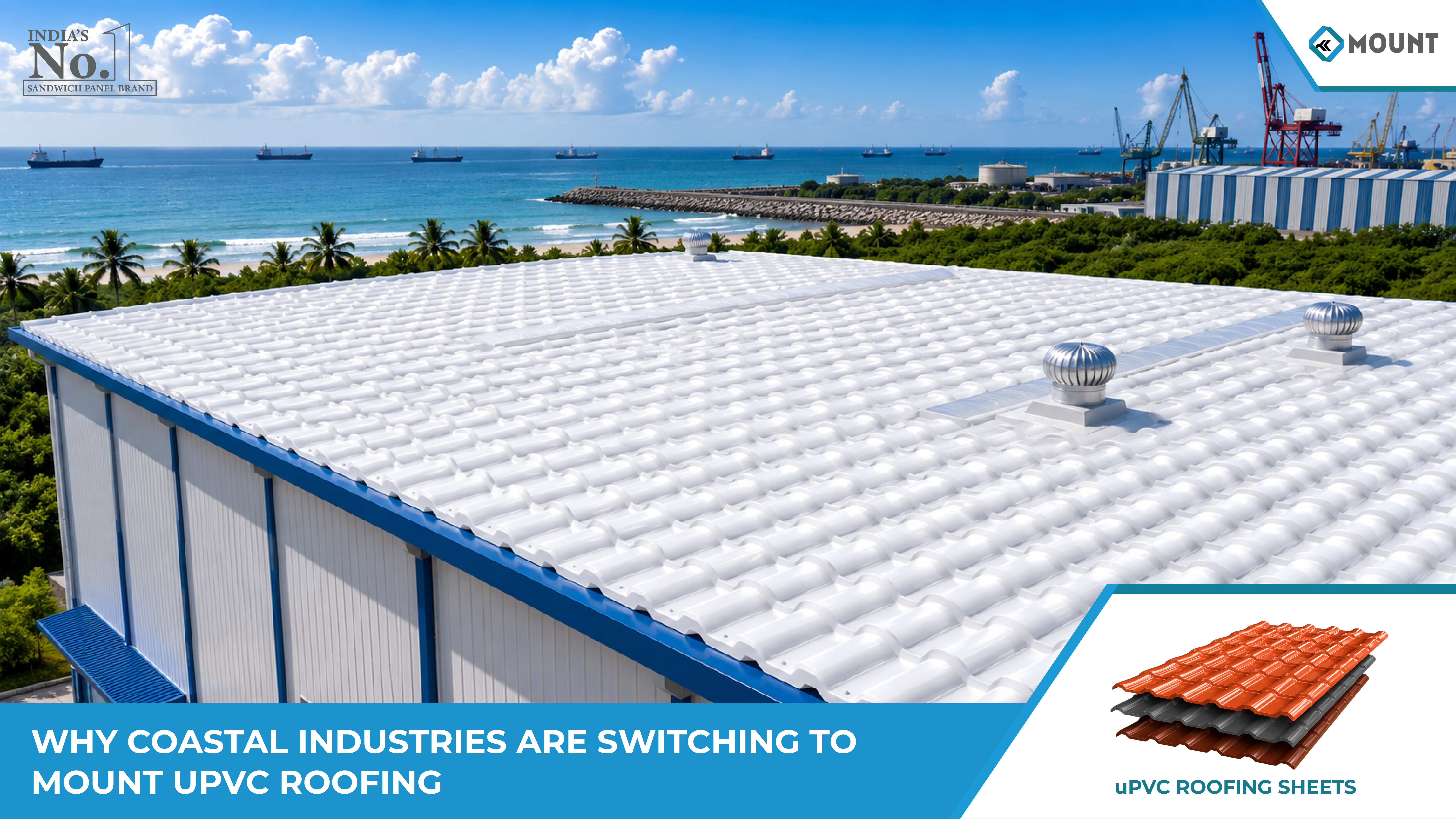
Why Coastal Industries Are Switching To Mount UPVC Roofing
A factory located 10 kilometres inland and a factory located 10 kilometres from the sea may look similar on paper. In reality, they operate in completely different environments.The coastal facility faces a challenge that never appears on a project drawing.
Salt.It arrives with the wind. It settles on structures. It combines with moisture. And over time, it starts affecting almost everything exposed to the atmosphere, including the roof.
This is one reason coastal industries often experience roofing problems earlier than facilities located further inland.
The roof may have been designed correctly.
The structure may have been built properly.
Yet maintenance teams still find themselves dealing with corrosion, leaks, repairs, and unexpected replacement costs years before anticipated.
That’s forcing many coastal industries to rethink how roofing systems are specified.
The Sea Doesn’t Need Direct Contact to Cause Damage
One common misconception is that corrosion only becomes a concern when a facility is located directly beside the shoreline.
The reality is quite different.
Salt particles can travel considerable distances through the air, especially in regions experiencing strong coastal winds. Once these particles settle on roofing surfaces, they begin interacting with humidity, rainfall, and atmospheric moisture.
The process isn’t dramatic.
In fact, it’s usually difficult to notice initially.
A small patch of surface deterioration.
A corroded fastening point.
Minor coating damage.
Then the maintenance cycle begins.
For facility managers, the challenge is that corrosion tends to accelerate once it gains momentum.
Coastal Weather Creates Multiple Problems at Once
Salt exposure is only one part of the story.
Coastal regions also experience consistently high humidity levels. During monsoon seasons, roofing systems face prolonged exposure to moisture. Certain regions encounter strong winds and severe weather events throughout the year.
These factors rarely operate independently.
Instead, they work together.
Humidity supports corrosion.
Rainfall introduces moisture.
Wind drives contaminants across roofing surfaces.
UV exposure continues affecting materials throughout the year.
The result is an operating environment that places constant pressure on conventional roofing systems.
This is why material selection becomes far more important in coastal infrastructure than many project teams initially assume.
Repairs Become More Expensive Than the Roof Itself
Most facility owners don’t replace roofing systems because of a single failure.The decision usually comes after years of recurring maintenance.
A leak is repaired.
A corroded section is replaced.
Another area requires attention six months later.
Over time, maintenance budgets begin growing while confidence in the roofing system declines.What’s often overlooked is the indirect cost.
Maintenance shutdowns.
Operational disruptions.
Inventory protection concerns.
Equipment exposure.
Safety risks.
For facilities operating continuously, these consequences can become more expensive than the original roofing investment itself.
This is one reason coastal industries increasingly focus on lifecycle performance rather than upfront material costs.
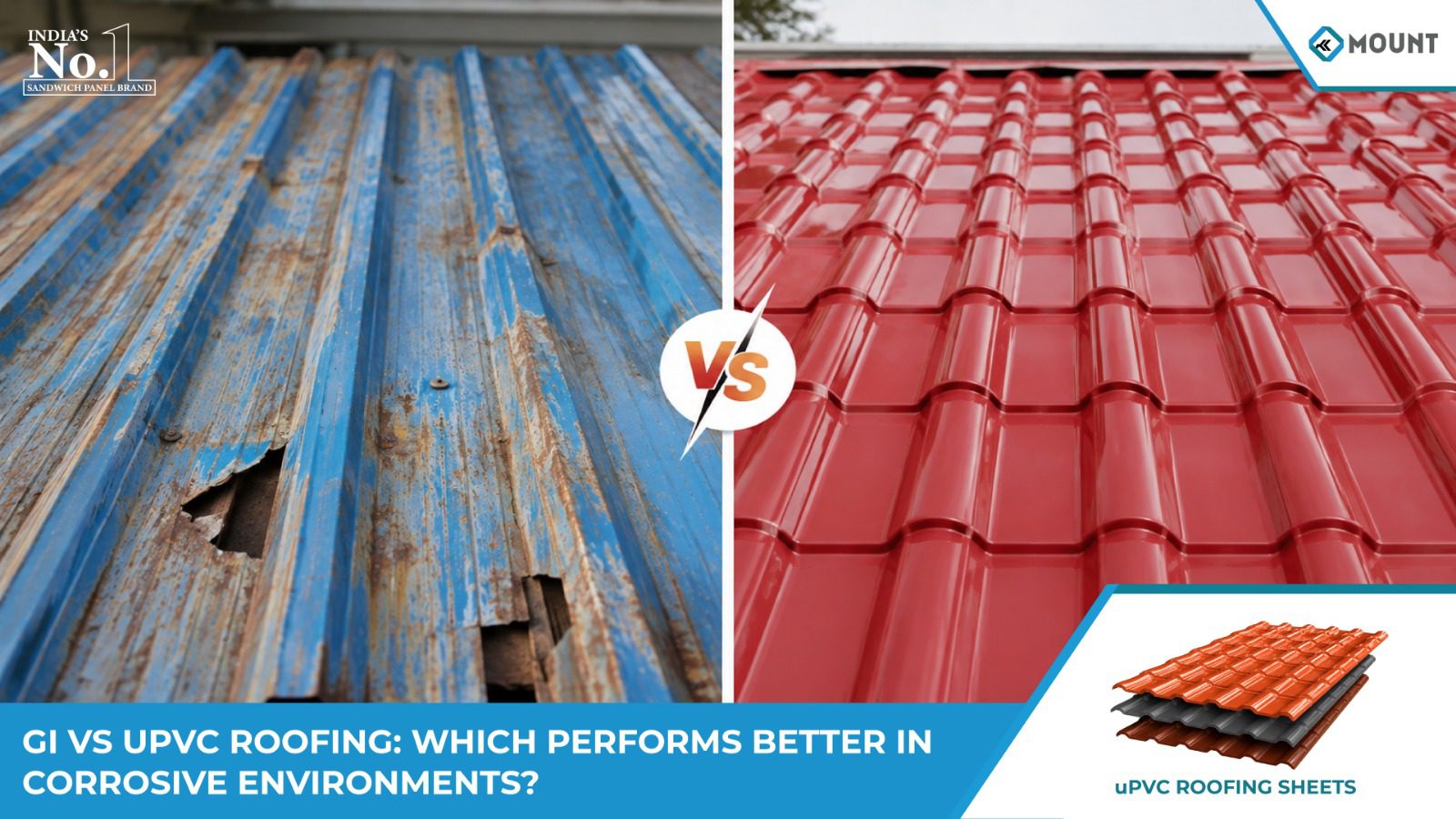
Why Conventional Roofing Materials Often Struggle Near the Coast
Many roofing systems perform effectively in standard industrial environments.
Coastal conditions introduce additional variables.
Protective coatings gradually experience wear. Moisture remains present for extended periods. Corrosion can develop around fasteners, laps, cut edges, and exposed surfaces.
Once deterioration begins, the roofing system often requires increasing levels of maintenance intervention.
For industries operating manufacturing facilities, warehouses, ports, logistics infrastructure, and processing plants, the objective is usually straightforward.
Reduce maintenance dependency.
That objective has contributed significantly to the growing adoption of UPVC roofing systems across coastal regions.
Why UPVC Roofing Is Gaining Attention
One reason uPVC roofing sheets are attracting interest is that they approach the corrosion challenge differently.
Unlike traditional metallic roofing materials, UPVC does not rely on exposed metal surfaces vulnerable to oxidation. This makes it particularly relevant for facilities operating in environments where salt exposure is unavoidable.
For plant managers, the value extends beyond corrosion resistance.
It means fewer concerns about coating failures, rust formation, and repeated repair cycles associated with aggressive coastal conditions.
The focus shifts from constant maintenance to long-term reliability.
Heat Management Matters Too
Many coastal regions experience high temperatures alongside humidity.
The combination can create uncomfortable working conditions inside industrial buildings, particularly large-span facilities.
As a result, developers increasingly evaluate roofing systems not only for durability but also for thermal behaviour.
Solutions such as heat resistant uPVC roofing sheets are frequently specified in facilities where reducing heat transfer through the roof contributes to improved indoor conditions and operational efficiency.
The roof is expected to manage multiple challenges simultaneously.
Corrosion resistance alone is no longer enough.
Coastal Facilities Need More Than Weather Protection
A roof installed near the coast faces different expectations than one installed elsewhere.
- It must resist moisture.
- It must tolerate UV exposure.
- It must withstand changing weather conditions.
- It must continue performing despite constant environmental stress.
This explains the increasing demand for weatherproof roof panels across ports, industrial estates, marine infrastructure, and coastal manufacturing hubs.
Facility owners are looking for roofing systems that remain dependable even when environmental conditions are working against them.
Different Industries, Same Challenge
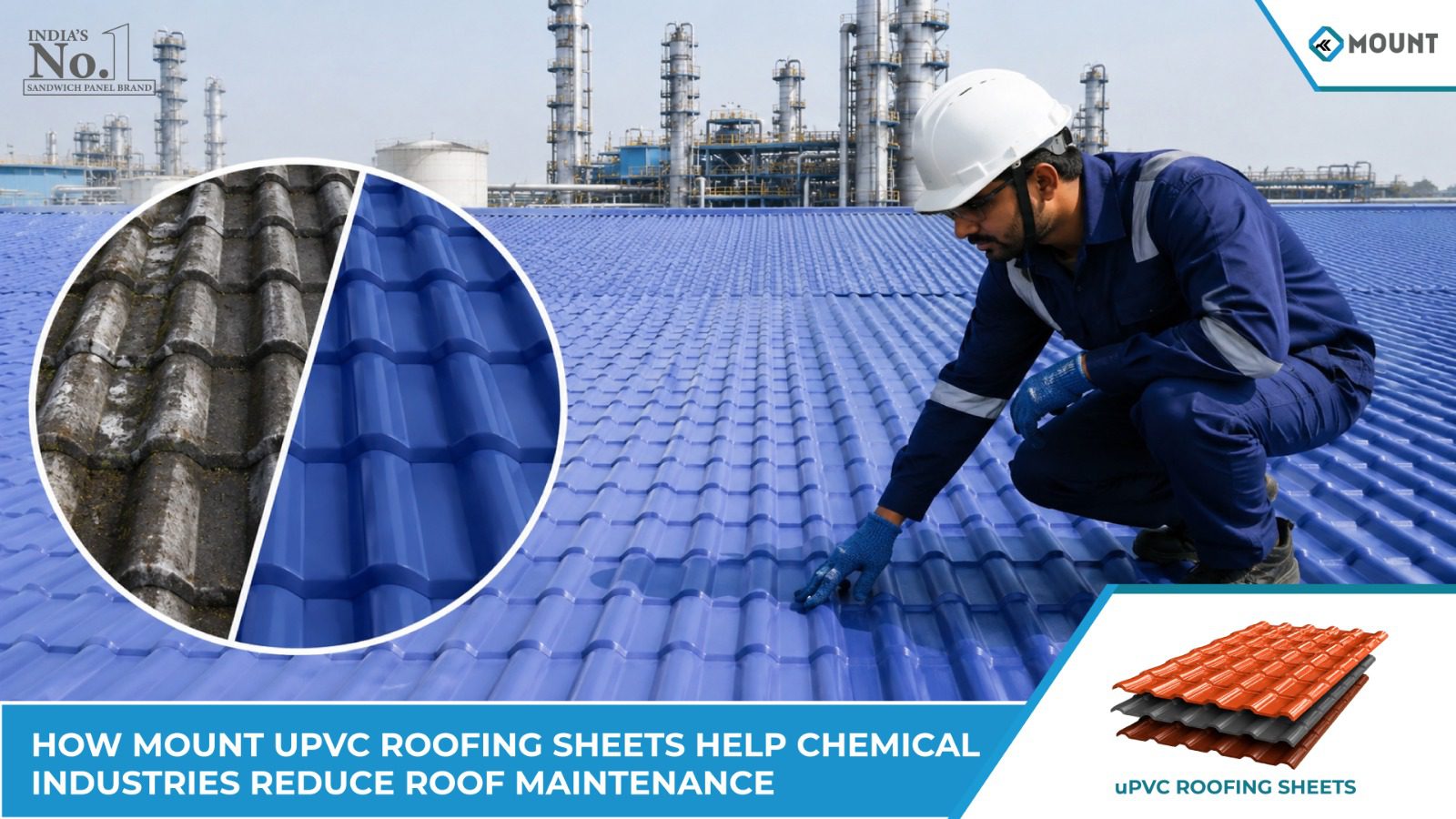
Interestingly, the move toward UPVC roofing is not limited to one sector.Manufacturing plants , Warehouses, Chemical facilities & Port infrastructure projects are adopting it.
The industries differ.The environmental challenge remains remarkably similar.Protecting buildings from corrosion while maintaining long-term operational reliability.This is where products such as cooling roof sheets and heat reduction roofing sheets continue finding relevance across a growing range of coastal applications.
Why Mount UPVC Roofing Is Becoming a Preferred Choice
Selecting roofing for coastal infrastructure requires a different mindset.
The conversation extends beyond roof coverage and structural performance. It involves understanding how materials behave after years of exposure to salt-laden air, humidity, rainfall, and temperature fluctuations.
Mount Roofing & Structures has developed roofing systems specifically for demanding industrial environments. As an established uPVC roofing manufacturer and uPVC sheets manufacturer, Mount delivers solutions engineered to withstand the challenges commonly encountered across coastal facilities.
With strong corrosion resistance, moisture durability, thermal performance, and reduced maintenance requirements, Mount UPVC roofing helps facility owners focus on operations rather than recurring roof repairs.
Because coastal environments rarely become less demanding over time.The roofing system needs to be prepared for that reality from day one.
FAQs
1. Why do roofs corrode faster in coastal regions?
Salt-laden air, high humidity, moisture exposure, and changing weather conditions accelerate corrosion and material deterioration compared to inland environments.
2. How does UPVC roofing help in coastal industries?
UPVC roofing provides strong resistance to corrosion, moisture, and environmental exposure, making it suitable for facilities operating near the coast.
3. Are UPVC roofing sheets suitable for industrial buildings?
Yes. UPVC roofing is widely used in warehouses, manufacturing facilities, chemical plants, logistics infrastructure, and coastal industrial projects.
4. Does UPVC roofing contribute to temperature control?
Many UPVC roofing systems are designed to help reduce heat transfer through the roof, supporting more comfortable indoor conditions.
5. What should coastal industries consider when selecting roofing materials?
Corrosion resistance, weather durability, thermal performance, maintenance requirements, environmental exposure, and expected service life should all be evaluated before specification.
Similar Events