 Aug 3, 2026
Why India’s Monsoon Is the Ultimate Test for Your Roofing System
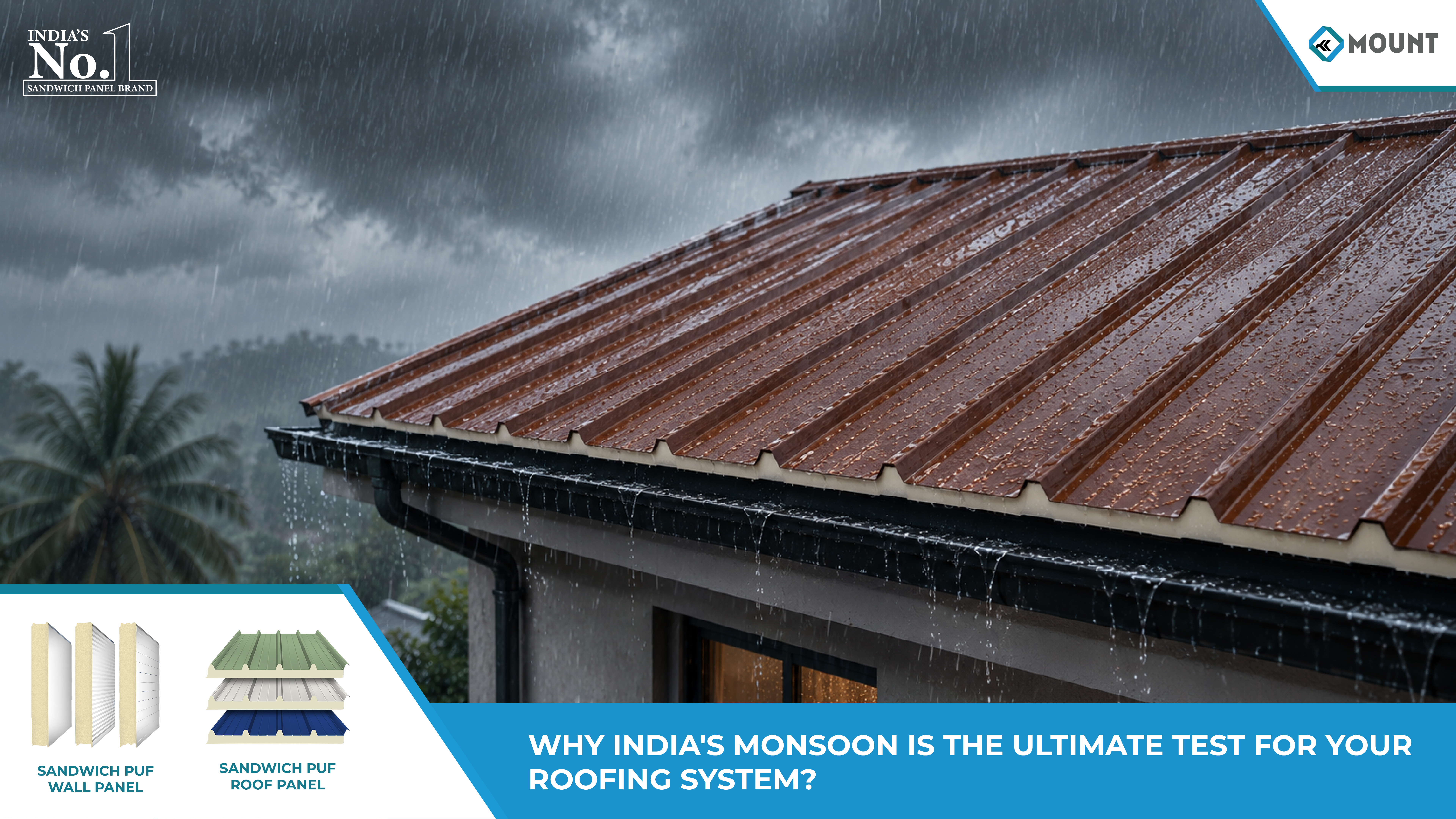
No structural load calculation, wind tunnel test, or fire rating certificate tells you as much about a roof as a single Indian monsoon season does. Sustained rainfall for weeks at a stretch, wind gusts that shift direction unpredictably, humidity that never really drops, and temperature swings between a scorching pre, monsoon afternoon and a cooled, rain, soaked evening, this combination stresses every joint, fastener, and material interface in a roofing assembly simultaneously. A roof that looks identical to its neighbour in April can behave completely differently by August, and the difference almost always comes down to design and installation decisions made long before the first rain fell, starting with whether the PUF Roof Panels specified for the job were engineered for this kind of sustained exposure in the first place.
Water Ingress: Where Most Failures Actually Start
Leaks rarely originate from the flat surface of a roofing panel. They start at the details, laps, ridge closures, gutter connections, and penetrations for pipework or ventilation, where two materials meet and rely on correct overlap, sealant, or fastener detailing to stay watertight. During sustained monsoon rainfall, water finds every gap in that detailing through capillary action and wind driven pressure that a light shower would never expose. This is why drainage design and joint detailing matter as much as the choice of Mount sandwich panels for roofing itself; a premium panel installed with inadequate lap overlap will leak just as readily as a budget one.
Wind Load and Structural Integrity
Monsoon winds don’t just push against a roof; they create uplift pressure that pulls at fastener points from underneath. Steel building roofing panels need to be fixed according to a wind load calculation specific to the site’s exposure category, not a generic fastening pattern applied uniformly across every project. Under-specified fastening is one of the more common causes of panel displacement during heavy storm events, and it’s a failure mode that’s entirely preventable at the design stage.
Thermal Fluctuation and Condensation
The temperature swing between a hot, humid pre-monsoon day and a cooled, rain-drenched evening creates ideal conditions for condensation to form on the underside of poorly insulated roofing. In warehouses storing moisture-sensitive goods or manufacturing plants running temperature-sensitive processes, condensation dripping onto stock or equipment is a direct operational risk, not just a cosmetic issue. Mount Insulated panels for steel buildings address this by maintaining a stable internal surface temperature that stays above the dew point, which prevents condensation from forming in the first place, rather than managing it after it appears.
Corrosion: The Damage That Compounds Over Seasons
Prolonged moisture exposure accelerates corrosion in any roofing material with an exposed metal surface, and repeated monsoon cycles compound this damage year over year if the protective coating isn’t holding up. This is where specifying corrosion resistant industrial roofing at the outset saves significantly more in lifecycle cost than addressing corrosion through recoating and patch repair once it’s already visible. Coastal and high humidity regions see this failure mode arrive faster, which makes coating specification a genuinely regional decision rather than a one size fits all default.
Why Panel Construction Quality Varies So Much
Not every product sold as a sandwich panel performs the same way under monsoon stress, and the difference often comes down to core density, facing gauge, and joint tolerance during manufacturing. Working with an established sandwich panel manufacturer like Mount matters here , consistent core density across a production run means every panel on a roof behaves the same way under load and temperature change, rather than some sections performing to spec while others fall short due to manufacturing variance.
Installation Quality Determines Real,World Performance
Even a well-engineered panel underperforms if installation cuts corners on fastener spacing, sealant application, or flashing detail. Proper sandwich panels for roofing installation follows manufacturer,specified fixing patterns and joint sealing procedures precisely , deviations that seem minor on a dry installation day become the exact points where monsoon rainfall finds its way in months later. This is why site supervision during installation is as important as the material specification itself.
Mount’s Approach to Monsoon, Ready Roofing
Mount Roofing & Structures designs every roofing package around the specific climatic exposure of the site, rainfall intensity, wind zone, and humidity profile, rather than applying a standard specification regardless of location. Our PUF Roof Panels are manufactured with consistent core density and weather,tight joint detailing, and our installation teams follow fixing and sealing protocols specifically calibrated for monsoon intensity rainfall rather than fair weather assumptions.
For warehouses, cold storage units, and manufacturing facilities where roofing panels for steel structures need to perform reliably across an entire monsoon season without emergency repairs, it’s worth having Mount evaluate the site conditions before finalizing a roofing specification.
FAQs
- What fastening density is typically required for roofing panels in high wind, uplift zones during the monsoon season
Fastening density is calculated based on the site’s wind zone classification, building height, and roof geometry, and coastal or open terrain sites generally require closer fastener spacing than sheltered inland locations to resist uplift pressure during storm events. - How can facility managers identify early signs of condensation and related roof damage before it affects stored goods?
Regular inspection of the underside of roofing panels for moisture staining, along with monitoring humidity levels in storage zones during temperature swings, can catch condensation issues before they progress to visible dripping or material damage. - Does panel core density affect a roof’s ability to withstand monsoon, related thermal cycling?
Yes, higher core density generally provides more consistent thermal resistance and dimensional stability across repeated heating and cooling cycles, which reduces the stress placed on panel joints and fixings over a monsoon season. - What joint detailing differences exist between standard roofing panels and monsoon,rated weather,tight systems?
Monsoon-rated systems typically use deeper lap overlaps, additional sealant application at joints, and reinforced ridge and eave closures compared to standard panel detailing designed for lower rainfall intensity regions. - How often should industrial roofing be inspected during and after monsoon season to catch developing issues early?
A pre-monsoon inspection to check fasteners, sealants, and drainage, followed by a post-monsoon inspection to assess for any corrosion, loosened fixings, or joint degradation, is generally recommended in addition to routine periodic maintenance checks.
Similar Events