 Nov 2, 2026
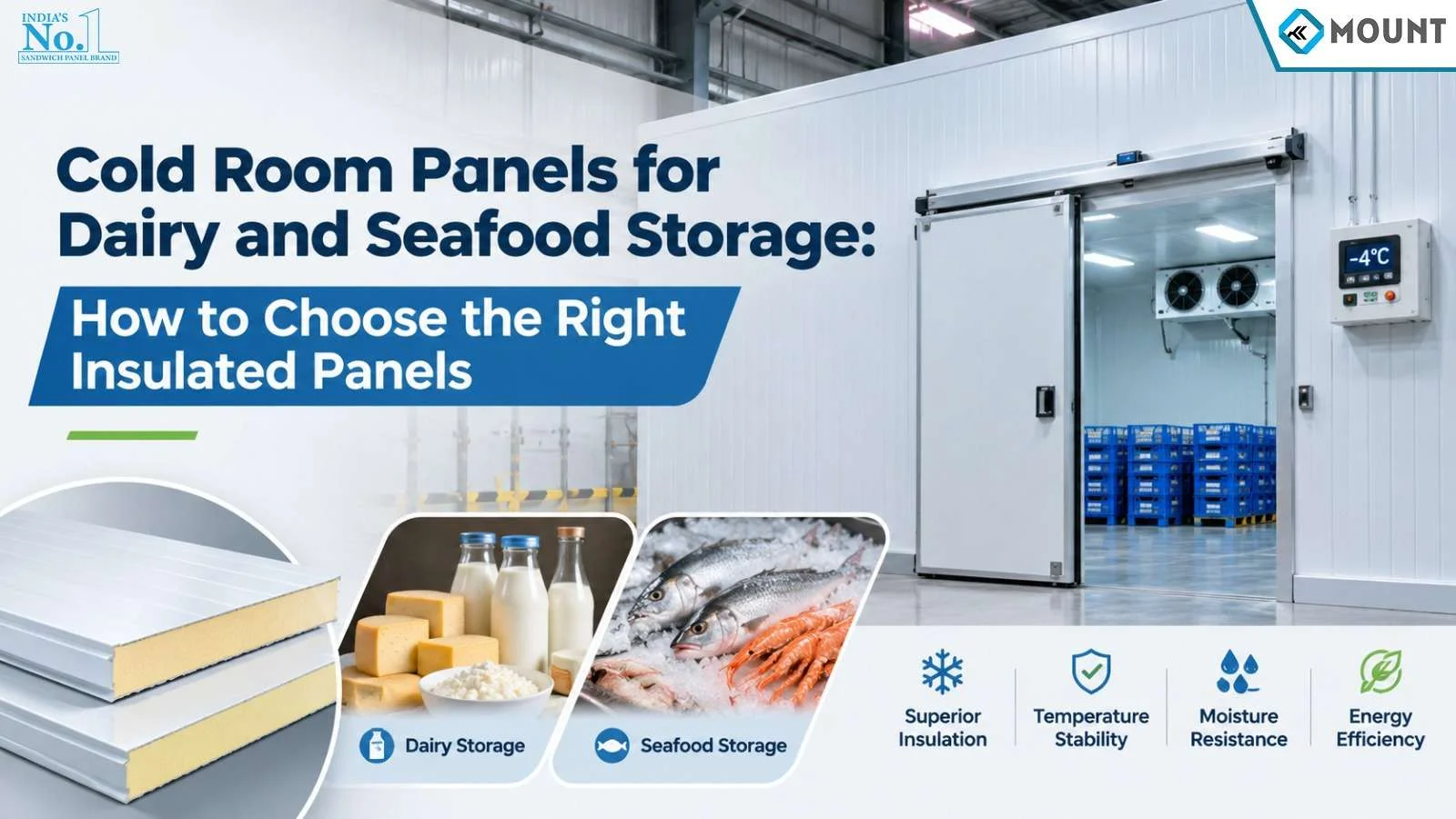
Cold Room Panels for Dairy and Seafood Storage: How to Choose the Right Insulated Panels
Dairy products and seafood require proper temperature-controlled storage to maintain their quality, freshness, and safety. Even small temperature fluctuations can affect products such as milk, cheese, butter, fish, prawns, and frozen seafood. This is why choosing the right cold room panels is an important part of designing a reliable cold storage facility.
Cold room panels are insulated sandwich panels used to construct the walls and ceilings of temperature-controlled rooms. They help reduce heat transfer from the outside environment, support stable internal temperatures, and improve the efficiency of refrigeration systems. PUF (Polyurethane Foam) and PIR (Polyisocyanurate) insulated panels are commonly considered for dairy processing plants, seafood storage facilities, food warehouses, and cold chain infrastructure.
However, selecting cold room panels involves more than choosing an insulation material. Panel thickness, surface finish, joint design, moisture protection, room temperature, and installation quality all influence the performance of a cold storage facility.
In this guide, we explain how to choose suitable cold room panels for dairy and seafood storage, the important specifications to consider, and common mistakes to avoid.
Why Are Cold Room Panels Important for Dairy and Seafood Storage?
Dairy and seafood products are sensitive to temperature changes. Without suitable storage conditions, their quality can deteriorate during processing, handling, and distribution.
Cold room panels create an insulated enclosure that helps limit heat entering the storage area. This allows the refrigeration system to maintain the required temperature more effectively.
Here are some important reasons why insulated panels are used in food storage facilities.
1. Maintain Consistent Storage Temperatures
Temperature stability is essential for dairy and seafood preservation. Insulated cold room panels help reduce heat transfer through walls and ceilings, supporting the refrigeration system in maintaining the required indoor conditions.
This is particularly important in facilities that operate continuously or store products at low temperatures.
2. Improve Refrigeration Efficiency
When heat enters a cold room through poorly insulated walls or ceilings, refrigeration equipment has to remove that additional heat.
Properly selected and installed insulation panels help reduce heat gain and can lower the refrigeration load. Actual energy savings depend on the room design, refrigeration equipment, insulation specifications, door usage, and operating conditions.
3. Support Hygienic Storage Environments
Food processing and storage facilities require surfaces that can be cleaned and maintained properly.
Metal-faced insulated panels offer smooth surfaces that can support regular cleaning when the correct facing, joint details, sealants, and cleaning procedures are selected.
4. Help Control Moisture and Condensation
Moisture can affect insulation performance and create maintenance problems if it enters panel joints or the building envelope.
Properly sealed panel connections, suitable vapour barriers, and correctly designed wall-to-floor and wall-to-ceiling joints help reduce moisture-related problems.
5. Allow Faster Cold Room Construction
Cold room panels are manufactured in advance and assembled at the project site. This can simplify installation compared with constructing insulated rooms entirely through conventional masonry methods.
Panel-based construction can also support modular room layouts and future expansion when the structure is designed accordingly.
Types of Cold Room Panels Used in Dairy and Seafood Facilities
Different insulation materials are available for cold storage construction. The right choice depends on the required temperature, fire performance, hygiene requirements, and overall project design.
1. PUF Sandwich Panels
PUF panels contain a rigid polyurethane foam core placed between two protective metal facings.
The foam provides thermal insulation and helps reduce heat transfer between the cold room and its surrounding environment.
Key features:
- Good thermal insulation performance.
- Lightweight sandwich panel construction.
- Suitable for various chilled and frozen storage applications when correctly specified.
- Available with different metal facings and joint configurations.
- Can be manufactured in different thicknesses.
Applications:
- Dairy product storage.
- Milk chilling facilities.
- Seafood cold rooms.
- Frozen food warehouses.
- Food processing units.
2. PIR Insulated Panels
PIR panels use a polyisocyanurate insulation core between metal sheets.
They are considered where thermal insulation and fire performance are important design requirements. However, actual fire performance must be checked against the test certification for the specific panel system.
Key features:
- High thermal insulation performance.
- Suitable for temperature-controlled environments.
- Available with different panel configurations.
- Can be considered for facilities with specific fire performance requirements.
3. Cold Room Camlock Panels
Camlock panels use mechanical locking arrangements to connect individual insulated panels.
These connections help create a secure panel assembly and are commonly used in modular cold room construction.
Key features:
- Mechanical panel connections.
- Suitable for modular cold room applications.
- Helps create properly aligned panel joints.
- Can simplify installation and dismantling where the system is designed for it.
4. Double Tongue and Groove Panels
Double tongue and groove panels use specially designed edges that fit together to create a close-fitting connection.
Proper sealing of these joints helps reduce air leakage and unwanted heat transfer.
Key features:
- Close-fitting panel connections.
- Supports airtight cold room construction.
- Suitable for wall and ceiling applications.
- Helps maintain consistent enclosure performance.
How to Choose the Right Cold Room Panel Thickness?
Panel thickness is one of the most important considerations when designing a cold storage facility.
The required thickness depends on the temperature difference between the inside and outside of the room, the insulation material, room dimensions, operating conditions, and refrigeration load.
For example, a chilled dairy storage room and a deep-freezing seafood facility may require different insulation specifications.
Consider these factors before selecting panel thickness.
1. Required Storage Temperature
A room operating at a chilled temperature generally has different insulation requirements from a freezer operating at a much lower temperature.
Lower internal temperatures can increase the temperature difference between the room and its surroundings. This makes insulation design particularly important.
2. External Climate Conditions
The Indian climate varies across regions.
A cold room located in a hot and humid coastal area may face different heat and moisture challenges compared with a facility in a cooler region.
Consider outdoor temperature, humidity, solar exposure, and seasonal conditions during design.
3. Cold Room Dimensions
The length, width, height, and total surface area of a cold room influence its heat gain.
Larger rooms require proper insulation and refrigeration calculations based on their actual operating conditions.
4. Frequency of Door Opening
Frequent door opening allows warm and humid air to enter the cold room.
Facilities with regular loading and unloading activities should consider insulated doors, suitable seals, strip curtains, and air management arrangements.
5. Refrigeration Load
Panel thickness should be selected as part of the overall refrigeration design.
A qualified refrigeration designer should consider product load, incoming product temperature, room dimensions, door openings, lighting, equipment, and other heat sources.
Important: Do not select panel thickness only because another cold storage facility uses the same specification. Ask for a project-specific thermal and refrigeration assessment.
Dairy Cold Storage: Choosing Panels for Milk and Milk Products
Dairy products require suitable storage conditions throughout processing, packaging, and distribution.
Different products have different storage requirements. Raw milk, pasteurized milk, cheese, butter, yogurt, and other dairy products should not automatically be assigned the same storage temperature.
Cold room panels help create an insulated environment that supports the refrigeration system.
Important Requirements for Dairy Cold Rooms
- Hygienic Internal Surfaces
Dairy processing facilities require surfaces that can be cleaned effectively. Select panel facings and joint details suitable for the cleaning chemicals and sanitation procedures used at the facility.
- Moisture Resistance
Dairy facilities may experience moisture from cleaning, processing, and refrigeration operations. Proper panel connections and vapour control are important.
- Temperature Stability
The insulation system should support the required storage conditions without unnecessary heat gain through walls and ceilings.
- Corrosion-Resistant Facings
Select suitable metal facings based on exposure to moisture, cleaning agents, and the operating environment.
- Proper Joint Sealing
Poorly sealed joints can allow moisture and air leakage. Pay attention to corners, panel connections, and wall-to-ceiling junctions.
Seafood Cold Storage: Choosing Panels for Fish and Frozen Products
Seafood is highly sensitive to temperature abuse. Fresh fish, prawns, shellfish, and frozen marine products need appropriate storage environments throughout the cold chain.
Seafood processing facilities may include separate rooms for receiving, chilled storage, processing, freezing, and finished-product storage.
Each area can have different operating requirements.
Important Requirements for Seafood Cold Rooms
- Suitable Insulation for Chilled and Frozen Storage
Fresh chilled seafood and frozen seafood require different storage conditions. Panel specifications should match the intended operating temperature.
- Corrosion Protection
Seafood facilities, especially those located near coastal areas, may experience high humidity, salt exposure, and frequent cleaning.
Choose suitable corrosion-resistant facings and compatible accessories.
- Hygienic Panel Surfaces
Smooth and cleanable internal surfaces help support sanitation procedures in seafood processing and storage areas.
- Effective Joint Sealing
Properly sealed joints help limit air leakage and moisture ingress, supporting consistent cold room performance.
- Suitable Flooring and Drainage
Seafood facilities can experience water, ice, and cleaning-related moisture. The floor, drainage system, and wall-to-floor connections should be designed to suit these conditions.
Dairy vs Seafood Cold Storage: What Are the Panel Requirements?
Although both industries require temperature-controlled storage, their operating conditions can be different.
| Requirement | Dairy Cold Storage | Seafood Cold Storage |
| Temperature requirements | Depends on the dairy product | Depends on chilled or frozen product |
| Hygiene | Important for processing and storage | Important for fish handling and processing |
| Moisture exposure | Cleaning and condensation | Washing, ice, and high humidity |
| Corrosion considerations | Depends on cleaning chemicals | Often important in coastal environments |
| Insulation | Based on product and room temperature | Based on chilled or freezing requirements |
| Panel joints | Properly sealed connections | Properly sealed and easy-to-clean connections |
| Flooring | Suitable hygienic flooring | Drainage and moisture management are especially important |
The main point is that cold room panels should be selected according to the facility’s actual application rather than using one standard specification for every industry.
What Temperature Should Dairy and Seafood Cold Rooms Maintain?
Storage temperature depends on the product, processing stage, packaging, and applicable food safety requirements.
Some useful reference points include:
| Product or application | Temperature reference |
| Pasteurized milk at the treatment establishment | Maximum 5°C until it leaves the establishment |
| Chilled fish and fish products | 0°C to 4°C |
| Frozen fish and fish products | -18°C or below |
These are regulatory or food-safety reference points for the stated applications, not universal settings for every dairy or seafood product.
For dairy products, follow the manufacturer’s specified storage temperature and applicable food safety requirements. For seafood, follow the relevant FSSAI requirements and product specifications.
The refrigeration system, insulation panels, doors, and temperature monitoring equipment should work together to maintain the required conditions.
Important Cold Room Panel Specifications to Check Before Buying
Before purchasing insulated cold room panels, review the following specifications with the manufacturer.
1. Insulation Core
Check whether the panel uses PUF, PIR, or another suitable insulation material.
Ask for thermal conductivity and other relevant technical performance data.
2. Panel Thickness
Confirm the thickness based on the intended storage temperature and design calculations.
3. Metal Facing
Review the type and thickness of the external and internal metal sheets.
For food-processing environments, the internal facing should be suitable for the hygiene and cleaning requirements of the facility.
4. Panel Density and Insulation Quality
Check the manufacturer’s declared foam density, production quality, and relevant test documentation.
Density alone does not establish the complete thermal performance of a panel.
5. Joint Design
Review whether the panels use tongue and groove, double tongue and groove, or camlock connections.
The joint design should support the required air-tightness and installation requirements.
6. Surface Finish
Choose a finish that can withstand the expected cleaning procedures and environmental exposure.
7. Technical Certifications
Request relevant product test reports, quality documentation, and applicable fire performance certificates.
Do not rely only on general claims such as premium quality or high insulation.
Common Mistakes to Avoid When Installing Cold Room Panels
Even good-quality insulation panels may not perform as expected if the cold room is poorly designed or installed.
Here are some common mistakes to avoid.
- Selecting Panels Without Thermal Calculations
Choosing a panel thickness without considering operating temperature and external conditions can result in inadequate insulation.
- Ignoring Panel Joints
Unsealed joints can allow air leakage and moisture ingress. Ensure that the specified joint system is installed correctly.
- Using Unsuitable Metal Facings
The wrong facing may deteriorate when exposed to moisture, cleaning chemicals, or coastal conditions.
- Neglecting Floor Insulation
Freezer applications may require properly designed floor insulation and vapour barriers. Ignoring these requirements can cause condensation and frost-related floor problems.
- Choosing the Wrong Cold Room Door
Doors are frequently opened during loading and unloading. Poorly sealed doors can increase heat gain and refrigeration demand.
- Ignoring Drainage and Cleaning Requirements
Food processing facilities need suitable drainage, hygienic corners, and cleaning procedures.
- Treating Panels as the Entire Cold Storage System
Insulated panels alone do not provide refrigeration. The complete system also requires suitable refrigeration equipment, doors, flooring, ventilation, drainage, and temperature monitoring.
Why Choose Mount Cold Room Insulation Panels?
Mount provides insulated cold room panel solutions for temperature-controlled storage and processing environments.
Its cold room insulation panel range is designed to support thermal stability, airtight panel connections, and hygienic internal surfaces.
Important features highlighted in Mount cold room panel range include:
- Temperature stability: Helps control heat ingress and maintain the required indoor conditions.
- Double tongue and groove joints: Designed to create close-fitting panel connections and reduce thermal losses.
- Thermal efficiency: Insulated panels help reduce heat transfer and refrigeration demand.
- Hygienic surfaces: Non-porous facings support cleaning and maintenance.
- Multiple panel configurations: Available solutions include wall and ceiling panels, double tongue and groove panels, camlock panels, and floor slabs.
These solutions can be considered for dairy storage, seafood facilities, frozen food warehouses, food processing units, and other cold chain applications.
The correct panel configuration, thickness, facing, and joint arrangement should be finalized according to the project’s technical requirements.
Explore Mount Cold Room Insulation Panels to understand the available solutions.
Planning a Dairy or Seafood Cold Storage Facility?
Choosing the right insulation panels is an important step towards building an efficient cold storage environment.
Contact Mount to discuss your cold room requirements, including the storage application, room dimensions, operating temperature, and panel specifications.
Frequently Asked Questions About Cold Room Panels for Dairy and Seafood Storage
1. Which panels are best for dairy cold storage?
PUF and PIR insulated sandwich panels are commonly considered for dairy cold storage applications. The right option depends on the required storage temperature, hygiene requirements, cleaning procedures, fire performance, and project specifications.
2. Which cold room panels are suitable for seafood storage?
PUF and PIR insulated panels can be used in seafood cold rooms when correctly designed for the operating temperature and environment. Corrosion-resistant facings, properly sealed joints, and suitable drainage are important considerations.
3. What thickness of PUF panels is required for a cold room?
The required PUF panel thickness depends on the storage temperature, room dimensions, external climate, insulation performance, and refrigeration load. A project-specific thermal calculation should determine the suitable thickness.
4. Are PUF panels suitable for frozen seafood storage?
Yes. PUF panels can be used in frozen seafood storage facilities when the panel specifications and complete cold room design are suitable for the intended low-temperature operation.
5. What is the difference between PUF and PIR cold room panels?
PUF panels use a polyurethane foam core, while PIR panels use a polyisocyanurate foam core. Both provide thermal insulation. Their fire performance and other properties should be evaluated using the technical documentation for the specific products.
6. How do cold room panels help reduce electricity consumption?
Insulated panels reduce heat transfer through the walls and ceiling. This can reduce the cooling load on refrigeration equipment and support more efficient operation. Actual energy savings depend on the complete cold room design and usage.
7. Why is panel joint sealing important in cold storage?
Properly sealed joints help reduce air leakage and moisture entry. Poor connections can contribute to condensation, thermal losses, and difficulties in maintaining the required room temperature.
8. Can cold room panels be used in coastal seafood processing facilities?
Yes. However, the panel facings, fasteners, sealants, and accessories should be selected to suit coastal conditions, including humidity, salt exposure, and frequent cleaning.
9. Do cold storage facilities require insulated flooring?
Freezer rooms and certain low-temperature applications require properly designed floor insulation and vapour control. The requirement depends on the operating temperature, ground conditions, and overall cold room design.
10. What factors should be considered before buying cold room panels?
Important factors include insulation material, panel thickness, thermal conductivity, metal facing, joint design, corrosion resistance, cleaning requirements, technical certifications, and installation quality.
Conclusion
Cold room panels play an important role in dairy and seafood preservation by helping create insulated environments for temperature-controlled storage.
However, choosing the right panels requires careful consideration of insulation performance, operating temperature, panel thickness, metal facings, joint design, moisture protection, and hygiene requirements.
For dairy processing plants and seafood storage facilities, the focus should be on selecting an insulation system that matches the actual application and works effectively with the complete refrigeration setup.
Mount offers cold room insulation panel solutions for different temperature-controlled storage and processing applications. Explore its product range to identify suitable options for your next cold storage project.
Similar Events

 30 October, 2026