 Aug 14, 2026
How UPVC Roofing Sheets Perform in Various Weather Conditions
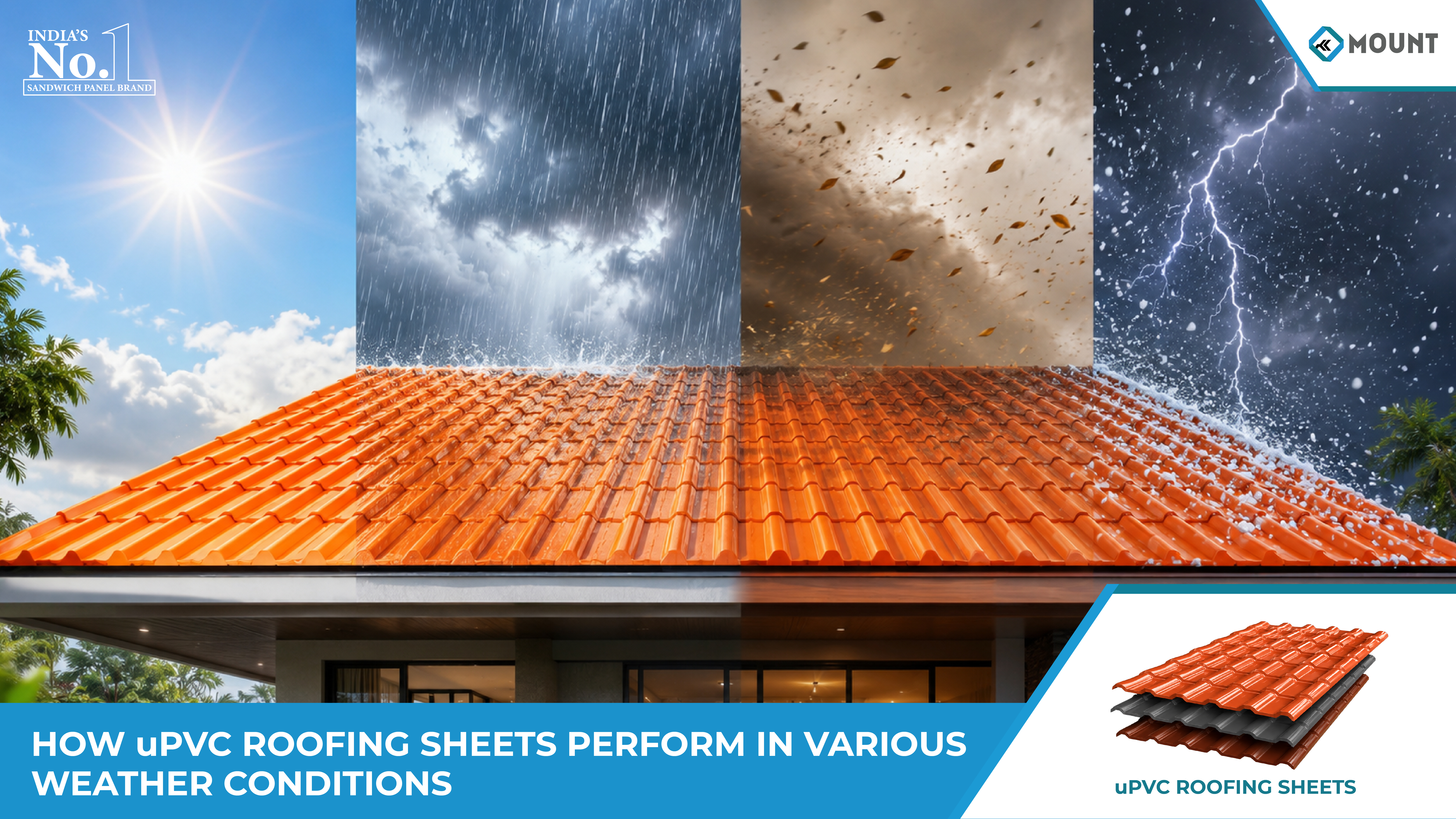
A roof in Rajasthan and a roof in Kochi are solving two completely different problems, even though both sit under the same national building code. One is fighting off surface temperatures that can push past 65°C on exposed metal. The other is dealing with saltladen humidity that eats through standard coatings within a few monsoon seasons. Add in the hailstorms of the north, the cyclonic winds of the eastern coast, and the sheer volume of rainfall during monsoon months, and it becomes clear why a single roofing specification rarely works everywhere. This is the practical reality that facility planners across India navigate, and it’s why uPVC roofing sheets have become a serious specification choice rather than a budget alternative.
Heat and UV: The Silent Degrader
Long before a roof leaks, prolonged UV exposure starts breaking down the polymer structure of lower-grade sheeting, a process that shows up first as chalking, then as brittleness, and eventually as cracking under normal wind load. In India’s peak summer zones, roofs face this stress for months at a stretch. Mount uPVC roof panels manufactured with stabilised formulations resist this photodegradation far longer than untreated alternatives, retaining structural integrity and colour consistency well past the point where cheaper sheeting begins to fail.
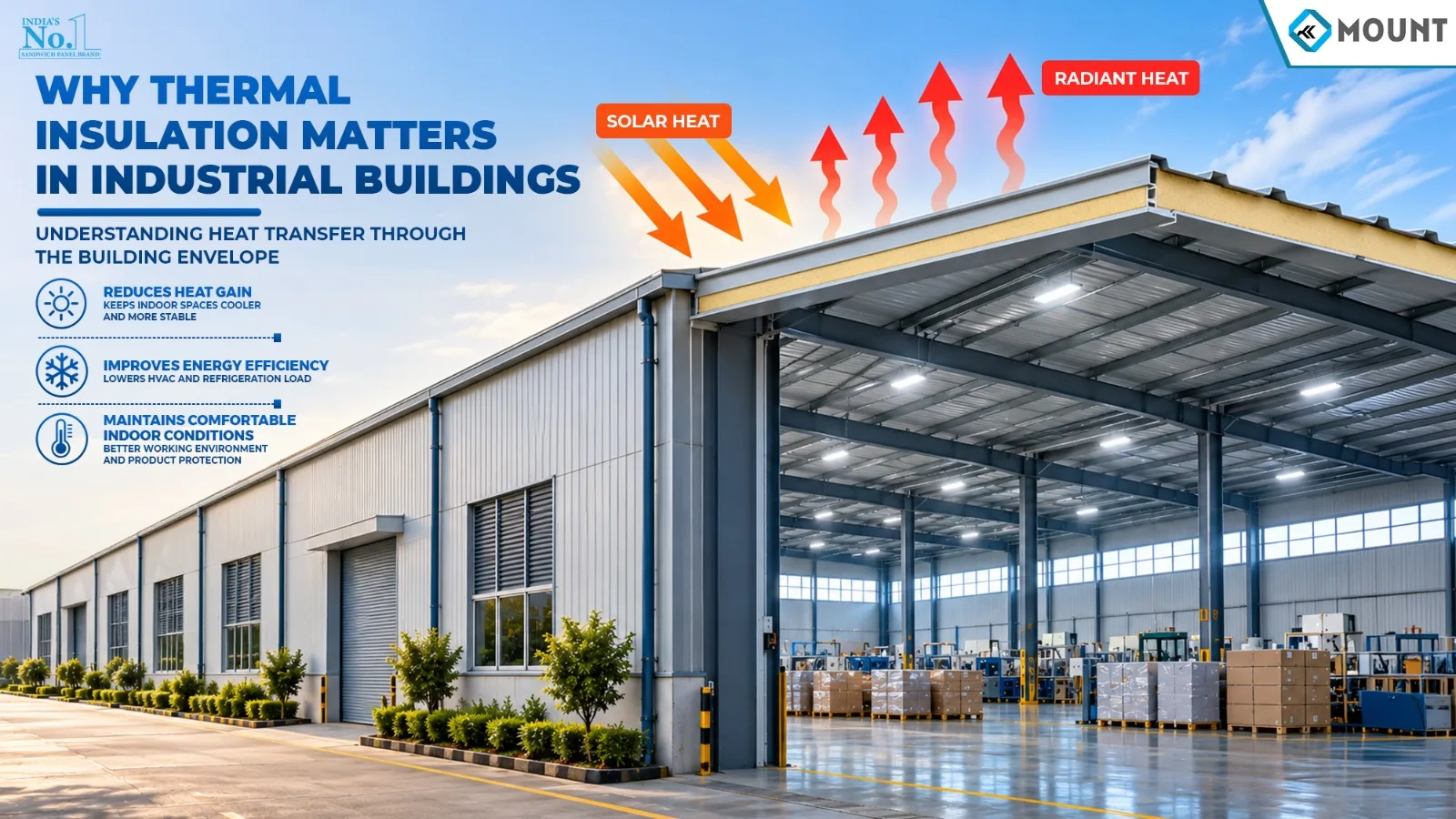
There’s a secondary benefit here that facility managers increasingly ask about directly: thermal comfort. Reflective, low-conductivity cooling roof sheets reduce heat transfer into the building envelope, which translates into a measurable drop in cooling load for warehouses and manufacturing floors that would otherwise rely entirely on mechanical ventilation to offset roof radiated heat.
Monsoon Loading and Water Ingress
Heavy monsoon rainfall tests a roofing system in ways dry, season inspections never reveal. Water doesn’t just need to be shed off the surface; it needs to be kept out of laps, fasteners, and end closures where capillary action can pull moisture inward over time. This is where profile design matters as much as material choice. Properly engineered overlap depth and fastener spacing prevent the slow water ingress that eventually causes purlin corrosion, even when the roofing material itself is unaffected by moisture.
Near-zero water absorption is a genuine advantage of well-formulated uPVC roofing sheets here. Unlike fibre, cement or certain composite sheets that absorb moisture and swell marginally over repeated wet,dry cycles, uPVC sheeting remains dimensionally stable across an entire monsoon season, which keeps fastener points tight and reduces the risk of progressive loosening.
Coastal and Chemical, Zone Corrosion
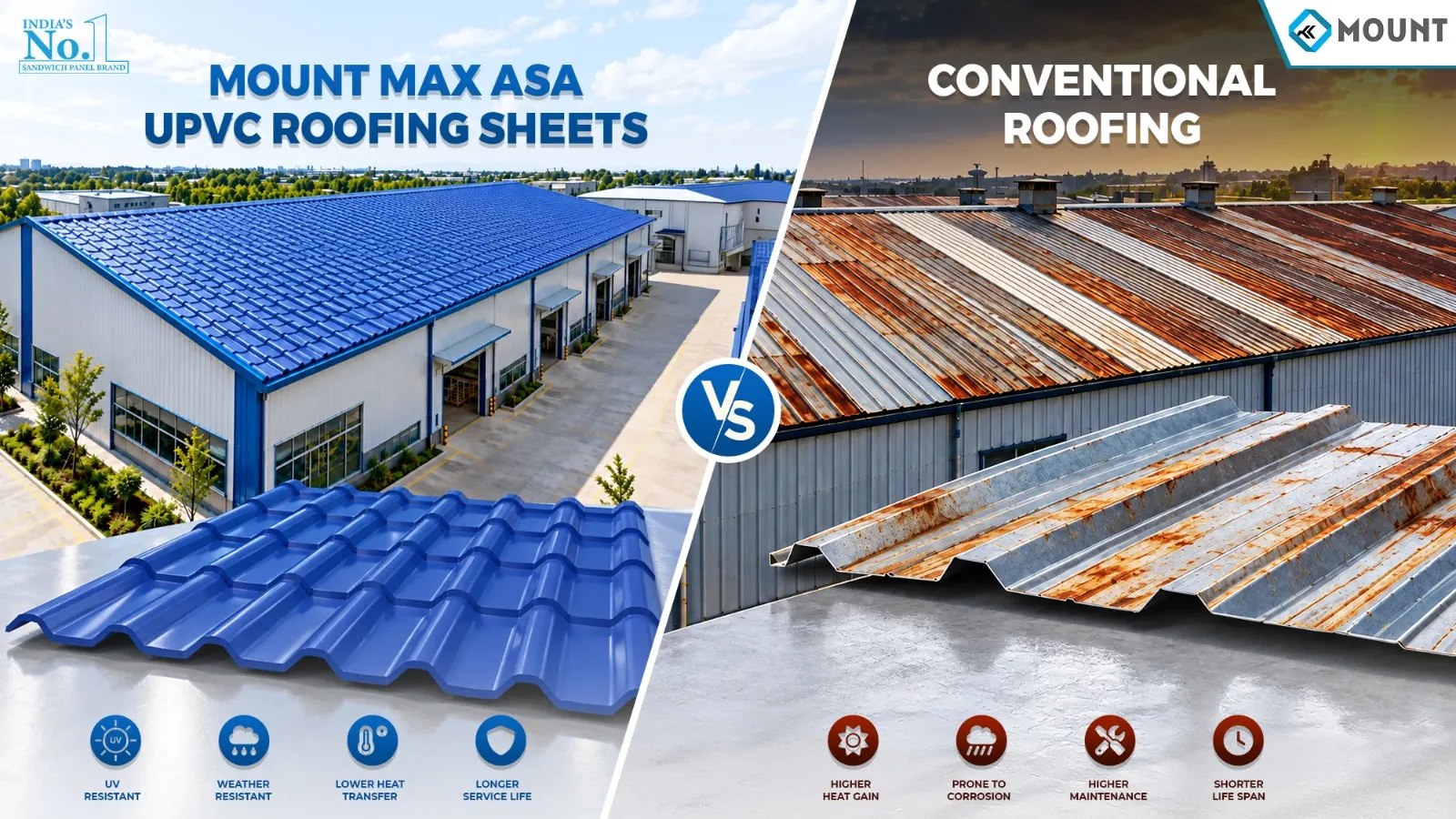
Chemical plants and coastal facilities face an accelerated version of every weather challenge combined: salt spray, industrial off-gassing, and humidity that rarely drops below uncomfortable levels. Metal roofing in these environments, even galvanised variants, typically shows visible corrosion within a handful of years unless maintained aggressively. Because uPVC does not rust or oxidise, it sidesteps this failure mode entirely, making it a preferred material for chemical storage facilities, fertiliser plants, and port, adjacent warehouses where airborne corrosive agents are a constant.
Thermal Expansion and Structural Movement
Every roofing material expands and contracts with temperature swings, and the difference between a roof that lasts and one that fails prematurely often comes down to whether the installation accounted for this movement. Fastener holes that are too tight or fixing patterns that don’t allow for expansion create stress points that eventually crack the sheet, regardless of the material’s inherent quality. This is a detail that separates experienced uPVC roofing contractors from installers working outside their expertise; proper fixing tolerance is not optional, it is fundamental to service life.
Matching the Roof to the Region
The honest answer to “which roofing system performs best” is that it depends entirely on the climatic zone and the building’s operational profile. A cold storage facility in a humid coastal belt has different priorities than an open-sided agricultural shed in a high, UV, low, rainfall region. This is why weatherproof roof panels need to be specified against actual site data, annual rainfall, average UV index, wind zone classification, and any chemical exposure, rather than a generic regional assumption.
Mount’s Engineering Approach to Weather Performance
Mount Roofing & Structures approaches every roofing specification as a climate-matching exercise. Rather than offering a single uPVC product across every project, our team evaluates site-specific conditions, humidity levels, UV intensity, chemical exposure, and wind loading before recommending a panel profile and fixing detail suited to that environment. As an established uPVC roofing manufacturer, we manufacture to consistent tolerances across production runs, which matters when a client is roofing multiple facilities across different states and needs predictable performance at every site.
For facilities that need installation handled to the same standard as the material itself, our team also covers fixing details, expansion allowance, and flashing work through dedicated uPVC roofing installation services, the details that determine whether a roof performs for five years or fifteen.
If your next project needs a roofing system engineered for the specific climate it will operate in, rather than a generic specification, Mount is worth bringing into the conversation early.
Frequently Asked Questions
Q: How does uPVC roofing compare to metal roofing in high,humidity coastal environments?
A: Unlike galvanised or pre,coated metal sheeting, uPVC does not corrode when exposed to saltladen air, making it a more predictable long term choice for coastal manufacturing and storage facilities where metal roofs typically require recoating or replacement within a shorter cycle.
Q: What fixing tolerance is required to accommodate thermal expansion in uPVC roofing sheets?
Fastener holes are typically oversized relative to the fastener diameter, and fixing patterns are spaced to allow the sheet to expand and contract with temperature change without inducing stress at the fixing point; installers should follow manufacturer specified spacing rather than standard metal roofing fixing patterns.
Q: Are uPVC roofing sheets suitable for chemical plants with airborne corrosive exposure?
A: Yes, uPVC’s chemical resistance makes it a common specification for fertilizer plants, chemical storage units, and industrial facilities where airborne acidic or alkaline compounds would accelerate corrosion in metal roofing systems.
Q: How much of a cooling load reduction can be expected from cooling roof sheet profiles versus standard roofing?
The reduction depends on building geometry, insulation, and ventilation design, but reflective and low-conductivity roofing profiles generally reduce roof-transmitted heat gain compared to uninsulated metal sheeting, which can meaningfully lower mechanical cooling demand in warehouse environments.
Q: What maintenance schedule should facility managers expect for uPVC roofing in monsoon, heavy regions?
A: Beyond periodic inspection of fasteners, laps, and flashing details after peak monsoon periods, uPVC roofing generally requires less intensive maintenance than metal alternatives since it does not need recoating or rust treatment, though gutter and drainage clearing remains important in high-rainfall zones.
Similar Events
 23 October, 2026