 Aug 19, 2026
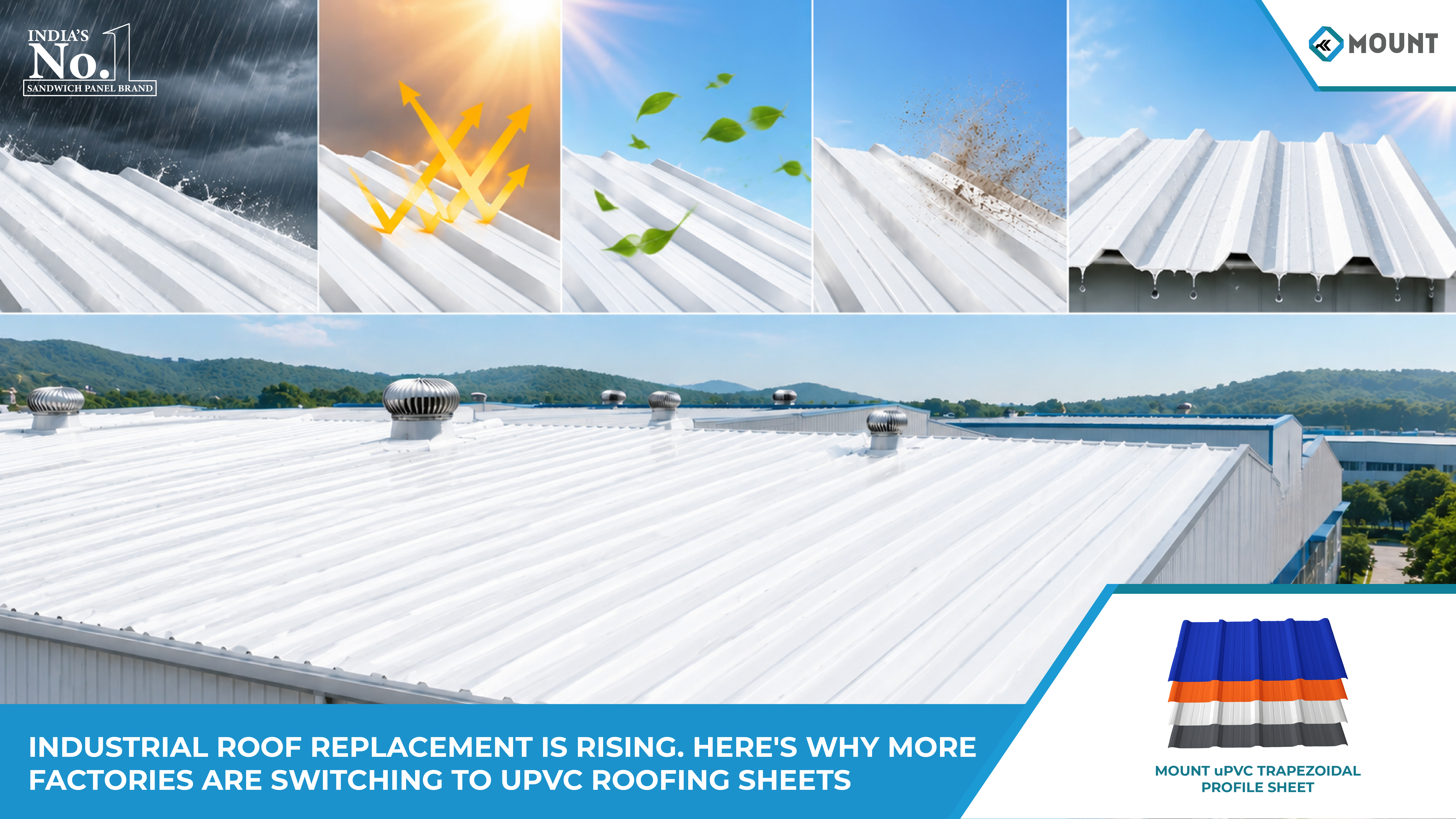
Industrial Roof Replacement Is Rising. Here’s Why More Factories Are Switching to UPVC Roofing Sheets
Every industry has its own reason for finally replacing a roof that’s been limping along on patch repairs, but the underlying pattern is the same across sectors: the original roofing material was specified for a generic industrial building, not for the specific chemical, thermal, or moisture conditions that particular facility actually operates under. As replacement cycles come due across India’s manufacturing base, more facility owners are correcting that mismatch the second time around by specifying uPVC roof installation rather than repeating it.
Manufacturing Plants: Fixing a Cycle of Recurring Repairs
Manufacturing facilities running continuous shifts don’t have the luxury of scheduling roof work around convenient downtime, which is exactly why recurring leaks become such an expensive problem , every emergency repair pulls maintenance staff away from production,critical work and risks equipment exposure in the meantime. Facilities replacing aging metal roofing are increasingly specifying uPVC roofing systems precisely because they remove the corrosion driven repair cycle that made the original roof so maintenance intensive in the first place, rather than simply installing another version of the same failure prone material.
Chemical Industries: Replacing Roofs That Couldn’t Survive the Environment
Chemical processing facilities put roofing materials through conditions most sheeting was never designed for , airborne acidic or alkaline compounds, off,gassing from storage tanks, and humidity levels that accelerate every corrosion mechanism at once. Standard galvanized roofing in these environments often needs replacement well ahead of its rated service life, which has pushed chemical plants toward materials engineered specifically for chemical resistance rather than general purpose weatherproofing. This is one of the clearest cases where a roof replacement decision is driven by environmental mismatch rather than simple age.
Textile Units: Managing Heat and Humidity Together
Textile processing environments run warm and humid by nature, a combination that accelerates corrosion in metal roofing far faster than dry industrial conditions would. At the same time, excessive roof heat gain adds directly to the cooling burden in dyeing and finishing areas where temperature control affects process quality. Facilities in this sector are increasingly specifying heat-resistant uPVC roofing sheets during replacement projects, addressing both the corrosion risk from ambient humidity and the thermal load from process heat in a single material decision rather than treating them as separate problems.
Warehouses and Logistics: Prioritizing Waterproofing at Scale
Large,span warehouse roofs accumulate a lot of joint length, and every additional metre of lap and fastening is another opportunity for water ingress once the original roofing starts to age. For facilities storing moisture,sensitive inventory, a single recurring leak point can mean recurring stock damage, not just an inconvenient drip. This is why waterproof uPVC roofing sheets, properly detailed at laps and penetrations, have become a standard replacement specification for logistics operators who can’t tolerate even occasional water ingress across a large storage footprint.
Food Processing: Replacement Driven by Hygiene Compliance
Food processing facilities face a different replacement trigger entirely , even a structurally sound roof can fail a hygiene audit if surface degradation creates crevices where contaminants collect, or if condensation dripping from an aging roof becomes a contamination risk on the production floor below. Roof replacement in this sector is frequently driven by compliance requirements as much as physical roof condition, and material selection needs to account for washdown resistance alongside the standard weatherproofing performance that uPVC roofing sheets India wide are now expected to deliver.
Coastal Industries: Racing Against Salt,Air Corrosion
Facilities within a few kilometres of the coastline see corrosion timelines compress dramatically compared to inland sites, with salt laden air attacking exposed metal surfaces and fastener points far faster than standard atmospheric exposure would. Because uPVC doesn’t rust, it sidesteps the corrosion mechanism entirely rather than slowing it down, which is why coastal facility replacement projects lean so heavily toward non-metallic roofing options regardless of the specific industry operating inside the building.
Sun Exposure and Long,Term Surface Stability
Regardless of industry, facilities in high,UV regions face a slower but equally important degradation process: surface chalking and embrittlement from sustained solar exposure. Roofs specified with heat-proof roofing sheets hold their surface integrity and light,reflective properties over a longer service window than untreated alternatives, which matters for facilities trying to avoid a second replacement cycle within a decade of the first.
Mount’s Role Across Replacement Projects
Mount Roofing & Structures approaches every replacement project by first identifying what actually drove the original roof’s failure , corrosion, thermal load, hygiene non-compliance, or joint failure , and specifying accordingly, rather than defaulting to a single standard product across every industry. This project,by,project approach to uPVC roof installation is why manufacturing, chemical, textile, and coastal facilities across the country continue returning to Mount when their next roofing decision comes up, whether that’s for a single building or a phased rollout across multiple sites.
If your facility’s roof replacement is being planned around anything more specific than “put the same thing back up,” it’s worth involving Mount before the specification is finalized.
Frequently Asked Questions
Q: How is the root cause of roof failure identified before specifying a replacement material?
A: A proper assessment reviews the failure pattern , whether it’s corrosion at fastener points, leaks concentrated at specific joints, or heat-related complaints from occupants below , since the failure mode directly informs which material properties should be prioritized in the replacement specification.
Q: Do chemical-resistant roofing requirements differ significantly between acidic and alkaline processing environments?
A: Yes, different chemical exposures degrade materials through different mechanisms, so the specific compounds present in a facility’s processing environment should be identified before finalizing roofing material and coating specifications, rather than assuming a single “chemical resistant” rating covers all exposure types.
Q: What hygiene-related roofing features matter most for food processing roof replacement projects?
A: Smooth, non-porous surfaces that resist bacterial harbourage, properly sealed joints that prevent moisture and pest ingress, and materials that tolerate washdown chemicals without degrading are typically the priority features auditors look for in food grade roofing replacements.
Q: How much faster does corrosion typically progress in coastal industrial roofing compared to inland sites?
A: Corrosion progression depends on distance from the coastline and local humidity, but facilities within a few kilometres of salt water generally see metal roofing degrade significantly faster than equivalent inland installations, which is why material selection for coastal sites warrants a different evaluation than standard inland specifications.
Q: Can roof replacement be phased across a large facility to avoid halting operations entirely?
A: Yes, replacement is commonly sequenced section by section, coordinated around production schedules and weather windows, with temporary weatherproofing measures used to protect the interior during the transition between removing old roofing and installing the new material.
Similar Events
 23 October, 2026